Preschool classroom jobs are specific roles assigned to children, such as line leader or snack helper, designed to teach responsibility, collaboration, and community skills. By participating in these daily tasks, children build confidence and gain a sense of ownership over their learning environment.

Classroom Job Chart for Preschools
A free, printable template for creating a preschool classroom job chart.
Why are classroom jobs important?
Implementing a job system in early childhood education offers developmental benefits that extend beyond simple help with tasks. When children actively participate in maintaining their classroom, they develop essential life skills.
- Fosters responsibility: Children learn that their actions contribute to the well-being of the group.
- Builds community: Working together towards a common goal strengthens social bonds.
- Encourages skill mastery: Repeating tasks helps children practice fine motor and cognitive skills.
- Boosts confidence: Successfully completing a job gives children a sense of accomplishment.
- Supports early literacy: Using a visual job chart helps children recognize names and job titles.
How to introduce classroom jobs
Before assigning roles, it is helpful to discuss the importance of these tasks with your class. Explain that a classroom is a community where everyone helps take care of the space and each other.
- Define the roles: Choose job names that are relevant and familiar to the children.
- Assign a role to everyone: Ensure every child has a job, whether they work individually, in pairs, or in larger groups.
- Decide on a schedule: Determine if jobs will rotate daily, weekly, or monthly based on the children's needs and mastery of tasks.
- Use visual aids: Create a chart so children can independently check their responsibilities.
10 preschool classroom job ideas
Assigning specific roles encourages independence and helps the day run smoothly. Here are ten age-appropriate job ideas for your childcare program.
1. Line leader
The line leader guides the class during transitions. They walk at the front of the line, setting a positive example for their peers to follow safely.
2. Snack helper
This role involves assisting the teacher during snack time. The snack helper can distribute napkins, snacks, and collect empty plates.
3. Gardener
The gardener is responsible for caring for classroom plants. Duties include watering the soil and removing dead leaves. This job teaches children about the lifecycle of living things and builds empathy as they nurture the plants to keep them healthy.
4. Materials helper
The materials helper organizes and distributes supplies. They might pass out crayons, glue sticks, or paper for activities. This interaction helps boost social skills as the helper connects with every child in the room.
5. Greeter
The greeter stands by the door to welcome classmates and visitors. This role helps create a friendly, inclusive environment and ensures everyone feels seen as they enter the room.
6. Calendar keeper
The calendar keeper helps the teacher update the class calendar. They might add markers for the current date, special events, birthdays, or upcoming holidays, helping the class stay informed about the schedule.
7. Librarian
Class librarians are responsible for returning books to the shelves after reading time. This role teaches organizational skills and problem-solving as children figure out where each book belongs.
8. Weather reporter
The weather reporter observes the conditions outside (sunny, rainy, snowy, windy, or cloudy) and reports back to the class. This job improves observation skills and teaches children how to categorize and describe the natural world.
9. Cleanup crew
Members of the cleanup crew focus on tidying the classroom after activities. They put away toys, wipe down tables, and ensure the space is organized for the next activity.
10. Pet caretaker
If your program has a class pet, the caretaker helps feed and care for the animal under teacher supervision. This role fosters a deep sense of responsibility and empathy for other living creatures.
Manage attendance, billing, and family communication with an all-in-one platform like brightwheel. Make it easier for staff to track and share observations with families and manage your admissions and waitlist online. The app is easy to use and is built to save you and your staff time.
Classroom job chart examples
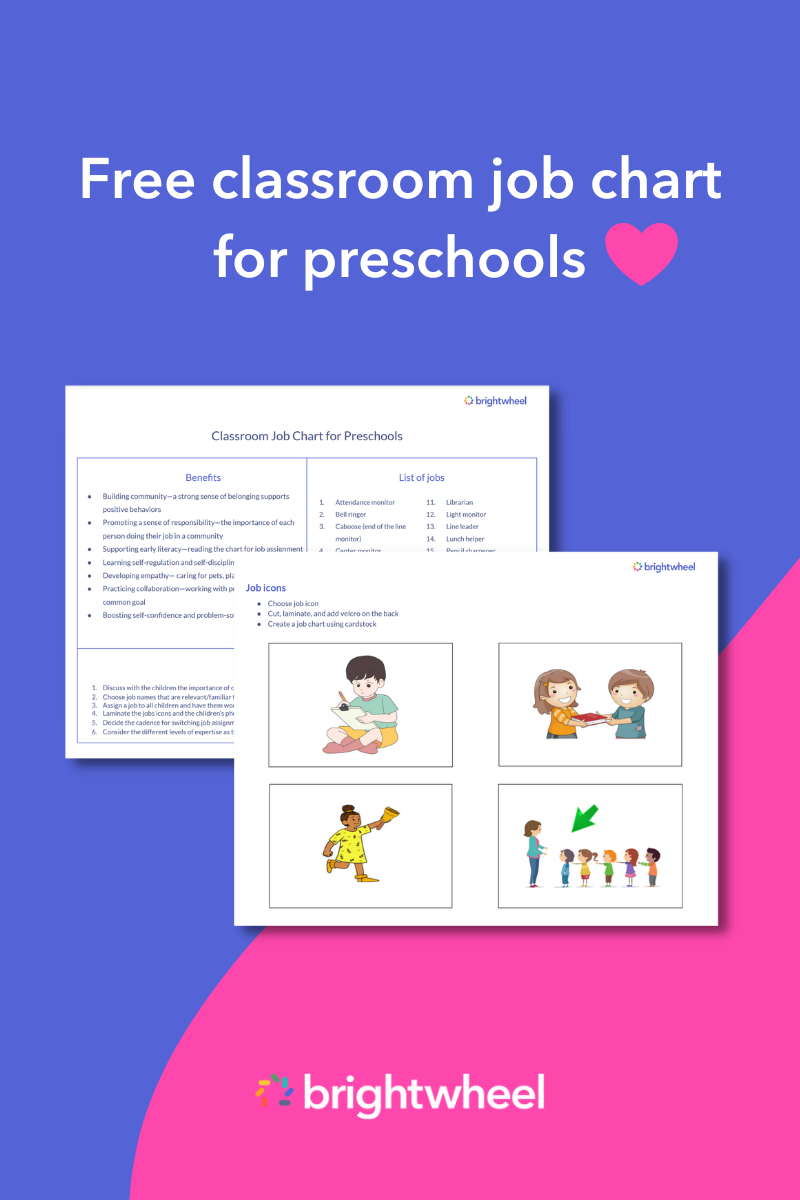
A classroom jobs chart is a visual tool that lists responsibilities and indicates which child is assigned to each role. This makes it easy for children to identify their tasks independently.
Classroom Job Chart for Preschools
A free, printable template for creating a preschool classroom job chart.
Library pocket chart
This method uses a poster board with library pockets (or envelopes) labeled with each job title. You can glue a picture of each child onto individual popsicle sticks. To assign a job, simply place the child's stick into the corresponding pocket.
Clothespin chart
For this job chart, write each child's name on a paper star or shape and glue it to a clothespin. Create a poster listing the jobs and clip the clothespins next to the assigned role. This makes rotating jobs quick and easy.
Frequently asked questions
How often should I change preschool classroom jobs?
You can rotate jobs daily, weekly, or monthly. A weekly rotation is often effective as it gives children enough time to master the task without becoming bored, though younger children may benefit from daily rotations to keep engagement high.
Should every child have a job?
Yes, it is best to assign a job to every child. If you have fewer jobs than children, you can assign multiple children to one role (e.g., a "cleanup crew" of three) to ensure everyone feels included and responsible.
What if a child refuses to do their job?
If a child is resistant, try to find a role that aligns better with their interests or pair them with a peer for support. Framing the job as a special help to the teacher or the community can also increase motivation.
Final thoughts
Assigning classroom jobs gives children meaningful ways to practice new skills while contributing to the group. Regularly rotate roles so each child has the chance to experience every job. These responsibilities not only build confidence and social skills, but also help you cultivate a strong sense of community in your classroom.