Spring activities for preschoolers are hands-on lessons that teach young children about plants, weather, animals, and insects while building fine motor, language, math, and social skills.
The best spring activities for preschoolers are planting seeds, nature walks, bug hunts, flower crafts, water play, and sidewalk chalk landscapes. This guide sorts activities by theme, month, and skill, with a materials list for each, so childcare teachers and administrators can plan a spring unit quickly.
Springtime brings temperate weather, new growth, and plenty of opportunities for young children to explore the world around them. Spring-themed activities stimulate preschoolers’ cognitive abilities as they learn about plants, flowers, animals, and weather changes, and they foster social development and literacy skills through play.
In this article
- Best spring activities at a glance
- Spring themes for preschool
- March activities
- April activities
- May activities
- Outdoor spring activities
- How spring activities support learning
- How to plan spring activities
- Frequently asked questions

Activities Across Developmental Domains
A free guide with activity ideas that foster child development across developmental domains.
What are the best spring activities for preschoolers?
The table below lists every activity in this guide with the best time to use it, the skills it builds, and the materials to gather. Select an activity name to jump to its instructions.
| Activity | Best time | Skills it builds | Materials |
|---|---|---|---|
| Plant seeds | March | Science, plant life cycles, responsibility | Small pots, potting soil, seeds |
| Egg carton caterpillars | March | Fine motor, creative thinking | Egg cartons, pipe cleaners, paint or markers, glue, googly eyes |
| Beaded wind chimes | March | Fine motor, sound awareness | String, straws, jingle bells, beads, paper cups |
| Outdoor scavenger hunt | March | Observation, exploring nature | A list of spring items |
| Spring sensory bin | March | Sensory exploration, tactile play | Dried beans and peas, sand, rice, flowers, rocks |
| Springtime songs | April | Focus, language, movement | Songs |
| Flower activities | April | Science, fine motor, creativity | Paint, pom poms, flower petals, construction paper |
| Egg-and-spoon activity | April | Gross motor, balance | Plastic eggs, spoons |
| Earth Day grass crowns | April | Fine motor, environmental awareness | Green construction paper, crayons, nature stickers |
| Coffee filter butterflies | April | Butterfly life cycle, fine motor | Coffee filters, markers or watercolors, pipe cleaners |
| Spring picture books | May | Literacy, vocabulary | Picture books |
| Insect activities | May | Math, science, observation | Leaves, sticks, magnifying glasses, containers |
| Teacher award ceremony | May | Communication, social skills | Printable ribbon template, drawing supplies |
| Baby animal match game | May | Sorting, noticing similarities and differences | Matching flashcards or slides |
| Popsicle stick flag | May | Fine motor, patterns | Popsicle sticks, red, white, and blue buttons, glue |
| Cloud watching | Any cloudy day | Concentration, observation | Crayons and paper |
| Nature walk | Any spring day | Gross motor, science | Collection items, optional insect net |
| Bird watching | Spring | Observation, identifying species | Binoculars, guidebooks |
| Kite flying | Windy day | Coordination, problem-solving, weather | Kites |
| Sidewalk chalk landscapes | Any dry day | Creativity, teamwork | Sidewalk chalk |
What spring themes work best for preschool?
Preschool spring themes organize daily activities around engaging topics like plants, weather, and insects to streamline lesson planning. Children are naturally curious and love learning new things, and with the advent of spring, many exciting themes can keep preschoolers busy and entertained.
| Theme | What children explore | Skills | Easy way to start |
|---|---|---|---|
| Plant theme | Seed germination and plant life cycles | Science, observation | Plant seeds and track growth |
| Weather theme | Rain, wind, and sunshine | Science, charting | Make a weather chart |
| Spring animals theme | Birds, bees, butterflies, and frogs | Science, fine motor | Build animal habitats |
| Shapes and colors theme | Natural shapes and colors | Cognitive, fine motor | Make shape collages |
| Gardening theme | How plants grow and why watering matters | Sensory, science | Decorate flower pots |
| Bugs theme | Insects and their role in the ecosystem | Observation, science | Go on a bug hunt |
| Arts and crafts theme | Texture, shape, color, and size | Fine motor, creativity | Print flowers with potatoes |
| Music and movement theme | Rhythm and movement | Gross motor, rhythm | Build an obstacle course |
| Water play theme | Volume, buoyancy, and sensory exploration | Science, sensory | Fill and pour containers |
| Space theme | Basic astronomy | Science, math, teamwork | Build rocket ships from recycled materials |
Plant theme
A plant theme introduces preschoolers to botany basics like seed germination and plant life cycles. Introduce children to different kinds of plants, their life cycles, and how they grow. Plant seeds with your class and watch the plants grow throughout the season. Have the children observe the changes in plants over time as new leaves and flowers emerge. Discuss how different plant parts are used for food, medicine, clothing, and decorations.
Weather theme
A weather theme helps preschoolers understand seasonal changes like rain, wind, and sunshine. Spring allows children to explore the weather and how the weather changes over time. Have children observe weather patterns like rain, wind, and sunshine. Educators can also discuss where rain comes from and why the environment needs rain for plants to grow. Create a chart to track the weather changes and discuss why it is essential to know what weather families will experience each day.
Also, encourage children to dress appropriately according to the weather and talk about how children can be safe when outdoors in different types of weather.
Spring animals theme
An animal theme teaches preschoolers about local wildlife that emerges in spring, such as birds, bees, and butterflies. Introduce preschoolers to animals that come out during spring, such as birds, bees, butterflies, and frogs. Explain how each animal plays a different role in nature and why these animals are essential to our environment.
Give children the opportunity to observe these animals up close by taking the class on outdoor nature walks or setting up bird feeders. Once the children are more familiar with the different animals, encourage them to create animal habitats using materials such as construction paper, popsicle sticks, straws, and clay.
Shapes and colors theme
Integrating shapes and colors into spring activities boosts early cognitive development and visual recognition. Have preschoolers look for natural shapes in clouds or leaves and talk about the different colors children see in trees, the sky, and flowers. Grab some construction paper for a craft activity where preschoolers can create collages of shapes and colors.
Allow children to practice fine motor skills by having the class cut out shapes or use glue sticks to put art projects together. Encourage children to draw and color with chalk on the sidewalk to stimulate creativity, allowing learners to explore different shapes and colors while having fun.
Gardening theme
A gardening theme provides hands-on sensory experiences where children learn how plants grow and why watering is essential. Introducing children to plants, different types of flowers, and the importance of watering will excite preschoolers about gardening. Explain how plants help families in everyday lives, from providing food and oxygen to helping conserve energy.
Educators can discuss all the different colors associated with gardening and show children some creative ideas for decorating pots or creating flower arrangements. This theme also lends itself to many simple and age-appropriate gardening activities.
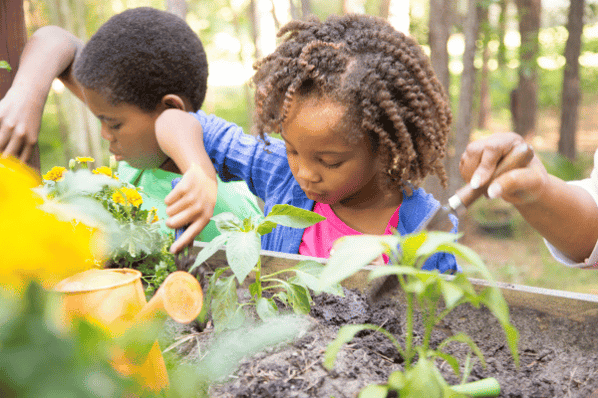
Photo credit: Canva
Bugs theme
A bugs theme encourages preschoolers to observe insects safely and understand their role in the local ecosystem. Get children interested in bugs by going on a bug hunt and exploring the different insects that come out during springtime. Let the class observe butterflies, ladybugs, or worms up close and discuss various bug characteristics. Explain why bugs are essential to our environment and how families can help protect these insects.
Arts and crafts theme
Spring-themed arts and crafts activities allow preschoolers to express creativity while developing fine motor skills. Preschoolers love to express creativity through arts and crafts. During springtime, encourage children to create various art projects related to the season, such as:
- Making flower prints with potatoes
- Creating rainbow wind chimes using sticks and yarn
- Crafting paper butterflies or caterpillars
While doing arts and crafts, encourage children to explore the concepts of texture, shape, color, and size.
Music and movement theme
Music and movement activities channel preschoolers’ energy into structured physical development and rhythm recognition. Incorporate some music and movement activities into your spring curriculum. Have the preschoolers create their own dances to songs about the season or have the class participate in an obstacle course involving various movements such as hopping, skipping, or jumping.
Water play theme
Water play activities introduce basic science concepts like volume, buoyancy, and sensory exploration. Have preschoolers explore water and teach the children about water’s properties by filling up different containers such as cups, bowls, bottles, or buckets. Educators can also add food coloring to create a rainbow of colors.
Let the class observe what happens when they add different items, such as rocks, sand, or clay to a bucket of water. For a different sensory experience, provide the children with sponges, paintbrushes, and other objects for a tactile exploration of the water.
Space theme
A space theme expands spring learning beyond Earth, boosting scientific thinking and early mathematical understanding. A space-themed lesson plan can boost children’s scientific thinking, mathematical understanding, and literacy skills. By engaging in activities like learning about solar eclipses, building rocket ships from recycled materials, or even participating in a simplified “astronaut training” obstacle course, children can develop fine motor skills, grasp basic astronomy concepts, and cultivate teamwork and problem-solving abilities.
This theme can inspire awe and curiosity about the world beyond our planet, encouraging questions and discussions that build cognitive skills.
What are good March activities for preschoolers?
March activities for preschoolers prepare children for the transition from winter to spring through hands-on crafts and exploration. March is the perfect time to prepare for the coming of spring, and the activities below will help get the class excited about the season.
Make egg carton caterpillars
Get your class excited about the coming of spring by helping children create egg carton caterpillars. As the children create their masterpieces, you can discuss why caterpillars are so important in springtime, how caterpillars turn into beautiful butterflies, and where families might find caterpillars in the school garden or neighborhood. This craft will help children practice fine motor skills and encourage creative thinking as learners learn about nature. For this activity, educators will need egg cartons, craft scissors, pipe cleaners, paint or markers, glue, and googly eyes.
Plant seeds
As the weather starts to warm up, it’s time to teach preschoolers about the life cycle of plants. Start with some small pots, potting soil, and different types of seeds. Help each child fill their pot with dirt and seeds. This is also a great activity to teach children about how to care for plants, such as placing them in a sunny area and watering them regularly. For quicker results, NAEYC suggests faster-growing seeds such as peas, green beans, and corn for classroom experiments.
Make wind chimes
Make cheerful noises around your classroom by making beaded wind chimes with children. You will need string, drinking straws, jingle bells, beads of different sizes, paint, paintbrushes, paper cups, pipe cleaners, a hole puncher, and scissors. This activity helps develop fine motor skills, stimulates creativity, and encourages sound appreciation.
Go on a scavenger hunt
Going on an outdoor scavenger hunt will encourage children to explore their environment and discover new things. This is an opportunity to learn about different animals, plants, and other elements of nature. Create a list of things commonly found during springtime and send your children outside. Encourage your children to try to find everything on the list.
Create a spring-themed sensory bin
You can create a sensory bin filled with spring items and colors. Stimulate children’s senses with tactile items such as dried beans and peas, sand, rice, flowers, and rocks. There are many spring-themed sensory ideas to consider as you engage your preschoolers in exploring the season.

Photo credit: Canva
What are good April activities for preschoolers?
April activities for preschoolers capitalize on blooming flowers and warmer weather to engage children in nature-based learning. April brings spring blooms, allowing educators to bring creative ideas for activities and projects into the classroom. Here are some ideas to keep preschoolers engaged and learning all month long.
Sing springtime songs
Start the month with a musical rendition of some of your favorite spring tunes. Singing songs is a great way to start each day and helps the children stay focused. Songs also help introduce basic concepts while getting your preschoolers engaged and involved. Have the children learn the words to the songs and add their movements to make it more interactive.
Explore flower activities for preschoolers
As flowers start to bloom, introducing flower activities will encourage preschoolers to explore and learn more about them. Here are three flower activities for preschoolers that will jumpstart their flower exploration:
- Create a rainbow garden using paint and pom poms instead of paint brushes.
- Make a flower-petal collage. Gather flower petals and leaves and help children glue them on construction paper to create their very own artwork.
- Learn the parts of a flower with this simple craft. Using construction paper, cut out the different parts of a flower, including the petals, leaves, and stem. Have your children label the different parts and color or paint the flower.
Play an egg-and-spoon Easter activity
The Easter holiday ushers in the perfect time for arts and crafts. First, have your preschoolers decorate a plastic Easter egg. Then, set up an area in the classroom where they can walk in a straight line, balancing the plastic egg on a spoon. While it might be challenging at first, this activity will help them practice and strengthen their motor skills. And if the eggs fall, you will not only be free from having to clean up a mess but you can also surprise the children by putting a treat inside.
Make grass crowns for Earth Day
Earth Day is celebrated on April 22 each year. This is a great time to incorporate Earth Day-themed activities that celebrate our planet and nature. For a simple grass crown activity, give your preschoolers green construction paper and help them make blades of grass by cutting the paper. You can also give them different shades of green crayons and allow them to draw more blades on their crowns. They can decorate them with nature stickers like flowers, birds, and insects. Don’t forget to let them wear their crowns for the day after crowning them protectors of nature.
Create a butterfly craft
This simple butterfly craft uses only a few materials and encourages children to use their imaginations as they learn about the lifecycle of a butterfly. To prepare the wings, allow children to color the coffee filters using markers or watercolor paints. Once they’re done decorating, leave the filters to dry. When the filters are dry, fold them accordion style and twist a pipe cleaner around the middle so that the two ends point upwards in a big letter “V.” Next, pinch the ends of the pipe cleaner and curl to make a small spiral, like a butterfly antenna. Finally, pull apart the folds of the coffee filter to shape the butterfly wings.
What are good May activities for preschoolers?
May activities for preschoolers wrap up the spring season by celebrating outdoor life, insects, and teacher appreciation. As the spring season winds down, allow preschoolers to explore the beauty of nature with these fun and creative activities.
Read books about spring
Picture books often provide fantastic images of the wonders of spring. These three books are sure to capture their attention:
- Chasing Rainbows by Tish Rabe: Sally and Nick want to paint rainbows, and the Cat in the Hat helps them find out which colors to use and in what order.
- The Tale of Peter Rabbit by Beatrix Potter: This classic book tells the story of a mischievous rabbit who ventures into Mr. McGregor’s garden.
- Rainbow Stew by Cathryn Falwell: Three children spend a rainy day with their grandfather, harvesting a rainbow of vegetables from his garden and cooking them into a stew.
Insect activities for preschoolers
Spring is the time for warmer weather and buzzing insects. Insect activities are a perfect way to celebrate the season with your preschoolers. Here are some creative activities to try:
- Insect collage craft: This activity combines imagination with paper crafting. Press an assortment of leaves, sticks, and acorn caps and allow the children to glue the pieces on paper in the shape of an insect.
- Bug hunt: Take your class on a bug hunt outdoors. Give each child a magnifying glass and help them search for bugs. Provide containers for safe bug storage. Explain the importance of handling the insects carefully before releasing them back into their habitats.
- Insect math: Incorporate basic math concepts into your insect activities by challenging your preschoolers to count and compare insects. Have them count the number of legs or antennae on each insect and compare sizes to see which is bigger.
- Insect snacks: Get creative by creating snacks in the shape of insects, like butterfly-shaped cookies. This activity will get your children excited about snack time while teaching them about the different insects they can find in their environment.
Have a teacher award ceremony
Teacher Appreciation Week typically falls during the first full week of May each year as a time to celebrate educators for all they do. You can encourage your preschoolers to celebrate their teachers by having them create a drawing or note describing their favorite thing about their teacher using a printable trophy or ribbon template.
At the end of the week, have children present their homemade awards to their teachers with a fun ceremony. This not only gives you the chance to hear what your preschoolers appreciate in their teachers, but it also gives your preschoolers the opportunity to practice their communication skills.
Play an interactive match game
Celebrate Mother’s Day by playing a match game inspired by the P.D. Eastman book Are You My Mother? In the story, a baby bird goes around looking for his mother. Using matching flashcards or a digital presentation with slides, have your preschoolers match baby animals to their mother. This sorting and grouping activity will boost cognitive skills, helping your preschoolers notice similarities and differences.
Create a popsicle stick American flag
After discussing the significance of Memorial Day with your preschoolers, you can celebrate the holiday with a popsicle stick American flag activity. Using popsicle sticks, help them create a popsicle “square” by gluing seven popsicle sticks horizontally over two vertical ones. Using different sizes of red, white, and blue buttons, have them glue the buttons to the popsicle stick to create their own American flag. If you don’t have buttons, you can decorate the popsicle sticks using paint or markers.
Outdoor spring activities for preschoolers
Outdoor spring activities for preschoolers use warmer weather to improve gross motor skills and environmental awareness. NAEYC’s Young Children journal explains that outdoor play supports early learning across all domains. For lesson planning success, be sure to incorporate outdoor activities that are engaging and developmentally appropriate for preschoolers.
Here are some outdoor spring activities that will help your preschoolers explore their environment and enjoy the sights and smells of nature.
Go cloud watching
Cloud watching is a simple activity that helps children develop their concentration and observation skills. On a cloudy day, have your preschoolers explore the sky as you point out various cloud shapes and sizes. You can also have them color pictures of the different clouds they see and display their drawings in the classroom.
Take nature walks
Nature walks allow children to learn about the outdoor environment and its inhabitants while enhancing their gross motor skills. Take children on fun walks around your neighborhood or at a nearby park and have them observe insect behavior and their habitats. You may even want to capture the bugs with an insect net for closer observation. Have children collect items for a nature collage, such as leaves, rocks, pinecones, or feathers. At the end of your walk, use what you’ve collected to create nature-inspired art projects. NAEYC also suggests sorting collected objects by shape, color, or texture back in the classroom.
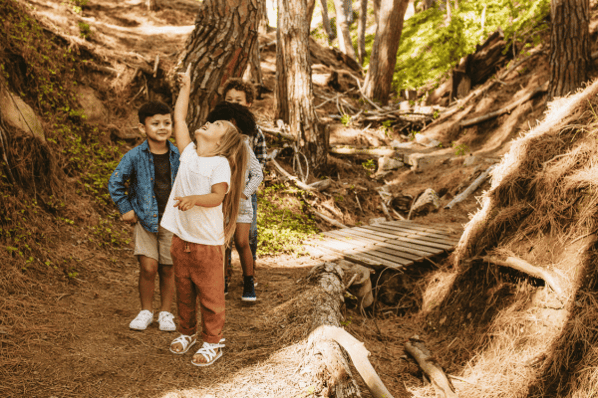
Photo credit: Canva
Go bird watching
One of the joys of spring is seeing the return of migratory birds. Bird watching will help children appreciate nature’s beauty and improve their observation skills. Plan a trip to your local bird sanctuary or a park and let your preschoolers observe the different species of birds that have returned. Bring along some binoculars and guidebooks so they can identify the types of birds they see.
Fly kites
On a windy day, head to a nearby park or open space for a fun-filled kite-flying day. Kite flying is a great way to help children understand weather patterns and the power of nature. This activity also develops their coordination and problem-solving skills.
Create sidewalk chalk landscapes
This activity allows children to bring their love for nature and creativity together, while also promoting teamwork and appreciation for the environment. Begin with a brief discussion about the different landscapes found in nature, such as forests, rivers, or mountains. Use images to help spark ideas and get the children excited about the kind of natural landscape they could create.
Let the children choose the theme and have them start to draw the landscape using a variety of sidewalk chalk colors. Encourage them to add details like animals, flowers, and other natural elements to make it come alive. After completing their sidewalk chalk landscape, have the children take a walk along it, pausing at different points to talk about what they’ve drawn and learn more about the natural elements in their chosen landscape.
How do spring activities support preschool learning?
Spring activities support preschool learning by giving children concrete, hands-on ways to practice skills in every developmental area. The Head Start Early Learning Outcomes Framework describes five central domains of early learning, and the table below shows which spring activities fit each one.
| Early learning domain | Spring activities that build it |
|---|---|
| Approaches to learning | Scavenger hunts, bug hunts, and nature walks that build curiosity and persistence |
| Social and emotional development | Sidewalk chalk landscapes, teacher award ceremonies, and group gardening that build teamwork and communication |
| Language and literacy | Spring picture books, springtime songs, and nature discussions that build vocabulary |
| Cognition: Mathematics and scientific reasoning | Insect math, weather charts, planting seeds, cloud watching, and water play |
| Perceptual, motor, and physical development | Egg-and-spoon activities, kite flying, cutting and gluing crafts, and nature walks |
The pairings above are suggestions for lesson planning, not an official crosswalk from Head Start.
How do you plan spring activities for a preschool classroom?
To plan spring activities for a preschool classroom, pick a theme, match it to the month, mix activity types, gather materials, take learning outdoors, and share progress with families. Follow these steps:
- Pick a spring theme. Choose one theme, such as plants, weather, animals, or bugs, so every activity in the week connects to the same idea.
- Match the theme to the month. Use March for the transition from winter, April for blooming flowers and Earth Day on April 22, and May for insects, Teacher Appreciation Week, Mother’s Day, and Memorial Day.
- Mix activity types across skills. Plan at least one craft, one outdoor activity, one sensory or science experience, and one book or song so children practice motor, language, and thinking skills.
- Gather materials ahead of time. Use the at-a-glance table to list supplies, then set out pots, soil, paper, pipe cleaners, and other materials before the day begins.
- Take learning outside and document it. Bring observation into nature walks, bird watching, and bug hunts, and photograph what children discover so you can revisit it in class.
- Share progress with families. Send photos and notes home so families can see what children learned and continue the conversation at home.
With brightwheel’s Experience Curriculum, childcare programs can support child development with expert-designed lesson plans that are aligned with all 50 states’ early learning standards. The curriculum includes daily embedded assessments, digital lessons in brightwheel, and hands-on learning materials mailed to the childcare program each month, with flexible plans for baby, toddler, and preschool classrooms.
-1.png?width=600&height=300&name=62025%20EC%20Blog%20Image%20(2)-1.png)
Teachers can also use brightwheel’s lesson planning and learning tools to record observations and track milestones, then turn those observations into a preschool progress report to share with families. Brightwheel is the #1 rated all-in-one childcare management software, with 100+ features in one cloud-based platform and a 4.9-star rating across 150,000+ reviews, and 95% of admins and staff report that brightwheel improves communication with families.
Frequently asked questions about spring activities for preschoolers
What are the best outdoor spring activities for preschoolers?
The best outdoor spring activities for preschoolers include nature walks, cloud watching, bug hunts, bird watching, kite flying, sidewalk chalk landscapes, and planting seeds in a garden. These hands-on activities develop gross motor skills and teach young children about changing seasons.
How do spring activities help early childhood development?
Spring activities help early childhood development by improving fine motor skills through crafts, boosting cognitive abilities via nature observation, and encouraging social development through collaborative group play.
How can childcare programs easily plan spring activities?
Childcare programs can plan spring activities by choosing a theme, matching it to the month, and mixing crafts, outdoor play, sensory bins, and books. Brightwheel’s Experience Curriculum provides expert-designed lesson plans aligned with all 50 states’ early learning standards, and brightwheel saves each admin and staff member 20 hours per month of administrative work.
What are good spring themes for preschool?
Good spring themes for preschool include plants, weather, spring animals, shapes and colors, gardening, bugs, arts and crafts, music and movement, water play, and space. Each theme can be taught through simple, hands-on activities.
What spring activities work for March, April, and May?
In March, try egg carton caterpillars, planting seeds, and scavenger hunts. In April, try flower crafts, Earth Day grass crowns, and coffee filter butterflies. In May, try insect activities, spring picture books, and Teacher Appreciation Week awards.
What spring activities can preschoolers do indoors on a rainy day?
Preschoolers can make wind chimes, butterfly crafts, and flower collages, explore a spring sensory bin, sing springtime songs, or play a baby animal match game. Water play with cups, bowls, and sponges also works well at a classroom table.
Why are nature activities good for preschoolers?
Nature activities give preschoolers hands-on ways to practice science, social, and physical skills. NAEYC notes that outdoor play supports early learning across all domains and that children are natural explorers who do not need a planned science lesson to learn outside.
Get in the mood for spring
Spring activities offer excellent opportunities for preschoolers to learn and explore. Incorporating creative projects into the learning process helps to ensure that every child is engaged, actively participating in activities, and enjoying their learning experiences.