A preschool open house is an event where prospective families visit a childcare program to meet teachers, tour the facility, and learn about the curriculum. Hosting an open house is one of the most effective ways to showcase your educational philosophy, build relationships with the community, and ultimately boost enrollment.

Preschool Open House Checklist
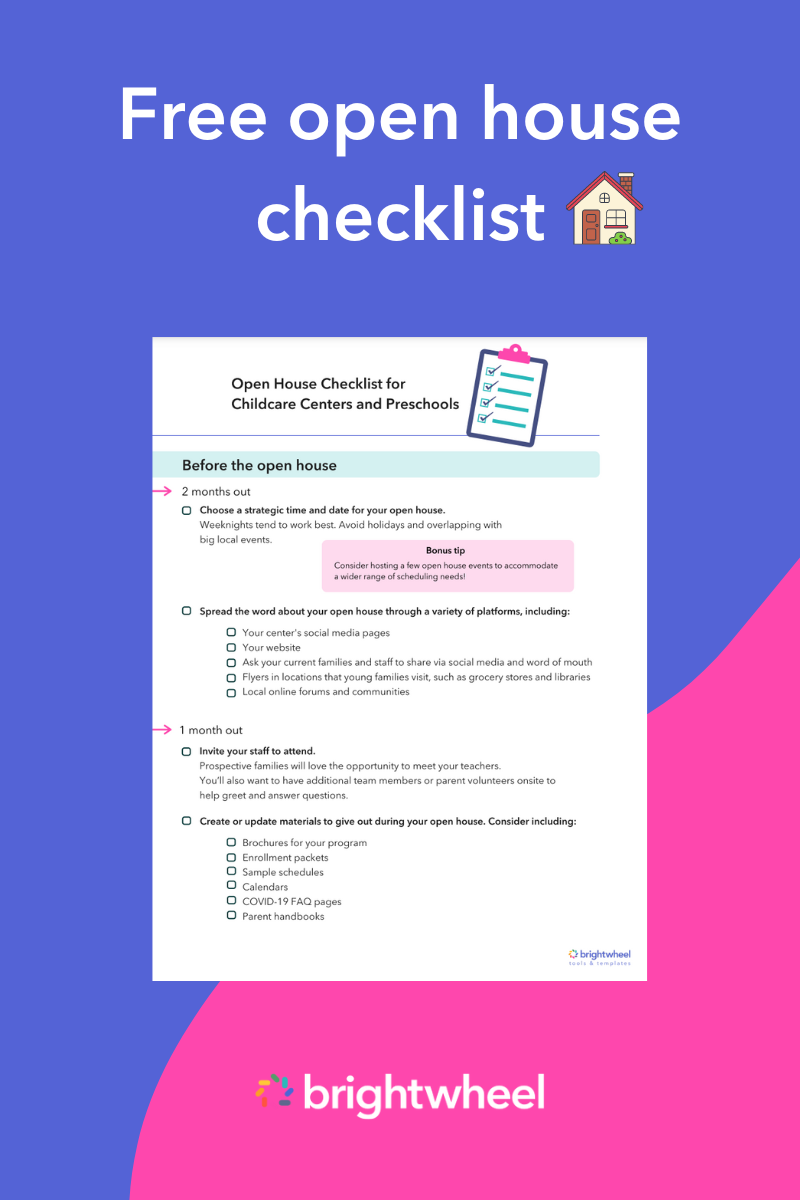
A free checklist to help you host a successful preschool open house for prospective families.
What makes a successful preschool open house?
A successful open house creates a welcoming environment that allows families to envision their child in your care. It combines a strategic date and time, engaging activities, clear communication about your program’s values, and organized follow-up to convert visitors into enrolled families.
Here are some essential steps to help you plan and execute a successful preschool open house.
1. Choose a strategic time and date
The first step to hosting a successful event is selecting a time that works well for families with young children. Early weeknights often work best.
Ensure your event does not overlap with significant local events, such as festivals, major sports games, or school graduations. Avoid holidays, as many families travel or have other commitments. To give prospective families enough time to assess your program, hold your open house about two months before enrollment applications are due. You might also consider hosting multiple events to accommodate different schedules.
2. Spread the word on multiple platforms
Promoting your event is key to generating interest and ensuring high attendance. Use every channel available to your program to reach your community.
- Social media: Share posts on all your pages in the weeks leading up to the date. Create a public event on Facebook including the date, time, and location, and encourage your followers to share it.
- Instagram: Post an image of your flyer and include a link to your website in your bio. Use hashtags to help local families find you when searching for childcare programs.
- Website: Place a banner on your homepage so visitors see the details immediately.
- Word of mouth: Ask enrolled families and staff to spread the word. Personal recommendations are highly effective. You might even offer a referral bonus to current families if a new family they refer enrolls.
Promoting your open house is key to generating interest and higher attendance at your event. Consider all the platforms and networks your program has access to and how you can use them to spread the word about your event.
3. Invite staff and family volunteers
You need a support team onsite to ensure everything runs smoothly. Ask staff members and current families to volunteer at least a month in advance.
Prospective families appreciate the chance to connect with teachers and hear directly from other families about their positive experiences. Assign greeters to welcome guests at the door. If your facility is large, station volunteers in each classroom and outside play areas so visitors can easily ask questions.
4. Create a welcoming atmosphere
Organizing classrooms, displaying lesson examples, and providing snacks creates a warm setting that makes a great first impression.
- Display children's work: Showcase art and projects in hallways and classrooms to give families a glimpse of the curriculum.
- Provide refreshments: Offer healthy snacks like fruit, crackers, and water. This demonstrates that you value nutrition.
- Plan engaging activities: Set up simple arts and crafts or scavenger hunts to keep children occupied while you connect with their guardians. This helps you get to know the whole family.
5. Prepare helpful materials for families
Families take in a lot of information during a visit. Make it easy for them to review the details later by providing handouts they can take home. These materials keep your program top of mind as they evaluate their options.
Useful resources to include:
- Program brochures
- Enrollment packets
- Sample daily schedules and calendars
- FAQ sheets
- Family handbooks
Organize these materials on a clearly marked table near the entrance or exit. You can also assign a staff member to ensure every guest leaves with a packet.
6. Offer an enrollment incentive
To encourage families to apply, consider offering an exclusive incentive for attendees. A common strategy is waiving or discounting the registration fee for applications submitted during the event or within a specific window, like one week after the open house.
Set up a station with printed applications, pens, or tablets for online submissions. Using software like brightwheel can streamline this process with digital forms and signatures, making it convenient for everyone.
7. Follow up with attendees
Collecting contact information from every visitor is crucial. When you meet new families, try to find a moment of personal connection—perhaps a shared interest or a specific question they had about your curriculum.
Send a personal email or make a phone call within 48 hours of the event. Reference the connection you made, thank them for visiting, and summarize why your program is the right fit for them. This personal touch ensures your program stays top of mind as they make their final decision.
Sample agenda for a preschool open house
6:00 PM - Welcome and check-in: Guests are greeted at the entrance and invited to sign in, pick up a welcome packet, and enjoy light refreshments.
6:15 PM - Introduction and presentation: A brief presentation by the preschool director outlining the school’s mission, programs, and philosophy.
6:35 PM - Classroom tours: Guests are guided through the classrooms in small groups, with opportunities to see the learning environment and meet the teaching staff.
7:00 PM - Interactive activity demonstration: Children can participate in a hands-on activity, such as storytelling or a simple craft, while parents observe or join in.
7:15 PM - Q&A session: An open forum for families to ask questions about the curriculum, daily routines, safety protocols, and enrollment process.
7:30 PM - Closing and feedback collection: Thank attendees for coming, distribute feedback forms, and provide information on next steps for enrollment.
Frequently asked questions
What activities should be done in a preschool open house?
Interactive activities work best, such as sensory bins, simple art stations, or a classroom scavenger hunt. These allow children to engage with the environment while adults speak with teachers.
How long should a preschool open house last?
Most open houses last between 90 minutes and two hours. This provides enough time for families to tour the facility and ask questions without feeling rushed or overwhelmed.
What is the main purpose of an open house?
The primary goal is to showcase your childcare program's environment, staff, and curriculum to prospective families. It allows you to build trust and encourage new enrollments by providing a firsthand look at the daily experience.
Wrapping up
An open house is a valuable opportunity to connect with prospective families and highlight the unique qualities of your childcare program. With thoughtful planning and a focus on personalization, your open house can be the first step in forming long-lasting relationships with families and filling your enrollment spots.