A preschool progress report is an essential tool that tracks a child's development across key learning domains. It helps educators monitor each child's progress, keeps families informed, and encourages everyone to work together to support the child's learning.
In this article, we'll explore the benefits of preschool progress reports and which developmental areas you should track to best support children's growth at your childcare program.

What are the benefits of preschool progress reports?
Preschool progress reports offer three main benefits: documenting developmental milestones, engaging families in the learning process, and helping educators facilitate effective lesson planning. By documenting progress and identifying areas for growth, preschool progress reports foster a supportive environment that encourages personalized learning, ensuring every child receives the attention and resources they need to thrive.
Documents progress in key developmental areas
A thorough progress report tracks a child’s growth and development in social-emotional, language, cognitive, and physical skills. Educators use the gathered details to identify any learning and behavior trends as well as any delays in developmental milestones.
Allows families to engage with their child's learning
Preschool progress reports serve as a vital communication tool between educators and families. By keeping parents informed about their child's developmental progress, these reports foster greater family engagement and involvement. When parents are aware of their child's achievements and challenges, they can better support learning at home and collaborate with educators to address any concerns, thus creating a cohesive support system that benefits the child.
Facilitates lesson planning
Progress reports also offer valuable insights that guide educators in planning effective instructional strategies. By detailing each child's strengths and areas for improvement, these reports enable educators to design personalized learning experiences that cater to individual needs. This approach ensures that lessons and activities are targeted and effective, promoting optimal development for every child.

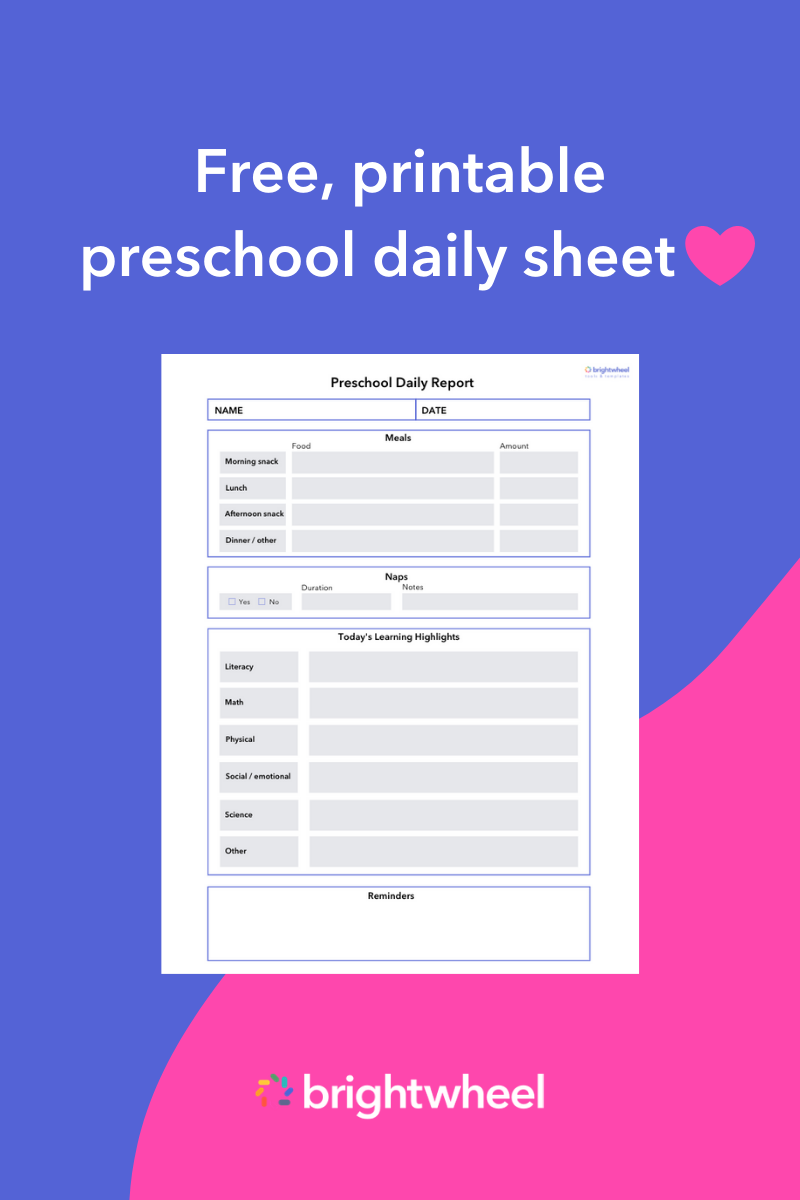
Preschool Daily Sheet
A free template to document a child's activities, meals, naps, and learning throughout the day.
Which developmental areas should you track?
A comprehensive preschool progress report should track four main developmental areas: language and literacy, physical skills, social-emotional development, and cognitive skills. Monitoring these skills helps support children's development into well-rounded individuals and successful learners.
Brightwheel's progress report feature makes it easy to track student progress. With customizable portfolio templates and easy sharing with families, brightwheel streamlines your milestone tracking and enhances learning outcomes at your childcare program.
Language and literacy development
The skills in this section include reading, communicating with others, and writing.
For language and literacy skills, focus on:
- Growing their interest in books and reading. Possible activities include story time, singing the alphabet song, and learning to recognize letters.
- Encouraging their ability to ask questions verbally and nonverbally.
- Improving their verbal and nonverbal communication.
Physical development
Physical progress is linked to other areas of early development, such as sensory development, cognitive thinking, and social-emotional development.
For a physical progress evaluation, focus on tracking:
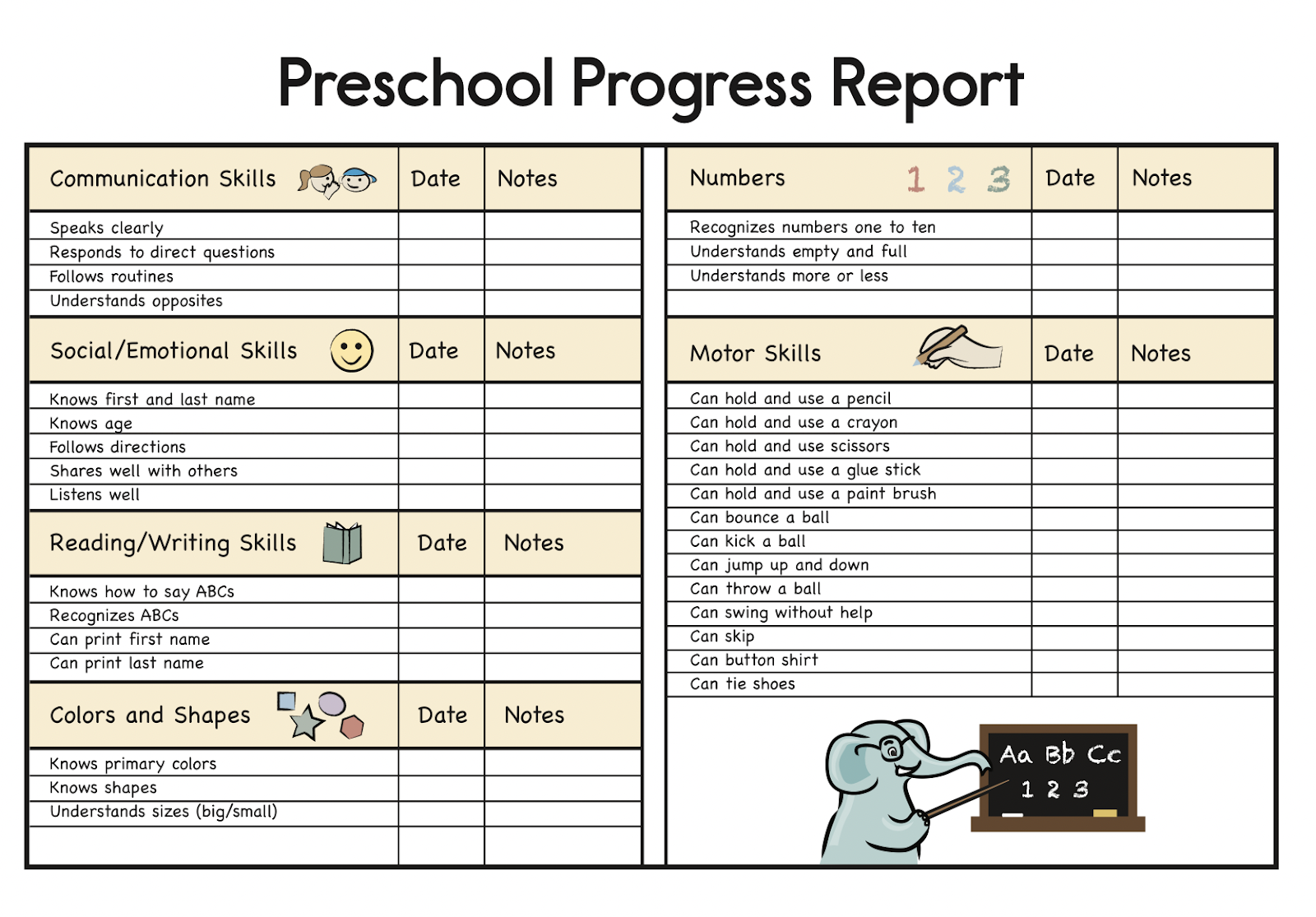
- Gross and fine motor skills: Pay attention to their ability to throw or kick a ball, hold a crayon, skip, and bounce.
- Independence: This includes how they zip their coat, tie their shoelaces, close their buttons, and swing without help.
- Hand and eye coordination: Track their ability to string beads, connect dotted activities, and play with jigsaw puzzles.
Social-emotional development
Social-emotional skills are essential to a child’s ability to establish positive relationships with others.
Social-emotional skills include:
-
- Ability to recognize, regulate and express their emotions
- Ability to cooperate and problem solve with their peers
- Ability to follow instructions and class routines
Cognitive development
Cognition refers to a child's mental process of comprehending issues and gaining knowledge. Cognitive processes include problem-solving, memory, perceptual reasoning, and verbal comprehension.
For cognitive development, focus on:
- Problem-solving skills
- Improved story narrating skills
- Recognizing and naming colors
What are some preschool progress report examples?
Common preschool progress report examples include daily reports for routine tracking, quarterly reports for long-term skill assessment, and specialized skills reports focusing on specific developmental milestones. Your report’s design will depend on what you report, how many items are on your checklist, and how often you report. Here are three templates to consider:
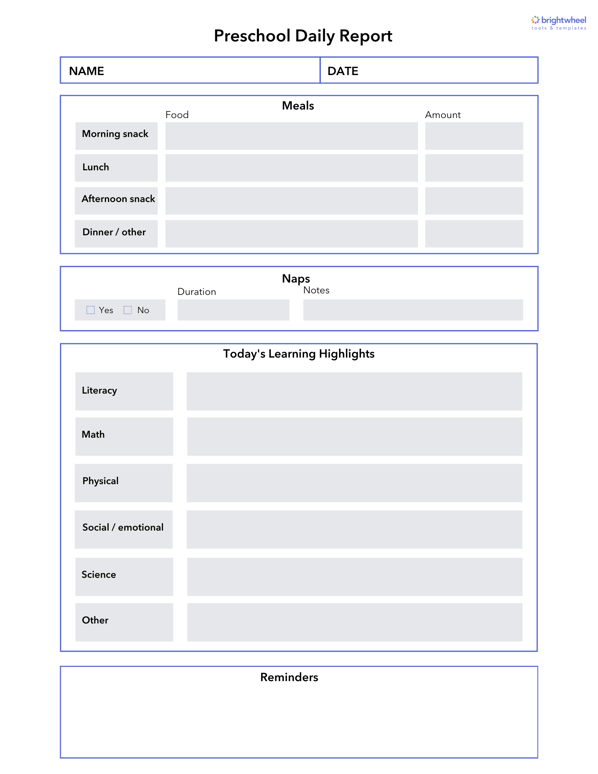
Daily preschool progress report
This preschool daily report template tracks daily activities like meals and naps, as well as each day's learning highlights in key skill areas.
Quarterly progress report
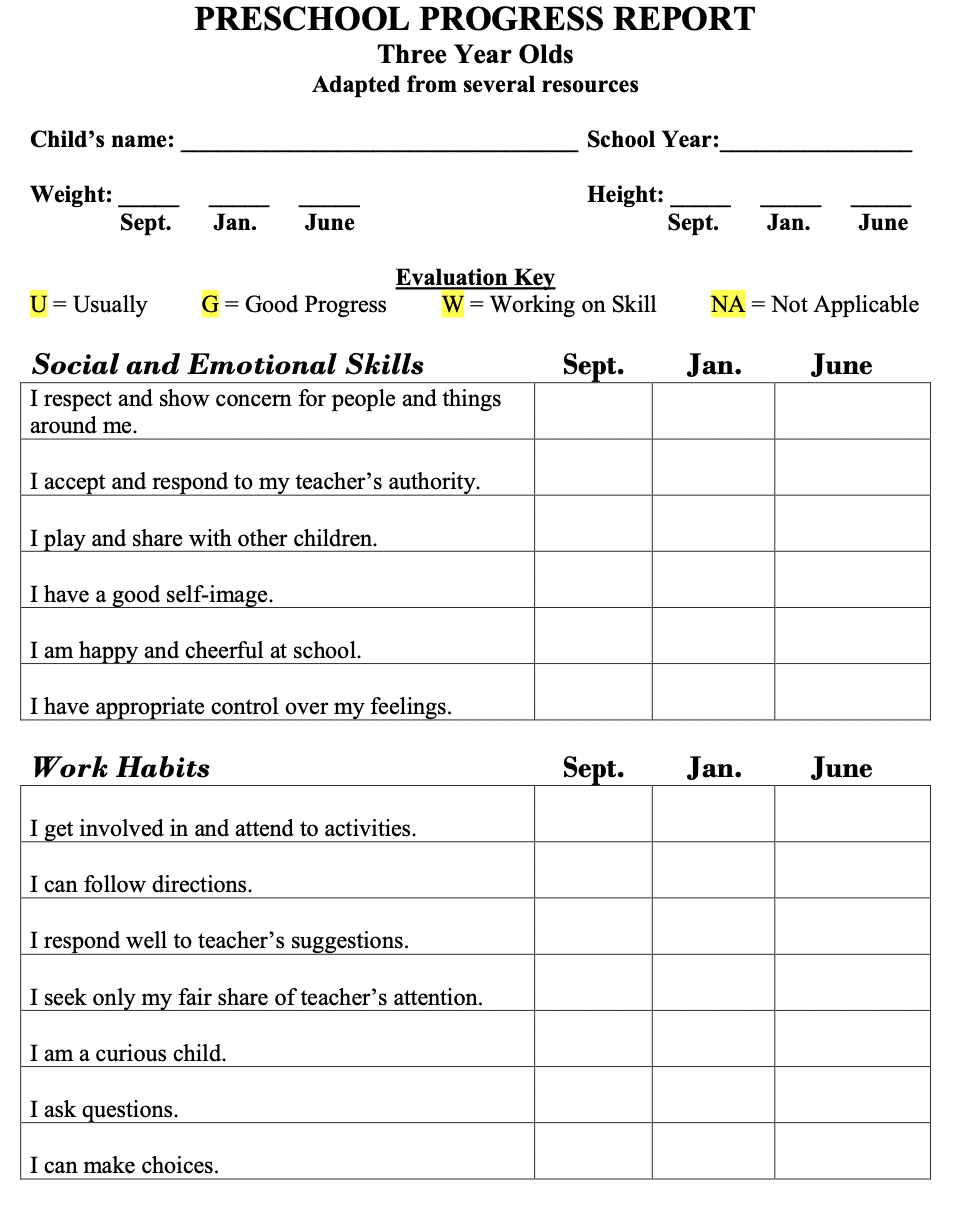
A quarterly preschool progress report gives children ample time to learn new things and develop skills. This template tracks and assesses skills on a quarterly basis.
Skills progress report
This template records progress on specific skills such as reading/writing, social-emotional, and motor skills.
Frequently asked questions about preschool progress reports
What is included on a preschool progress report?
A preschool progress report includes comments on all aspects of a child's development, including social-emotional skills, physical skills, cognitive skills, and language and literacy skills. You should include observations on a child's accomplishments and areas of improvement, and note any unique behavior.
How do you write a progress report for a preschool student?
To write a progress report, include developmental achievements and any specific challenges the child has, and discuss the progress they make. End by stating any goals and next steps, and provide families with any resources or suggestions to support their child.
How do I gather information for a preschool progress report?
- Be observant. Watching how children interact with other children, solve their problems, or play can help you evaluate their motor skills, problem-solving abilities, and social-emotional skills.
- Be present and listen. When you're around children, you're a part of their world. Pay attention and listen to how they reason.
- Understand the curriculum you're using. Understanding your curriculum ensures you're clear on your expectations of the children, making it easier to support and evaluate them.
How often do I issue a preschool progress report?
Children are rapidly growing and reaching new milestones in their preschool years, so a regular reporting cadence will show a child's clear progress from one point to another. While the exact frequency will vary depending on your program, it is a good idea to schedule your formal preschool progress reports quarterly or semi-annually.
Can childcare software help with preschool progress reports?
Yes, childcare software streamlines the creation of preschool progress reports and saves administrators valuable time. It allows educators to quickly log daily activities, track developmental milestones, and instantly share updates with families through a secure platform.
How do preschool progress reports differ from traditional report cards?
A preschool progress report focuses on developmental milestones and observational learning rather than letter grades. It highlights a child's physical, social, and cognitive growth instead of academic test scores, providing families with a holistic view of early childhood development.
Final thoughts
Preschool progress reports help ensure children get the support they need in early childhood. They can focus on a short-term goal like improving a challenging behavior, or a long-term goal like improving their reading and writing skills. As an educator, you can choose the best format and reporting cadence that fits the needs of your children as you guide them to the next stage of their development.