As a childcare provider, your top priority is the safety and well-being of the children in your care. While you plan for daily activities and learning, it's equally important to prepare for unexpected events like power outages. A sudden loss of electricity can disrupt routines, compromise safety, and create anxiety for children, staff, and families. Having a well-thought-out daycare emergency plan for a power outage ensures you can manage the situation calmly and effectively.
This article will walk you through the essential steps to prepare your childcare program for a power outage. From creating a solid daycare emergency plan for a power outage to communicating effectively with families, you'll learn how to navigate a blackout while keeping everyone safe and secure.
Understanding the risks of power outages
A power outage is more than just an inconvenience; it presents several risks for a childcare program. Without electricity, essential systems fail. Heating, ventilation, and air conditioning (HVAC) stop working, which can lead to uncomfortable or even unsafe temperatures inside your facility. Refrigeration for food and medication is lost, posing health risks.
Lighting is another major concern. Poor visibility increases the risk of accidents and can be frightening for young children. Furthermore, security systems, including door locks and alarms, may become inoperable, creating potential safety issues. By understanding these risks, you can better prepare to mitigate them and ensure the safety of both children and staff during an outage.
Creating a power outage emergency plan
A detailed emergency plan is the foundation of your power outage preparedness. This written document outlines specific procedures for staff to follow, ensuring a consistent and organized response.
Key components of an emergency plan
Your power outage plan includes the following key components:
- Immediate actions: Define the first steps staff should take when the power goes out, such as checking for downed power lines, assessing the immediate safety of the environment, and calming the children.
- Roles and responsibilities: Assign specific roles to each staff member. For example, one person might be in charge of the emergency kit, another responsible for checking on the children, and a third designated as the communications lead.
- Evacuation procedures: If conditions become unsafe and you need to evacuate, your plan should detail the evacuation route, a designated meeting point, and procedures for accounting for all children and staff.
- Communication protocol: Outline how and when you will communicate with families, emergency services, and your licensing agency.
- Child supervision and activities: Plan for how you will keep children safe and engaged without electricity. This could include a list of non-electronic activities, like story time with flashlights, sing-alongs, or simple crafts.
Training staff and families
A plan is only effective if everyone knows how to use it. Conduct regular training sessions and drills with your staff so they are familiar with their roles and responsibilities. Practice scenarios to build confidence and identify any gaps in your plan.
It's also important to inform families about your emergency procedures. Share a summary of your power outage plan in your family handbook and send reminders periodically. Let them know how you will communicate with them during an emergency and what your policies are regarding early pickups.

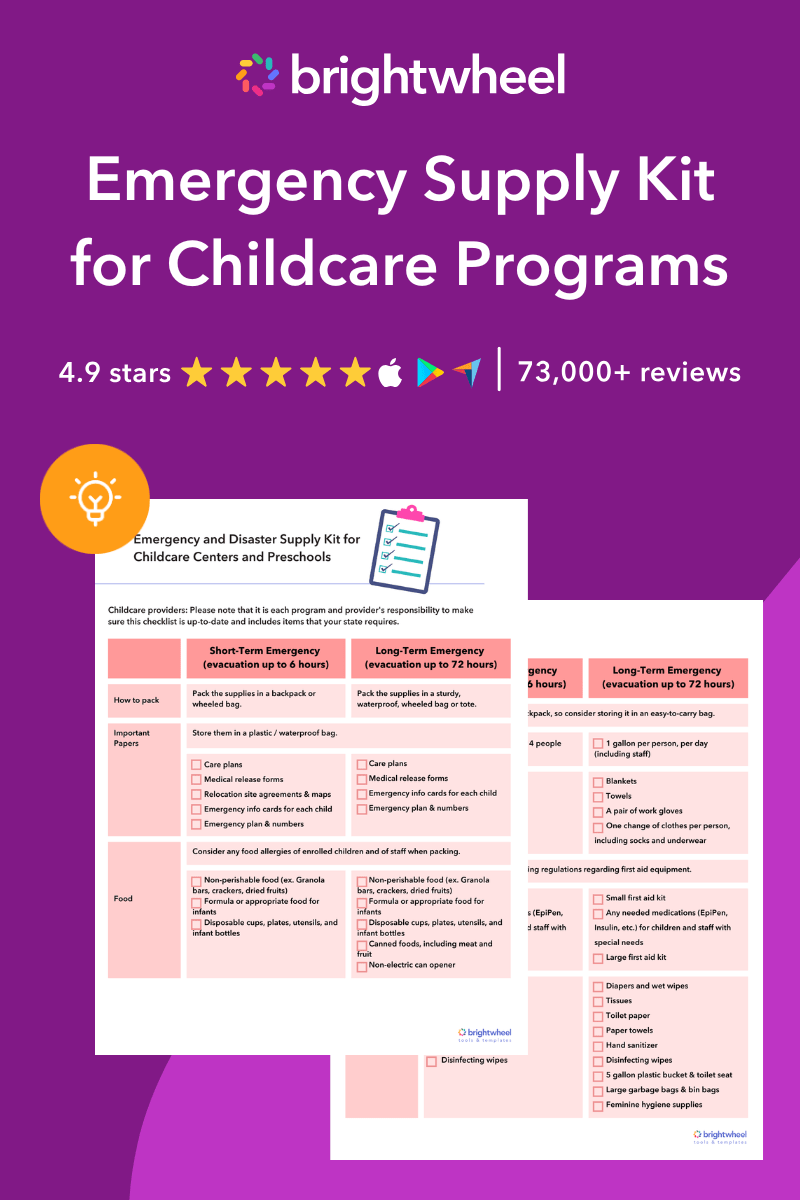
Emergency Supply Kit
Download this free quick reference guide and templates to prepare your childcare program for an emergency.
Essential supplies for a power outage kit
An emergency kit with essential supplies is a must-have for any childcare program. This kit should be easily accessible and regularly checked to ensure all items are present and in working order.
Checklist of must-have items
Your power outage kit should contain:
- Lighting: Battery-powered or crank-operated flashlights and lanterns. Avoid using candles, as they pose a fire hazard.
- Communication: A battery-powered or hand-crank radio for receiving updates from authorities, along with a fully charged power bank for mobile phones.
- First-aid supplies: A well-stocked first-aid kit with bandages, antiseptic wipes, pain relievers, and any specific medical supplies needed for children in your care.
- Food and water: A three-day supply of non-perishable food and bottled water for all children and staff.
- Important documents: A binder with emergency contact information for all families, staff contact lists, and copies of children's medical records.
- Activities: Books, puzzles, coloring supplies, and other non-electronic games to keep children occupied.
- Sanitation: Hand sanitizer, wet wipes, and extra supplies for diapering.
Storing and maintaining the kit
Store your emergency kit in a cool, dark place that is easy for all staff to access. Assign a staff member to check the kit every six months. During these checks, they should replace any expired food, water, or medications and test all battery-operated equipment.
Communication strategies during a power outage
Clear and timely communication is crucial during a power outage. Families will be anxious for information about their children and your program's status.
Keeping families informed
Establish a primary method for communicating with families during an emergency. While power and internet outages may disrupt your usual channels, having a plan B is essential. A robust childcare management platform can be invaluable in these situations.
For instance, brightwheel’s communication features allow you to send real-time updates to all families simultaneously from a mobile device. As long as you have a cell signal, you can send messages to keep families informed about the situation, share updates on the children's well-being, and provide instructions for early pickups if necessary. This centralized communication system ensures that all families receive consistent information promptly.
Using alternative communication methods
If your primary communication method fails, have backup options. A phone tree, where designated staff members call a small group of families, can be an effective way to spread information. You can also update your program's social media pages from a mobile device if you have a data connection. Whatever methods you choose, make sure families are aware of them in advance.
Post-power outage procedures
Once the power is restored, your work isn't over. You need to ensure your facility is safe before resuming normal operations.
Assessing damage and safety
Conduct a thorough inspection of your childcare program. Check for any damage to the building, equipment, and electrical systems. Dispose of any perishable food that may have spoiled in refrigerators and freezers. Ensure that all systems, including HVAC, security alarms, and fire detectors, are functioning correctly.
Communicating updates to families
After you have assessed the situation, communicate with families to let them know when your program will reopen or if there are any changes to your operating hours. Provide a brief summary of how the situation was handled and thank them for their patience and cooperation. This transparency helps build trust and reinforces your commitment to their children’s safety.
Prioritizing preparedness for peace of mind
Preparing for a power outage requires careful planning and regular practice, but the effort is well worth it. A comprehensive emergency plan, a well-stocked supply kit, and a clear communication strategy will give you, your staff, and your families peace of mind. By prioritizing safety and preparedness, you can confidently lead your childcare program through any unexpected event.