Flu season is one of the most challenging times of the year for childcare providers. With sniffles, coughs, and fevers seemingly spreading overnight, keeping your program running smoothly can feel like an uphill battle. Young children are naturally curious and explore their world through touch, which unfortunately makes childcare programs potential hotspots for germs during peak illness months.
However, a proactive approach to cleaning and disinfecting can make a world of difference. By implementing strategic cleaning protocols, you can significantly minimize the spread of the flu, protect the health of your children and staff, and give families peace of mind knowing their little ones are in a safe environment.
This article covers practical cleaning strategies designed specifically for childcare settings. You will learn how to identify high-risk areas, strengthen your daily cleaning routines, and establish proactive measures that stop germs in their tracks.
Prioritizing germ hotspots
When flu season hits, not all surfaces are created equal. While general tidiness is important, your main defense against the flu virus lies in targeting specific "high-touch" areas where germs love to linger.
Identifying critical surfaces
Did you know that flu viruses can live on hard surfaces for up to 48 hours? This durability means that a door handle touched by a sick child on Monday morning could potentially infect another child or staff member on Tuesday afternoon. To break the chain of transmission, you need to identify and target the surfaces that are touched most frequently throughout the day.
Make a list of these primary targets in your facility:
- Doorknobs and handles
- Light switches
- Faucet handles and toilet flushers
- Cabinet pulls and drawer handles
- Shared sign-in tablets or kiosks
- Stair railings
- Phones and computer keyboards used by staff
Cleaning vs. sanitizing vs. disinfecting
It is crucial to understand that "cleaning" is not the same as "disinfecting," especially during flu season. Using the right method at the right time is key to effective germ control.
- Cleaning: This process uses soap and water to remove visible dirt, grime, and some germs from surfaces. It improves the appearance of the facility but does not necessarily kill all bacteria and viruses.
- Sanitizing: This lowers the number of germs on surfaces to a safe level, as determined by public health standards. This is often used for food contact surfaces.
- Disinfecting: This process uses stronger chemicals to actually kill germs on surfaces.
During flu season, disinfecting is crucial for those high-touch points identified above. However, remember that you cannot effectively disinfect a dirty surface. If a table is covered in cracker crumbs or glue, you must clean it first with soap and water before applying a disinfectant.
Frequency matters
A once-a-day wipe-down is often insufficient when the flu is circulating in your community. Experts recommend disinfecting high-touch hotspots at least twice a day—once mid-day (perhaps during nap time) and once after closing.
If you are experiencing a known outbreak in your area or within your specific program, you should increase this frequency. Consider assigning a staff member to do a "disinfecting loop" of doorknobs and faucets every few hours.

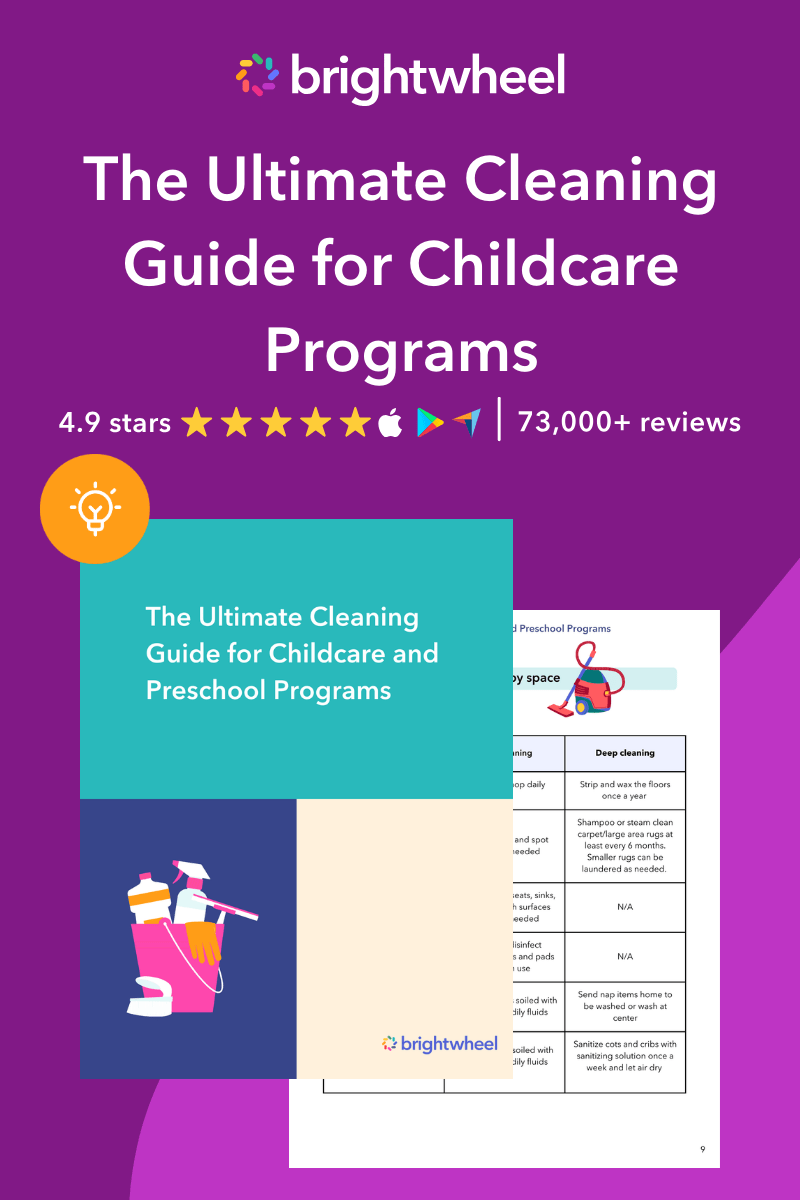
The Ultimate Cleaning Guide for Childcare Programs
Use this guide to create safe and healthy spaces for children, staff, and families.
Adjusting your schedule for peak season
Your standard cleaning routine works well for most of the year, but flu season requires a more aggressive approach. Strengthening your daily routines ensures that you catch germs before they have the chance to spread.
Classroom hygiene protocols
Classrooms are where the magic of learning happens, but they are also where germs are most easily shared. Adjusting how you manage classroom materials can reduce exposure risks.
Toys and manipulatives
Young children put everything in their mouths. During flu season, implement a strict "yuck bucket" system. If a toy goes into a child's mouth, it goes immediately into a designated bin to be cleaned and sanitized before another child can touch it. Additionally, consider rotating toys more frequently. Having fewer toys out at one time makes it easier to clean a batch thoroughly at the end of the day.
Soft surfaces
Soft items like plush toys, dress-up clothes, and pillows can harbor viruses. During peak flu months, aim to wash these items weekly using the hot water setting on your washing machine. If a child who is visibly ill has touched a soft item, remove it immediately for laundering.
Nap mats and cots
Sleep is vital for immune health, but nap time can also lead to cross-contamination. Wipe down sleeping surfaces daily with an appropriate disinfectant. When storing mats or cots, ensure they are stacked or placed so that the sleeping surface of one mat does not touch the sleeping surface of another.
Common areas and entryways
Germs often enter the building from the outside world. By fortifying your entryways and common areas, you create a buffer zone for your program.
The check-in station
The sign-in and sign-out period is high-traffic time. Keep a bottle of hand sanitizer and a canister of disinfectant wipes right next to your sign-in kiosk or clipboard. Encourage families to sanitize their hands immediately upon entering and to wipe down the pen or screen after use.
Floors
Because infants and toddlers spend a significant amount of time crawling, sitting, and rolling on the floor, these surfaces need extra attention. Vacuum and mop daily to remove dirt and virus particles that may have settled. Be sure to use a disinfectant cleaner that is safe for crawling surfaces, ensuring no harsh chemical residues are left behind where little hands and knees will be.
Proactive measures for a healthy environment
While cleaning is reactive, there are several proactive measures you can take to make your environment less hospitable to the flu virus.
Improving indoor air quality
Viruses can hang in the air, especially in enclosed spaces during winter when doors and windows are typically shut. Improving ventilation is a simple but powerful tool.
Whenever weather permits, open windows periodically—even for just five or ten minutes—to circulate fresh air and dilute airborne virus particles. Check your HVAC system to ensure it is working efficiently and replace filters regularly. For high-traffic rooms or classrooms with limited airflow, consider using portable air purifiers equipped with HEPA filters to capture airborne contaminants.
Staff and child hygiene habits
The best cleaning routine in the world cannot replace good personal hygiene. Reinforce healthy habits with both your staff and the children in your care.
Handwashing
Make handwashing a fun and non-negotiable part of the day. Reinforce the "20-second rule" by teaching children songs that last the full duration of the wash. Supervise handwashing strictly upon arrival, before eating, after restroom use, and after coming in from outside.
Respiratory etiquette
Teach children the "vampire cough" (coughing into the elbow rather than the hand). Ensure that tissues are readily available in every room and that staff encourage children to dispose of used tissues immediately, followed by handwashing.
Clear communication policies
Your partnership with families is essential during flu season. Communicate your sick policy clearly and compassionately. Remind families that keeping a sick child home is the best way to protect the entire community.
Equally important is supporting your staff. Encourage staff members to stay home if they show flu symptoms. While being short-staffed is difficult, having an influenza outbreak spread to your entire teaching team is far worse for your operations and the children's safety.
Maintaining a healthy program
Navigating flu season requires vigilance, from targeting high-touch surfaces to reinforcing hygiene habits and improving air quality. It is a team effort that involves administration, teachers, cleaning crews, and families.
By tightening your cleaning protocols now, you create a safer, healthier environment that allows children to learn and play without unnecessary interruption. A clean program is a healthy program, and your dedication to these details protects the wellbeing of everyone who walks through your doors.