Rent is one of the largest and most consistent costs for childcare programs. Whether operating from a commercial building or a rented home, understanding how to account for rent as a business expense is crucial for financial planning and tax deductions.
This guide outlines what qualifies as a rent expense for both commercial and home-based childcare providers. We’ll cover the importance of tracking rent, how to maintain proper records, and how to claim deductions accurately.
What qualifies as a rent expense?
A rent expense refers to the amount paid to use a property for your business. Here's how it applies based on your program’s location:
Commercial space rent
If you lease a building exclusively for your childcare program, the entire rent payment qualifies as a business expense. This applies to spaces used 100% for business purposes.
Rent for in-home programs
If you rent a home or apartment where you also live, you can deduct a portion of your rent. The deductible amount depends on the business use of your home, calculated using:
- Percentage of space used for business: Divide the square footage dedicated to childcare by your home’s total square footage.
- Percentage of time used for business: Divide the total hours your business operates annually (including prep and cleaning) by the total hours in a year (8,760).
The result, called the time-space percentage, determines how much of your rent qualifies as a business expense.
Why tracking rent expenses is important
Tracking rent payments carefully is essential for managing finances and preparing for taxes. Here's why:
- Accurate budgeting: Rent is a predictable, recurring expense. Proper tracking helps you set tuition rates, manage cash flow, and plan effectively.
- Tax deductions: Rent is a major deductible expense. Without proper records, you risk missing out on deductions and increasing your tax liability.
- Proof of business operations: For commercial providers, lease agreements and receipts verify your business location. In-home providers need these records to claim home office deductions.
- Simpler tax filing: Organized rent records make tax preparation easier and help you maximize deductions.
How to track rent expenses effectively
Keeping detailed, organized records is critical for accurately deducting rent expenses.
1. Save lease agreements and receipts
Retain copies of your lease agreements and proof of rent payments, such as:
- Canceled checks
- Bank statements
- Receipts from landlords or property managers
Store these documents in a labeled file—either physical or digital—for easy access.
2. Use a business bank account
Pay rent from a dedicated business account to separate personal and business expenses. For in-home providers, transfer the business portion of rent from this account to your personal account each month for clear tracking.
3. Calculate deductions for in-home programs
In-home providers can calculate rent deductions using IRS Form 8829, "Expenses for Business Use of Your Home." Record the total rent paid and apply the time-space percentage to determine the deductible amount.

Income and Expense Worksheet
Use this worksheet to track your finances, make smarter spending decisions, and create a monthly budget.
Are rent expenses tax deductible?
Yes, rent is a deductible expense, but the method varies depending on your program’s location:
- Commercial spaces: Deduct 100% of rent payments as a "Rent or Lease" expense on Schedule C (Form 1040).
- In-home programs: Deduct the business portion of rent through the home office deduction using Form 8829. The deduction is based on your time-space percentage and is transferred to Schedule C. Consult a tax professional to ensure accurate calculations and to maximize your deductions.
Simplify financial management with Brightwheel
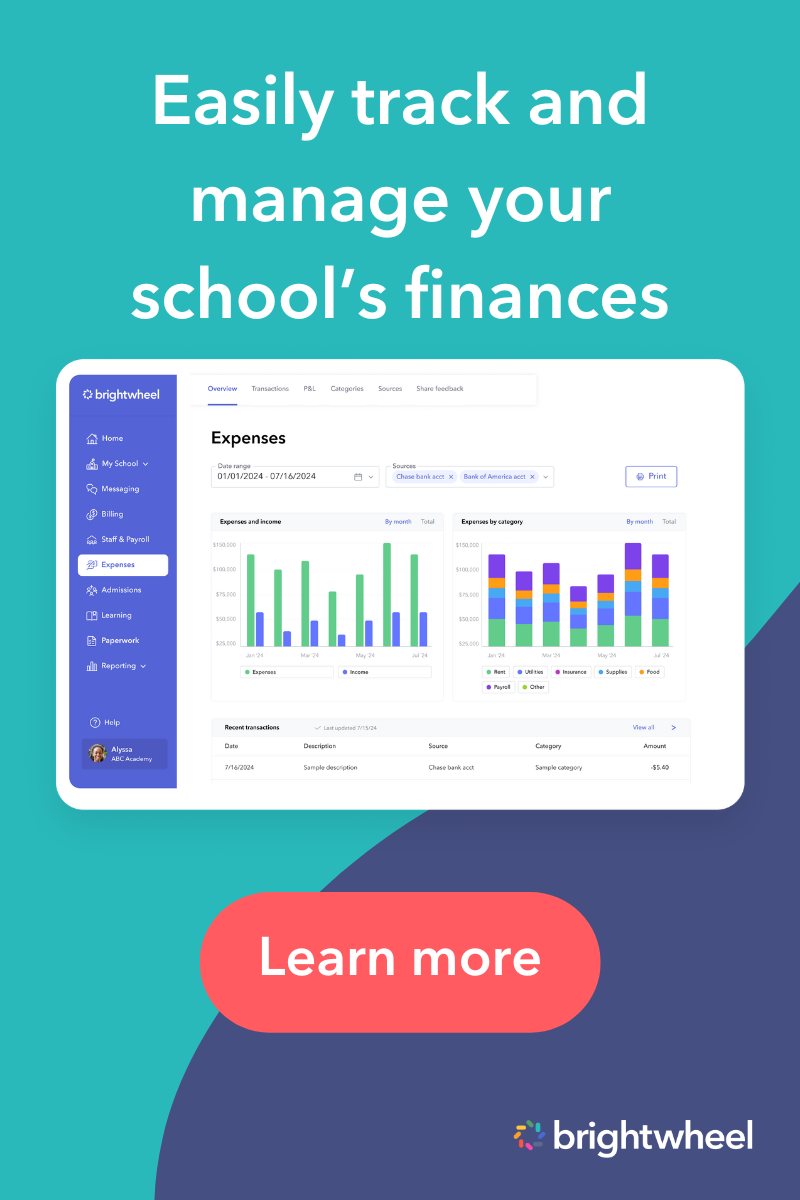
Managing rent and other expenses is easier with the right tools. Brightwheel provides an all-in-one platform for childcare providers to track expenses, monitor budgets, and organize records. Key features include:
- Expense tracking: Record rent payments, store lease documents, and generate financial reports with ease.
- Integrated payroll: Manage staff wages, automate tax filings, and sync time tracking with payroll.
- Streamlined tax prep: Simplify tax filing with organized records and maximize deductions confidently. Brightwheel saves you time on administrative tasks and ensures your finances stay accurate and accessible.
Brightwheel saves you time on administrative tasks and ensures your finances stay accurate and accessible.
Build a strong financial foundation
Rent is a foundational expense for running a childcare program. By tracking payments and claiming deductions correctly, you can improve budgeting, reduce taxes, and stay organized. With detailed records and tools like Brightwheel, you can manage expenses with confidence and focus on providing a nurturing environment for the children in your care.
Frequently asked questions about rent expenses
Can I deduct the cost of rental insurance as a childcare business expense?
Yes, rental insurance related to your childcare program is generally deductible. If the policy covers risks specific to your childcare space (like liability or property coverage for business use), be sure to keep documentation for your records.
What if I operate from my own home and rent a portion to my business?
If you use part of your home exclusively for your program, you may deduct the business-use portion of your rent using the IRS time-space percentage. Keep detailed records of the area used and the hours your program operates to calculate your deduction accurately.
Can I expense security deposits or key fees paid when signing a lease?
Security deposits are typically not deductible unless they’re nonrefundable or applied directly to rent. Key fees and similar charges can generally be deducted as business expenses in the year paid.
How should I track and record rent expenses for accounting and tax purposes?
- Keep copies of your lease agreements and all payment receipts.
- Use a dedicated business bank account for rent payments to separate business and personal expenses.
- Record payments regularly in your bookkeeping system, noting the date, amount, and purpose.
- For in-home programs, apply your time-space percentage when recording each month’s deductible rent portion.
Are rent expenses tax deductible for both commercial and in-home providers?
Yes, but the method differs. Commercial programs usually deduct 100% of rent as a business expense. In-home providers must calculate and deduct only the portion related to business use, typically using IRS Form 8829.
Is there anything I should avoid doing when tracking rent expenses?
Avoid mixing personal and business rent payments in your accounts. Always back up your expense claims with proper records and consult a tax professional for specific situations or if you have questions about complex scenarios.