A child medical consent form is a critical document for any childcare program. It gives you the authority to seek medical care for a child in the event of an emergency when their family can’t be reached. This form ensures healthcare professionals have the information they need to provide the best care while protecting your program from potential liability.
In this article, we’ll explain what a child medical consent form is, why it’s essential in a childcare setting, the key details it should include, and best practices for managing these forms. By the end, you’ll know exactly how to implement this important tool to keep children safe and build trust with families.
What is a child medical consent form?
A child medical consent form is a legal document signed by a child's family that grants a childcare provider permission to seek medical treatment for the child in an emergency. Its primary purpose is to eliminate any delay in care when a child is sick or injured and a legal guardian is not present or cannot be contacted.
Having this form on file means you can authorize necessary medical attention, from a minor scrape that needs a doctor's visit to a more serious situation requiring emergency services.
What are the key components of a comprehensive form?
To be effective, a medical consent form must be thorough. It should provide a clear and complete picture of the child's health, enabling medical personnel to make informed decisions. Here are the essential components every form should include:
- Child’s personal information: This includes the child's full name, date of birth, and home address.
- Medical history and allergies: This section should detail any pre-existing medical conditions (like asthma or epilepsy), known allergies (to food, medication, or environmental factors), and any previous significant injuries or surgeries.
- Immunization records: A record of the child's immunizations is often required by state licensing and is crucial for medical providers to know.
- Emergency contact information: Include primary and secondary contacts, such as grandparents or trusted friends, with multiple phone numbers for each.
- Insurance details: The form should list the child’s health insurance provider, policy number, and group number to streamline administrative processes at a medical facility.
- Consent for treatment: This is a clear statement signed by the family authorizing the childcare program to obtain medical treatment for their child in an emergency. It often specifies permissions for both non-emergency and emergency care.

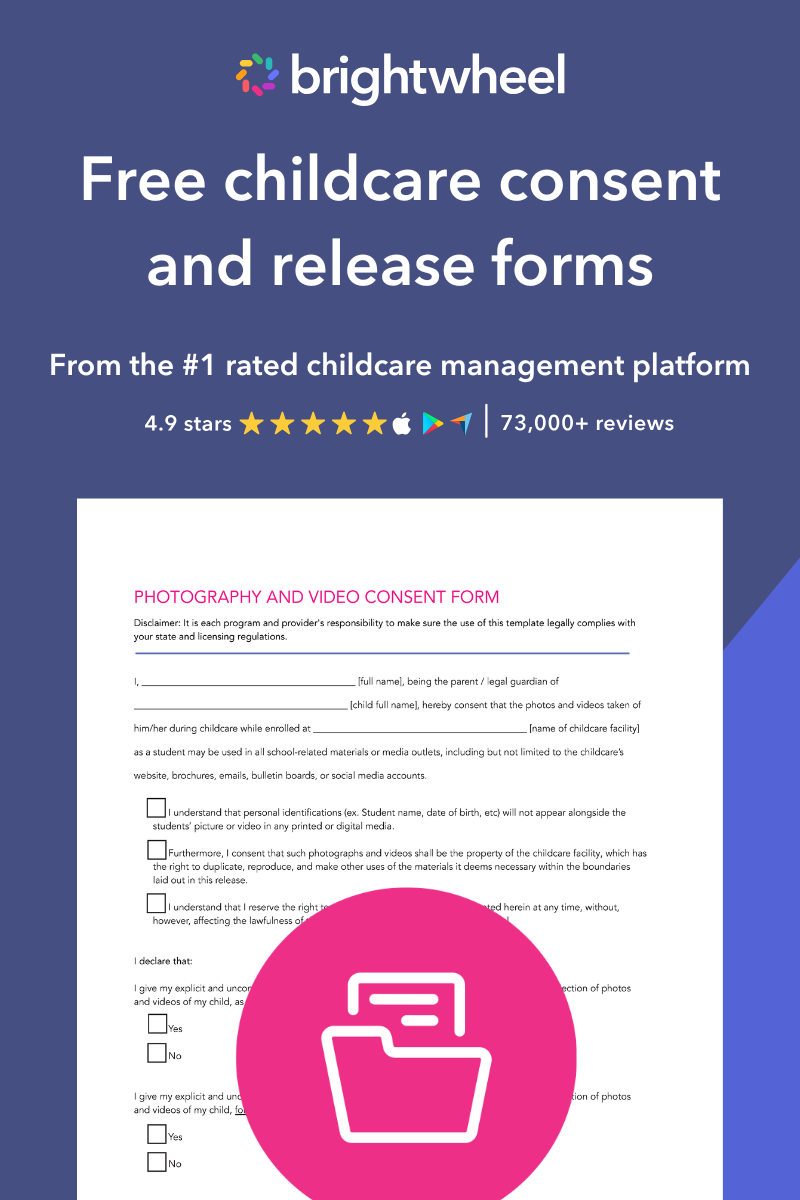
Childcare Consent and Release Forms
Use this free set of fillable PDF templates to obtain required approvals and permissions from families.
Why are child medical consent forms essential?
A properly completed medical consent form is one of the most important documents in a child's file. Its value becomes clear in an emergency, where every second counts.
Enables quick action in emergencies
When a child has a severe allergic reaction, a fall on the playground, or a sudden high fever, you need to act fast. A medical consent form allows you to seek immediate medical help without having to wait for a family member's permission. This ability to act decisively can make a significant difference in the outcome of a medical emergency.
Provides necessary medical information
When emergency services arrive or when a child is taken to an urgent care clinic, medical professionals will need a detailed health history. The consent form provides this vital information at a glance, including allergies, medications, and existing health conditions. This context helps ensure the child receives safe and effective treatment.
Protects the childcare program from liability
In addition to ensuring child safety, these forms also protect your program legally. By obtaining signed consent, you demonstrate that you have acted responsibly and within the scope of the permission granted by the family. This documentation can protect you from liability in the event of an unforeseen medical incident, proving that you followed established protocols and acted in the child's best interest.
What are the best practices for implementing medical consent forms?
Implementing medical consent forms successfully requires making them accessible, ensuring accuracy, updating them regularly, storing them securely, and training your staff. Having the forms is the first step, but managing them effectively is just as important.
Follow these five best practices to ensure your system is organized, secure, and reliable:
- Make the forms easily accessible: Include the medical consent form as part of your enrollment packet. Using digital forms can simplify the process for families, allowing them to fill out and sign documents from their computer or phone.
- Ensure forms are completed accurately: Before accepting a form, review it to make sure all sections are filled out completely and legibly. If any information is missing, follow up with the family immediately.
- Regularly update forms: A child's health information can change. It's crucial to have families review and update their consent forms at least once a year or whenever there's a significant change, such as a new allergy or updated insurance information.
- Store forms securely: These documents contain sensitive personal health information and must be stored confidentially. Whether you use a locked file cabinet for paper forms or a secure digital platform, ensure that access is limited to authorized staff.
- Train staff on how to use the forms: All staff members should know where the forms are located and how to use them in an emergency. Conduct regular training sessions and drills to ensure everyone feels confident and prepared to act when needed.
What are some real-life scenarios that require a consent form?
The importance of a child medical consent form is best understood through real-world examples, such as allergic reactions, minor injuries, and sudden illnesses. Consider these three situations:
- Allergic reaction: A toddler in your care tries a new snack and begins to show signs of an allergic reaction, including hives and difficulty breathing. Because you have a medical consent form on file, your staff can immediately call 911 and provide the paramedics with the child's medical history, including a note about a suspected nut allergy.
- Minor injury: During outdoor play, a preschooler falls and sustains a deep cut that may require stitches. The family isn't answering their phones. With the consent form, you can take the child to a nearby urgent care clinic for treatment, preventing further complications.
- Sudden illness: A child suddenly develops a high fever and becomes lethargic. The consent form allows you to seek prompt medical evaluation, where a doctor can diagnose the issue and begin treatment without delay.
In each of these cases, the existence of a signed medical consent form allowed the childcare provider to act quickly and responsibly, ensuring the child received the necessary care.
How can brightwheel streamline your paperwork?
Brightwheel's childcare forms feature allows you to build and send digital forms for your families to complete, including a comprehensive child medical consent form. Managing paperwork can be time-consuming, but brightwheel makes it easy. This tool is designed to help you gather all the essential information you need while saving you administrative time.
The benefits of going digital with brightwheel include:
- Ease of use for families: Families can easily complete and sign forms from their phone, tablet, or computer, streamlining the enrollment and update process.
- Centralized and secure storage: All completed forms are securely stored in one place, making them easy for authorized staff to access in an emergency.
- Automated reminders: You can set up automated reminders for families to review and update their information annually.
Using brightwheel's forms feature ensures every authorization is accurately recorded and easily accessible, allowing you to focus on what matters most—providing excellent care.
Fortify your program’s safety protocols
By implementing a robust system for collecting, updating, and managing medical consent forms, you ensure that you are ready to handle any medical situation with confidence and care. A child medical consent form is more than just a piece of paper; it is a cornerstone of your program’s commitment to safety, preparedness, and trust.
Frequently asked questions
Q: How often should a child medical consent form be updated?
A: A child medical consent form should be updated at least once a year. You should also request an immediate update from families if the child receives a new medical diagnosis, develops a new allergy, or changes health insurance providers.
Q: Does a child medical consent form need to be notarized?
A: While notarization is not strictly required in all states for routine childcare emergencies, having the document notarized adds an extra layer of legal validation. You should check your specific state childcare licensing requirements to ensure full compliance.
Q: Can a family refuse to sign a child medical consent form?
A: Yes, a family can refuse to sign, but most childcare programs make signing the form a mandatory requirement for enrollment. Without this form, a childcare program assumes a high level of liability and risks delaying life-saving treatment in an emergency.