Childcare consent forms are formal, written agreements that outline specific permissions and responsibilities between a childcare program and families. They are critical tools that provide necessary medical information for safe care, protect your business from legal liability, and establish mutual trust.
This article explains why consent forms are essential for your childcare program. You'll learn the types of consent needed, key elements to include, and best practices for managing them—giving you peace of mind to focus on delivering great early education.
Why updated consent forms are essential
Updated childcare consent forms are essential because they provide vital health information for safe care, prevent legal speculation, and build a foundation of trust with families. Consent and release forms are a cornerstone of a well-run childcare program. Let's look at why they are so important.
Provide necessary information for proper care
Consent forms give you the vital information needed to care for each child safely. From known allergies and medical conditions to specific dietary needs, having this information documented ensures every staff member is aware of a child's unique requirements. In an emergency, a medical consent form can authorize you to seek necessary treatment, a critical step that could make all the difference.
Build trust with families
When you present families with clear, detailed consent forms, you show them that their child's safety and well-being are your top priorities. It demonstrates professionalism and a commitment to open communication. By giving families the chance to opt in or out of specific activities, like having their child's photo shared online or participating in field trips, you respect their boundaries and build a relationship based on mutual trust and understanding.
Prevent speculation and provide a legal basis for action
Every family has different comfort levels and expectations. Can you apply a common brand of sunscreen? Is it okay to share a photo of their child on your program's social media page? You can't guess the answers to these questions. Consent forms remove the guesswork by getting explicit, written permission. This documentation protects your program from legal liability.
For example, administering medication without documented consent could lead to serious legal issues if an adverse reaction occurs. These forms provide a clear legal basis for your actions, as long as they align with the family's instructions.

Childcare Consent and Release Forms
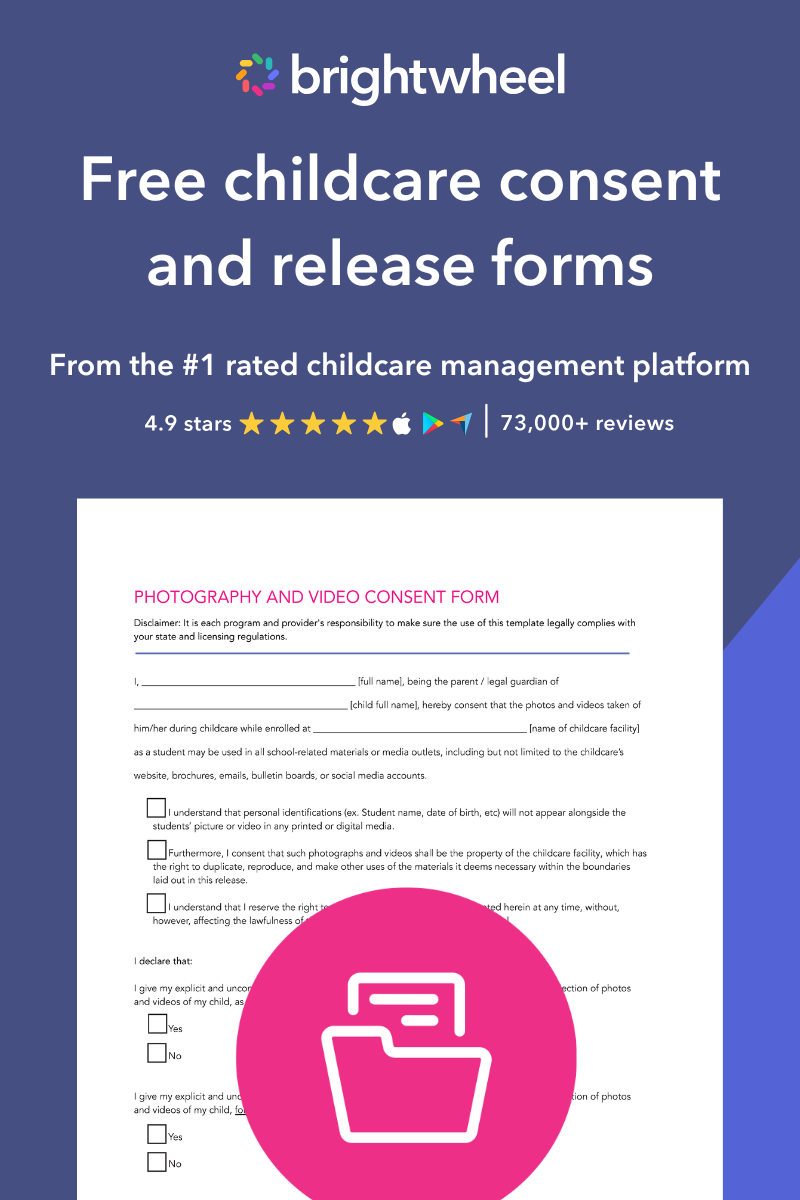
Use this free set of fillable PDF templates to obtain the required approvals and permissions from families
Types of childcare consent forms
The most common types of childcare consent forms include medical consent forms, photography and video releases, and field trip permissions. Consent forms should be tailored to specific situations. While you may have a general release form, several distinct types are necessary for running a comprehensive childcare program.
Medical consent forms
These are arguably the most critical forms you'll manage. They authorize you to provide medical care and administer medication.
- Child medical consent form: This form gives you permission to seek emergency medical treatment for a child. It should include emergency contacts, preferred hospitals, and any known medical conditions or allergies.
- Medication administration form: If a child requires regular medication, this form provides detailed instructions, including dosage, timing, and potential side effects. It ensures medication is administered correctly and safely.
- Sunscreen and diaper cream forms: Obtaining written consent to apply common topical creams like sunscreen or diaper cream protects your program, especially if a child has a previously unknown allergy.
Photography and video consent forms
In the digital age, sharing photos and videos is a great way to keep families engaged and market your program. However, privacy is a major concern. A photography and video consent form outlines how you intend to use media featuring the children. It should give families specific options to consent to different uses, such as internal sharing with families, use in promotional materials, or posting on social media.
Family consent form for field trips
Off-site activities are a fantastic learning opportunity for children, but they come with additional risks. A field trip parent consent form should detail all the specifics of the trip, including the date, location, mode of transportation, and scheduled activities. This ensures families are fully informed and have officially agreed to their child's participation, releasing your program from certain liabilities associated with the trip.
Key elements of a consent form
A comprehensive childcare consent form must include clear language, specific details about the permissions granted, and a legally binding liability release statement. To be effective, your consent forms need to be well-structured and easy to understand. Here are the essential components to include.
Clarity
Use simple, clear language that families can easily understand. Avoid jargon or overly legalistic terms. The purpose of the form should be immediately apparent. A clear title, like "Consent for Field Trip to the City Zoo," helps everyone know exactly what they are signing.
Specificity
Vague forms can lead to misunderstandings. Be as specific as possible. For a photo release form, list the exact ways you might use the photos. For a field trip form, provide every relevant detail. You should also include fields for the parent or guardian's full name, the child's name, the date, and a signature.
Liability release statement
Including a liability release statement is crucial for protecting your business. This clause states that the parent or guardian releases your childcare program from liability for incidents that may occur, provided you have acted in accordance with the consent given and have not been negligent. It’s always a good idea to have your forms reviewed by a legal professional to ensure they comply with your state's regulations.
Best practices for managing consent forms
To effectively manage childcare consent forms, programs should distribute them during enrollment, store them securely to protect sensitive data, and require families to update them annually. Creating the forms is only half the battle. You also need a solid system for managing them.
Collection and distribution
Distribute consent forms to families as part of your enrollment packet and collect them before a child's first day. For time-sensitive forms, like for a field trip, give families plenty of advance notice. Using a digital system can make distribution and collection much more efficient.
Secure storage
Consent forms contain sensitive personal information and must be stored securely but accessibly. Whether you use a locked filing cabinet or a secure digital platform, ensure that authorized staff can quickly access the information when needed, especially in an emergency.
Regular updates
Circumstances change. A child might develop a new allergy, or a family might change their mind about photo permissions. It’s best practice to have families review and update their consent forms annually. You should also inform them that they can submit a new form at any time to reflect changes.
Frequently asked questions
Q: How often should a childcare program update consent forms?
A: Childcare programs should ask families to review and update consent forms at least once a year. It is also best practice to allow families to submit new forms anytime their medical or personal circumstances change.
Q: Do I need a separate consent form for applying sunscreen?
A: Yes, you should use a specific consent form for topical creams like sunscreen or diaper cream. This ensures you have written permission and protects your program if a child has an unexpected allergic reaction.
Q: Can digital childcare consent forms replace paper ones?
A: Yes, digital consent forms are legally binding and often more efficient than paper copies. Using childcare software allows you to securely store digital forms and easily track which families have completed them.
Strengthen your program with solid practices
Updated consent forms are a fundamental part of running a responsible and professional childcare program. They are your first line of defense against legal liability, a tool for building trust with families, and a critical resource for ensuring the health and safety of every child in your care. By creating clear, specific forms and managing them effectively, you can streamline your operations and gain the confidence that comes with being prepared.