Childcare consent forms are legally binding documents that give your childcare program permission to care for children in specific situations, such as emergencies or field trips. Having the right childcare consent forms on file is critical to protecting the children in your care and your business.
Enrollment season brings new families and children to your program, making it easy to overlook the stack of paperwork you need to collect. Consent forms build a trusting relationship between your program and the families you serve. They ensure everyone understands your safety, privacy, and emergency procedures. Without them, a simple misunderstanding can escalate into a legal liability. Preparing these forms in advance lets you focus on welcoming children and helping them feel at home.

Childcare Consent and Release Forms
Use this free set of fillable PDF templates to obtain the required approvals and permissions from families.
Why do childcare consent forms matter for your program?
Childcare consent forms matter because they provide legal authorization for you to care for a child in specific situations. They protect your staff by giving them clear guidelines on how to act during a medical emergency or when administering medication.
Clear documentation also builds trust with families. When you present comprehensive, professional consent forms, it signals that you take child safety and privacy seriously. It shows that you have planned for potential scenarios and established proper protocols. This level of professionalism reassures families that their children are in capable hands.
5 essential consent forms for your childcare program
The five essential childcare consent forms every program needs are a child medical consent form, medication administration form, photography and video consent form, field trip consent form, and sunscreen permission form.
While every program may have unique needs based on its activities and state regulations, there are five core forms that every provider should have ready before a child’s first day.
1. Child medical consent form
A child medical consent form authorizes you and your staff to seek emergency medical treatment for a child if their guardians are unreachable. This is the most critical document to have on file for unexpected emergencies.
Imagine a scenario where a child has a severe allergic reaction or sustains an injury on the playground. In these moments, every second counts. Having a signed medical consent form allows medical professionals to begin treatment right away without waiting for a family member to arrive. This form must include the child’s physician information, insurance details, and a clear statement authorizing emergency care.
2. Medication administration form
A standardized medication administration form gives your staff written permission to give a child short-term or daily medication. This reduces liability and ensures children receive the correct dosage at the right time.
Managing medications for children requires strict protocols and unwavering attention to detail. Best practices suggest following the "Five Rights" of medication administration: the right patient, the right drug, the right dose, the right route, and the right time.
Your form should provide space for families to document these details clearly, along with specific instructions on storage and potential side effects. This documentation creates a clear log that keeps children safe and protects your staff from errors.
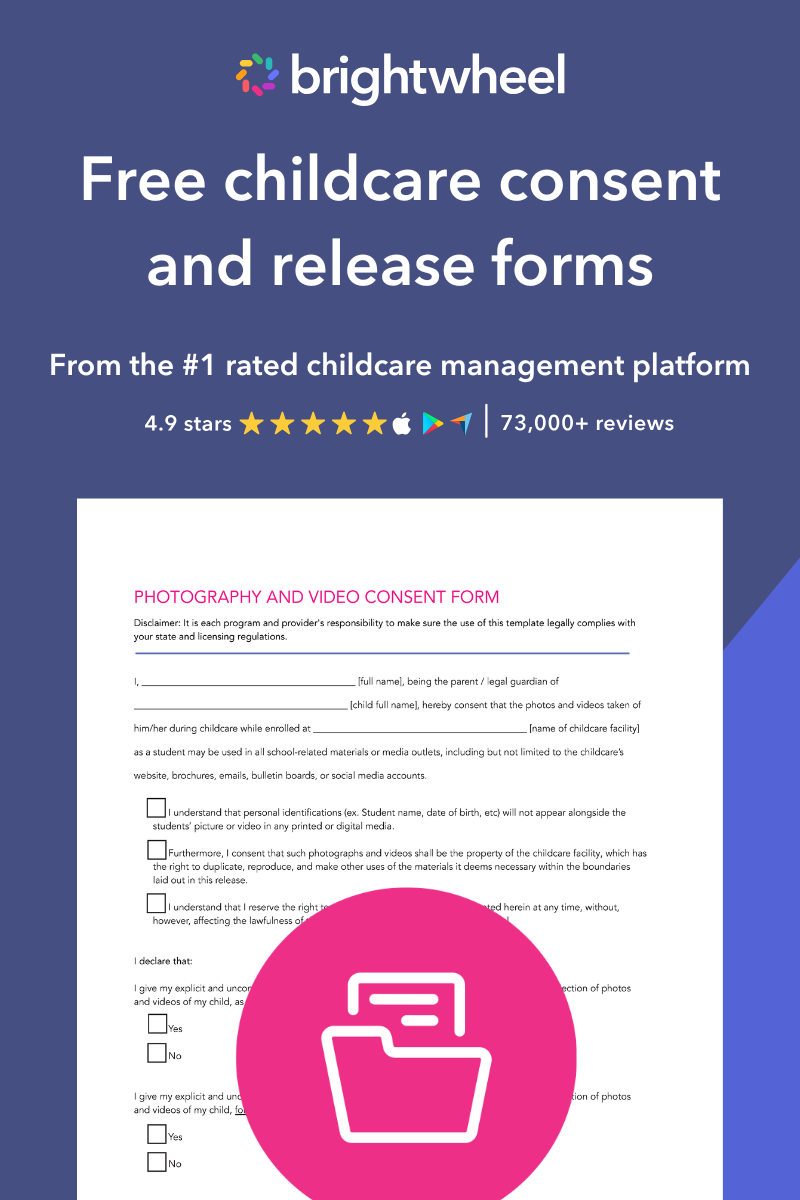
3. Photography and video consent form
A photography and video consent form allows families to specify exactly how your childcare program can use their child's image. This protects the child's digital footprint and helps you avoid privacy disputes.
You may want to share photos of daily activities or use images for marketing your program, but you must respect each family's privacy preferences. Some families might feel comfortable with photos shared internally on a parent communication app but object to public social media posts. Others might prefer no photos at all. Offering clear options, such as "internal use only," "marketing materials," or "social media," demonstrates respect for their boundaries.
4. Field trip consent form
A parent consent form for field trips provides specific legal authorization to take children off-site. It should outline the destination, date, time, method of transportation, and supervision ratios.
Field trips are excellent learning opportunities, but they come with unique risks. Whether you walk to a nearby park or take a bus to a museum, you need explicit permission for these excursions. The form must also include emergency contact information specific to the day of the trip. By having families sign this form, you ensure they are fully informed about the logistics and risks.
5. Permission to apply sunscreen form
Your program needs a permission to apply sunscreen form because many state licensing bodies classify sunscreen as a topical medication that requires authorization.
Beyond compliance, this form is highly practical for health and safety. Children have different skin sensitivities, and some react poorly to specific ingredients found in generic sunscreens. This form lets families authorize the use of a specific brand they provide or opt into the brand your program supplies. This ensures children stay protected from sun exposure while avoiding potential skin reactions.
What are the best practices for managing childcare consent forms?
The best practices for managing childcare consent forms include capturing essential details clearly, adding a liability release, and distributing the forms early using digital tools.
Having the right forms is only the first step. Managing them effectively ensures your documentation process remains seamless and secure.
Include essential details
Every form should clearly indicate your childcare program's name and the specific type of form to prevent confusion. Avoid generic titles. Ensure you include clear fields for the child’s full name, the guardian’s full name, signatures, and the date signed.
Add a liability release
A liability release statement acknowledges that the family releases your business from liability in specific scenarios, provided you act within agreed-upon guidelines. You should include this release where appropriate to protect your program. Always consult with a legal professional or check your state’s licensing regulations to ensure your liability language remains enforceable and compliant.
Distribute and collect early
Distribute childcare consent forms well in advance, ideally as part of an enrollment packet or during an orientation session.
Do not wait until the first day of school to hand out paperwork. Early distribution gives families time to read everything thoroughly and ask questions. Using digital tools can significantly streamline this process. Many modern childcare management platforms let you send digital forms that families can sign directly from their phones. This saves paper and guarantees you have a secure, easily accessible digital record for every child.
Frequently asked questions about childcare consent forms
Q: How often should I update my childcare consent forms?
A: You should update your childcare consent forms at least once a year, typically during the annual enrollment period. However, you should also request updates immediately if a child's medical condition, medication, or emergency contact information changes.
Q: Can I use digital signatures for childcare consent forms?
A: Yes, most states allow digital signatures for childcare consent forms. Using a secure childcare management platform to collect electronic signatures saves time, reduces paper waste, and keeps records easily accessible.
Q: What happens if a family refuses to sign a mandatory consent form?
A: If a family refuses to sign a mandatory form, such as a child medical consent form, you may need to deny enrollment to protect your program from liability. Always explain the legal and safety reasons behind the form to help families understand its importance.
Streamline your enrollment process today
Collecting consent forms is an essential part of running a childcare program. These documents serve as a safety net for the children, their families, and your business.
Take the time to review your current forms before enrollment season kicks into high gear. A little preparation now will save you hours of administrative work later, allowing you to focus on providing a nurturing and safe environment for the children in your care.