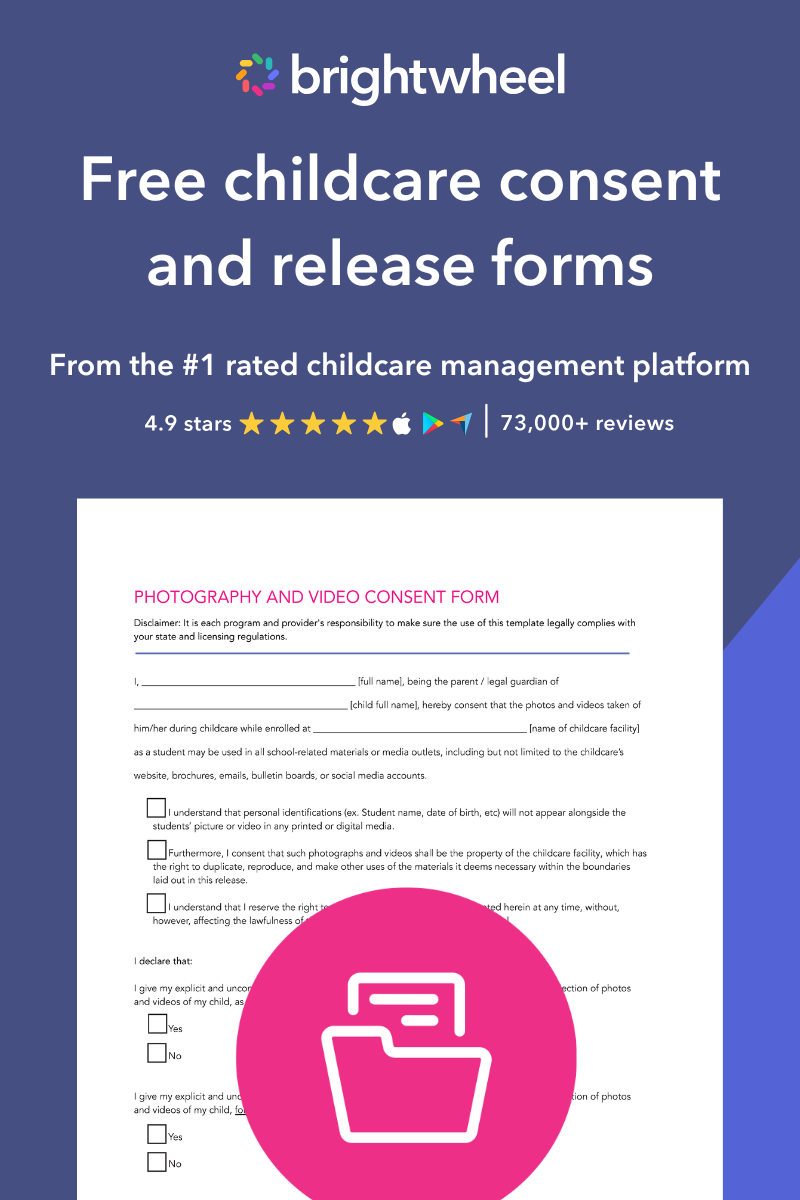
Photo and video consent forms are legal documents that allow families to control how a childcare program captures and shares images of their children. In the age of social media, these forms are essential for protecting child privacy, building trust with families, and marketing your childcare program responsibly.
What is a photography and video consent form?
A photo and video consent form is a formal agreement where a family gives a childcare program permission to capture, use, and distribute images or recordings of their child.
This isn't just a simple checkbox; it's a detailed agreement that outlines how, where, and for what purpose a child's likeness will be used. For childcare programs, this consent is vital for protecting children's digital privacy. Without clear guidelines, a child's image could be shared publicly without their family's knowledge or approval, creating a permanent digital footprint they can't control.
A well-crafted consent form establishes clear boundaries, ensuring that every photo and video shared aligns with the family's wishes. This proactive approach shows professionalism and a deep respect for the children and families in your care.

Childcare Consent and Release Forms
Use this free set of fillable PDF templates to obtain required approvals and permissions from families.
Why are photography and video consent forms essential?
Photo and video consent forms are essential because they protect children's digital footprints, allow you to market your childcare program responsibly, and build trust with families. Clear consent forms are a cornerstone of a safe, transparent, and trustworthy childcare program.
How do these forms protect a child's digital footprint?
Every photo posted online contributes to a child's digital footprint, which can have long-term implications. Consent forms give families control over their child’s online presence. By providing specific options, you allow them to decide what they are comfortable with, whether it's sharing photos in a private family communication app or using them on public social media channels. This careful management helps protect children from potential privacy risks down the line.
How can you market your childcare program responsibly?
A photography and video consent form allows you to identify which images are cleared for marketing purposes so you can promote your business safely. Photos and videos of happy children engaged in learning are powerful marketing tools that offer an authentic glimpse into your program's environment. However, this promotional need must be balanced with family preferences. This ensures you can create compelling promotional materials without compromising the trust or privacy of any family in your community. According to marketing best practices, internal sharing works best when you need to update enrolled families, while public marketing is better suited for attracting new enrollments.
Why does this build trust with families?
Openly communicating about your policies for using photos and videos demonstrates transparency, which directly builds trust with families. Trust is the foundation of the relationship between a childcare program and its families. When families see that you take their privacy seriously, it reinforces their confidence in your program. This commitment to respecting their boundaries fosters stronger, more positive relationships and shows that you prioritize the well-being of their children above all else.
What are the key components of a photo and video consent form?
The key components of a photo and video consent form include clear identification of your program, specific usage permissions, a liability release, and details about the duration of the consent. A comprehensive consent form should be clear, specific, and easy for families to understand to protect both the child and your program.
What is clear identification?
Your form should start with the basics by clearly stating your program's name and identifying the document as a "Photography and Video Consent Form." This ensures families know exactly what they are signing from the very beginning.
How do you set specific usage permissions?
Instead of a single "yes or no" option, provide a checklist with specific permissions so families can customize their consent. One of the most critical sections is where you outline how the photos and videos will be used. Consider including options such as:
- Internal use only: For classroom displays, internal staff training, or private communications with the child's family.
- Private program communications: For use in secure family communication apps (like brightwheel) or private newsletters.
- Public marketing materials: For use on your program's public website, brochures, or flyers.
- Social media: For posting on your program’s official social media channels (e.g., Facebook, Instagram).
What is a liability release?
A liability release statement is a standard legal protection that states the family releases the childcare program from any liability related to the use of the photos or videos, as long as the use is within the agreed-upon terms. It's always a good practice to have your forms reviewed by a legal professional to ensure they comply with local regulations.
How do you define duration and revocation?
The form should specify how long the consent is valid, which is often for the duration of the child's enrollment. Crucially, it must also explain the process for families to revoke or change their consent. This ensures families remain in control and can update their preferences if their circumstances or comfort levels change.
What are the best practices for implementing consent forms?
Best practices for implementing consent forms include communicating clearly with families, collecting forms before a child's first day, training your staff on privacy policies, and regularly updating permissions. Having a consent form is only half the battle; how you manage the process is just as important for building trust and ensuring compliance.
Why is communication key?
Communicate with families in writing, explaining why you are asking for consent and how you plan to use the photos and videos. Don't just hand over a stack of forms. Distribute the forms as part of your enrollment packet so you have them on file before the child's first day. This proactive approach avoids confusion and shows that you value their input.
How should you handle timely collection and management?
Collect all consent forms before a child starts at your program to avoid any delays or mix-ups. Once collected, have a system to manage them. Whether you use a digital platform or a physical filing system, ensure that the information is organized and easily accessible to all staff members who might be taking photos or videos.
How do you train your staff on consent policies?
Train your team on who has given consent and for what specific uses to ensure every staff member understands your consent policies. For example, a teacher should know which children can't have their photos posted on social media. Consistent enforcement is critical to upholding the promises you've made to families.
Why are regular updates necessary?
Policies and family preferences can change, so you should review and update your consent forms periodically, such as at the start of each new school year. This is also a good opportunity to remind families of your policies and give them a chance to revise their permissions. Staying current ensures your practices remain aligned with regulations and family needs.
How do consent forms work in real-world scenarios?
In real-world scenarios, having a clear consent policy allows staff to quickly verify which children can be photographed, while lacking a policy can lead to accidental privacy violations and upset families.
Imagine it's the week of your annual spring festival. Your classrooms are buzzing with activity, and you capture a perfect photo of a group of children laughing as they participate in an art project.
- Scenario 1: With a clear consent policy. Before posting the photo on your program's Facebook page, your staff quickly checks the consent forms. They see that one child in the photo does not have permission for social media. They choose a different, equally wonderful photo where all children have the necessary consent. Families appreciate the beautiful post, and the privacy of every child is respected.
- Scenario 2: Without a clear consent policy. The staff posts the photo without checking. The family of the child without consent sees the post and is upset, feeling their privacy has been violated. This erodes trust and could lead to a difficult conflict.
These examples highlight how having a robust consent system in place prevents problems and reinforces your program's commitment to safety and respect.
Build trust with clear consent
A thorough photography and video consent form is a fundamental tool for upholding shared privacy responsibilities, protecting children, and building trust between families and childcare providers.
In our digital world, managing a child’s privacy is a shared responsibility. Using consent forms protects children, respects families, and allows you to share the magic of your program with confidence. By implementing clear policies and communicating openly, you can build a strong foundation of trust that will benefit your entire community.
Frequently asked questions
Q: Can a family change their photo and video consent preferences later?
A: Yes, families can revoke or update their photo and video consent forms at any time. Childcare programs should provide a clear, written process for families to adjust their permissions as their comfort levels change throughout the year.
Q: Do I need a consent form if I only share photos internally with enrolled families?
A: Yes, you still need a photo and video consent form even for internal sharing. Families must explicitly agree to have their child's image shared on private communication apps, newsletters, or classroom displays.
Q: Are digital consent forms legally binding for childcare programs?
A: Yes, digital consent forms are legally binding as long as they clearly outline the permissions and include a verifiable electronic signature from the child's legal guardian.