Field trips are often the highlight of the year for children. Whether it's a visit to a local farm, a museum, or a simple walk to the neighborhood library, these excursions provide hands-on learning experiences that extend far beyond the classroom walls. However, taking a group of excited children off-site comes with a unique set of responsibilities and potential risks.
For childcare administrators and directors, ensuring safety is the top priority. While you can't predict every bump in the road, you can prepare for them. A robust parent consent form is your first line of defense. It ensures that families are fully informed about the details of the trip and have given their explicit permission for their child to participate. More than just a "permission slip," this document is a vital tool for risk management, medical preparedness, and clear communication.
This article will walk you through exactly what a field trip parent consent form is, why it matters, and the essential elements you need to include to keep your children safe and your business protected.
What is a field trip parent consent form?
A field trip parent consent form is a legal document that provides families with specific details about an upcoming excursion and obtains their written permission for their child to attend. It serves as a mutual agreement between the childcare program and the family.
By signing the form, parents or guardians acknowledge that they understand the nature of the activity, including where their child is going, how they will get there, and what activities they will be doing. It also confirms that they accept the potential risks involved.
For childcare providers, these forms serve three critical purposes:
- Authorization: They grant legal permission for the child to leave the premises under your supervision.
- Information gathering: They collect up-to-date emergency contacts and medical information relevant to the trip.
- Liability protection: They help protect your program from liability claims in the event of an unforeseen incident, provided you have acted within your professional capacity.
Think of the consent form as your safety net. It ensures everyone is on the same page before the bus even leaves the parking lot.

Childcare Consent and Release Forms
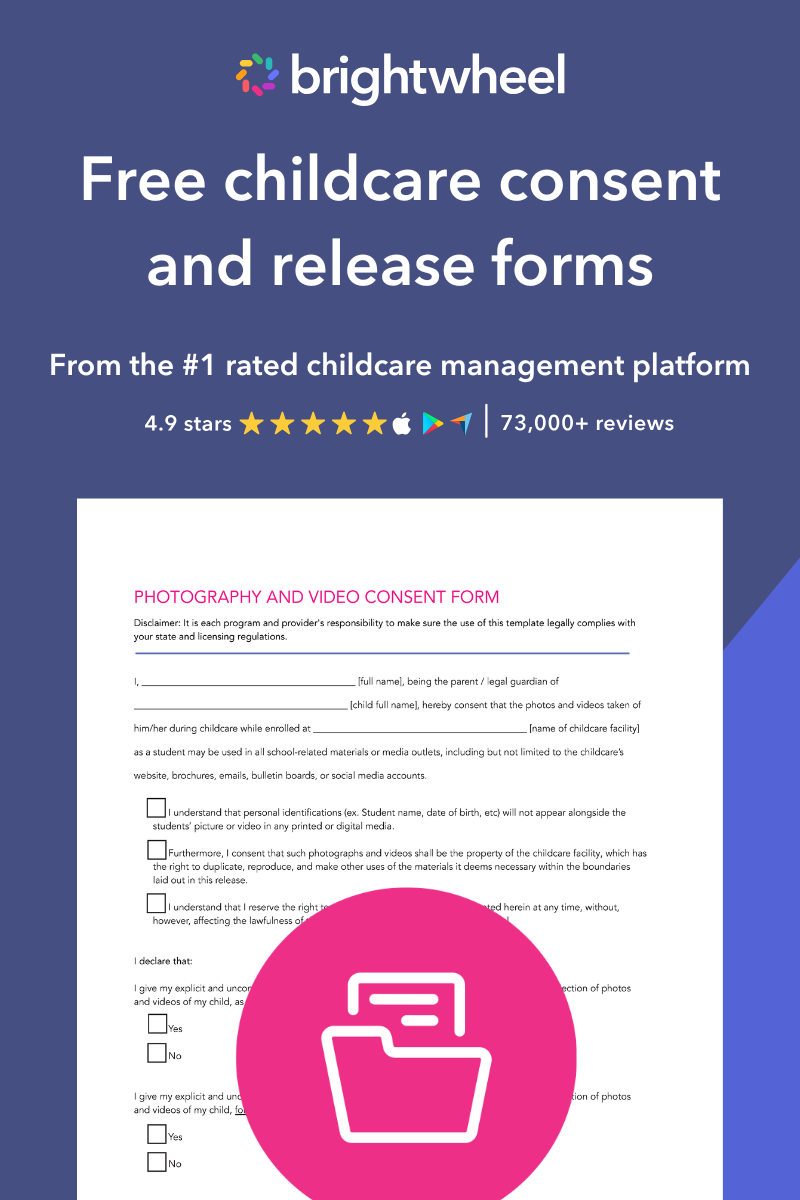
Use this free set of fillable PDF templates to obtain the required approvals and permissions from families.
Essential elements of a field trip parent consent form
To be effective, your consent form needs to be comprehensive. A vague form (e.g., "I give permission for my child to go on the trip") leaves too much room for misinterpretation. Instead, your form should answer the "who, what, where, when, and how" of the trip.
Here are the specific elements you must include:
Date, time, and location
Clarity is key. Include the specific date of the trip and the exact hours the children will be away from your facility. Be sure to list the full name and address of the destination. If the trip involves multiple stops (e.g., a museum followed by lunch at a nearby park), list all locations.
- Example: "Tuesday, October 12th. Departing facility at 9:00 AM; returning at 2:00 PM. Destination: City Science Museum, 123 Main St."
Transportation methods
Families need to know how their children will be traveling. Will you be using a chartered bus, a school bus, or public transportation? Will staff members be driving personal vehicles, or will you be walking?
Specifying the mode of transport manages expectations and allows families to ask questions if they have safety concerns regarding car seats or seatbelts.
Emergency contact information
Even if you have emergency contacts on file at your program, it is best practice to request them again on the permission slip. This ensures you have the most current phone numbers right at your fingertips during the trip, rather than needing to access digital files remotely or call back to the center during a crisis.
Medical information and allergies
Field trips can introduce new environments that trigger allergies (e.g., pollen at a park or animals at a petting zoo). Include a section for families to list:
- Current allergies (food, environmental, insect stings)
- Required medications (like EpiPens or inhalers)
- Specific instructions for medical care
Make sure your staff brings these specific medications and the corresponding medical consent forms with them on the trip.
Liability waiver
A liability waiver is a legal statement where the family agrees not to hold the childcare program responsible for injuries or accidents that might occur during the trip, provided the program has taken reasonable safety precautions.
Note: Liability laws vary by state. It is highly recommended that you have a legal professional review the specific wording of your liability waiver to ensure it is enforceable in your jurisdiction.
Parent/guardian signature and date
This is the most important part. You need a clear space for the parent or legal guardian to print their name, sign their signature, and date the form. This confirms they have read, understood, and agreed to all the terms listed above.
Why field trip parent consent forms are important
While paperwork can sometimes feel administrative, consent forms play a crucial role in the safety ecosystem of your childcare program.
Ensuring child safety
The primary goal of any field trip is a safe, fun experience. Consent forms force you to plan ahead. By gathering medical info and emergency contacts, you prepare your staff to handle allergic reactions or injuries immediately. Knowing exactly who has permission to go also helps with attendance tracking and headcount management throughout the day.
Legal protection
If an accident happens—a child trips and needs stitches, or a minor fender bender occurs on the bus—a signed consent form acts as evidence that families were informed of the trip's details and accepted the inherent risks. Without a signed form, you could face significant legal challenges and liability issues that could threaten your business.
Informed decision-making
Transparency builds trust. When you provide families with all the details, you allow them to make the best decision for their child. A parent might decide to skip a trip to a petting zoo if their child has a severe animal allergy, or they might volunteer to chaperone if they are worried about transportation. This open line of communication prevents misunderstandings and strengthens your partnership with families.
Best practices for distributing and collecting consent forms
Having a thorough form is only the first step; you also need a system to get them signed and returned.
Give families plenty of notice
Don't spring a permission slip on families the day before a trip. Aim to distribute forms at least two weeks in advance. This gives families time to review the details, ask questions, and make necessary arrangements.
Make the form accessible
Paper forms often get lost in backpacks. Consider using digital tools to streamline the process. Software like brightwheel allows you to send digital consent forms directly to families' smartphones. They can sign instantly, and the document is automatically saved to the child’s digital profile—no lost papers, no filing cabinets.
Follow up with reminders
Families are busy. If you haven't received a form a few days before the trip, send a friendly reminder. A quick message via your childcare app or an email can ensure 100% participation. Be firm on your policy: no form, no trip. It is unsafe and potentially illegal to take a child off-site without written consent.
Prioritize safety on every adventure
Field trips are magical opportunities for growth and exploration. By using comprehensive parent consent forms, you ensure that these adventures remain safe and positive experiences for everyone involved. These documents protect the children by ensuring staff are prepared for medical needs, protect families by keeping them informed, and protect your program from unnecessary liability.