A sunscreen permission form is a written document that authorizes childcare staff to apply sunscreen to a child in their care. It specifies the approved product, SPF level, any skin sensitivities or allergies, and application instructions — giving staff everything they need to protect children safely and in accordance with each family's wishes.
With warmer weather comes more outdoor play, and sun safety becomes a top priority for child care programs. While applying sunscreen is a simple protective measure, doing so without documented consent can expose your program to legal liability and put children at risk of allergic reactions. A sunscreen permission form is a non-negotiable part of any sun safety policy.
This article explains why these forms are essential, what to include, how to use them effectively, and how to manage them efficiently.
Why do childcare programs need a sunscreen permission form?
A sunscreen permission form accomplishes several critical goals at once: it protects children's health, keeps your program legally compliant, and builds trust with families.
Does applying sunscreen require parental permission?
Yes — in most states, applying any substance to a child's skin, including common over-the-counter products like sunscreen, is classified as a topical application and requires documented parental consent. Many state childcare licensing regulations specifically require written permission before staff may apply sunscreen or other topical products. Applying sunscreen without this authorization can leave your program liable for any adverse reactions, regardless of how well-intentioned the action was.
What are the child health risks of skipping a permission form?
Some children have sensitive skin or known allergies to ingredients commonly found in sunscreens — including fragrances, oxybenzone, or certain preservatives. Without a permission form, staff have no way to know which products are safe for each individual child. A form allows families to specify the approved brand, note any known sensitivities, and prevent adverse reactions before they happen.
How does a sunscreen form build family trust?
A sunscreen permission form signals to families that you respect their role as the primary decision-makers in their child's care. It provides a formal channel for parents and guardians to communicate their preferences — whether that's a specific SPF level, a mineral-based formula, or a family-supplied product. When families see that your program follows through on those preferences, it reinforces confidence in your professionalism and attention to detail.

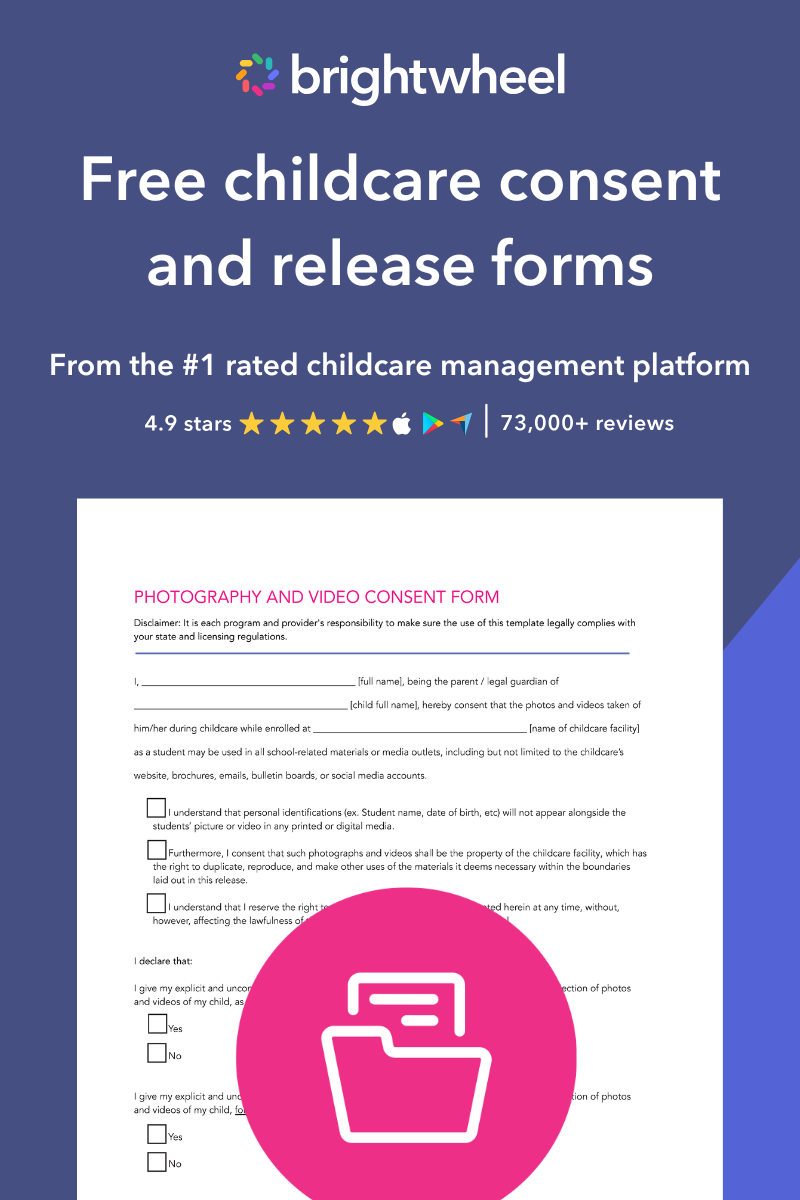
Childcare Consent and Release Forms
Use this free set of fillable PDF templates to obtain required approvals and permissions from families.
What should a childcare sunscreen permission form include?
To be effective, your permission form needs to be clear, comprehensive, and easy for families to complete. Every form should include the following fields:
-
Child's full name and date of birth
-
Sunscreen type and brand (family-provided or program-provided)
-
SPF level
-
Known allergies or skin sensitivities
-
Application instructions (frequency, areas to avoid, etc.)
-
Parental consent statement (see sample language below)
-
Parent or guardian signature and date
-
Liability release clause
What should the consent statement say?
The parental consent statement is the core of the form. It should be a clear, unambiguous declaration granting permission for staff to apply sunscreen as specified. Here is sample consent language you can adapt:
"I, [Parent/Guardian Name], authorize the staff of [Program Name] to apply sunscreen to my child, [Child's Name], according to the instructions I have provided above. I understand that staff will follow these instructions carefully and will use only the approved product specified on this form."
Always ensure your language complies with your state's child care licensing regulations, and consider having your liability release clause reviewed by a legal professional.
How should childcare programs manage sunscreen permission forms?
When should you collect sunscreen permission forms?
Collect sunscreen permission forms at enrollment or at least two weeks before outdoor season begins. This gives you enough time to follow up with families who haven't returned them before the first warm-weather day. Building form collection into your enrollment packet — alongside other consent documents like field trip and medication administration forms — makes this easier for families to complete everything at once.
How should sunscreen and forms be stored?
Store all sunscreens — both program-provided and family-provided — in a cool, dry location away from direct sunlight. Label each child's personal sunscreen clearly with their full name. Keep permission forms accessible to all staff, ideally linked directly to each child's profile so the right instructions are always at hand. Check expiration dates regularly and discard any outdated products.
How often should sunscreen permission forms be renewed?
A child's skin sensitivities can change, and families may wish to switch products from season to season. Make it a standard practice to have families review and resubmit sunscreen permission forms annually — and remind them that they can submit an updated form at any time if their child's needs or preferences change.
How should staff be trained on sun safety procedures?
All staff should be trained on your sun safety policy before outdoor season begins. This includes knowing where permission forms are stored, how to read each child's instructions, which products are approved for which child, and the proper technique and timing for application. Fifteen to thirty minutes of sunscreen before outdoor play is the general recommendation for effective protection.
How brightwheel helps you manage sunscreen permission forms
Managing paperwork is one of the most time-consuming parts of running a child care program. Keeping track of dozens of individual permission forms — and ensuring staff always have access to current, accurate information — is a significant administrative burden.
Brightwheel's childcare forms feature lets you digitize the entire process. You can create and send permission forms directly to families through the app, receive real-time notifications when forms are completed, and have all documents automatically linked to each child's profile for instant staff access. No paper to track down, no risk of outdated versions in circulation.
 Forms on brightwheel save me weeks of time each year. I no longer need to constantly check in with families to see if they've filled out the form. I can just send a message now and it's instant." — Pam M., Owner and Executive Director of Creative Learning Preschool in Aurora, CO
Frequently asked questions about sunscreen permission forms
Is a sunscreen permission form legally required for childcare programs?
In many states, yes. Childcare licensing regulations in most states require written parental consent before staff may apply any topical product to a child, including sunscreen. Requirements vary by state, so check your specific licensing guidelines to confirm what's required in your jurisdiction.
What happens if a child doesn't have a signed sunscreen permission form?
Without a signed form, staff should not apply sunscreen to that child. Contact the family to request a completed form, and in the meantime, keep the child in shaded areas during outdoor play to minimize sun exposure. Having a clear policy in place — and communicating it to families at enrollment — prevents this situation.
Can families provide their own sunscreen for their child?
Yes, and many families prefer to do so. Your permission form should include a field indicating whether the family is providing their own sunscreen or consenting to a program-provided product, along with the specific brand and SPF. Make sure all family-supplied sunscreens are clearly labeled with the child's name.
What is the difference between a sunscreen permission form and a medication administration form?
A medication administration form is used for prescription or over-the-counter medications administered by staff on a schedule. A sunscreen permission form specifically authorizes the topical application of sun protection products. Some states classify sunscreen alongside topical medications for licensing purposes — in those states, your sunscreen permission form may need to meet the same documentation standards as a medication administration form.
Should sunscreen permission forms be part of the enrollment packet?
Yes. Including sunscreen permission forms in your enrollment packet — alongside field trip consent, photography and video consent, and medication administration forms — simplifies the onboarding process for families and ensures your files are complete before a child's first day.
How should childcare programs handle children with sunscreen allergies?
The permission form should include a field for known allergies or skin sensitivities. If a family indicates an allergy to common sunscreen ingredients, work with them to identify an approved alternative — such as a mineral-based formula — before outdoor season begins. Document the approved product clearly on the form and ensure all staff are aware of that child's restrictions.