Medication administration in a childcare setting is the formal process of safely receiving, documenting, storing, and giving medicine to children in your care. When a child needs medication, families place an immense amount of trust in your program to handle it safely and accurately. Having clear, consistent procedures is essential for ensuring child safety, maintaining compliance, and building trust with families.
This article walks you through the essential components of safe medication administration in a childcare program. You will learn about proper documentation, the five rights of medication administration, staff training, and how to communicate effectively with families. By implementing these best practices, you can create a safe environment that protects the children in your care and reduces liability for your program.
What is a medication administration form?
A medication administration form is a formal document that gives your program legal permission to administer medication to a child. It provides all the necessary details to give the medicine correctly and serves as your foundational tool for safety and communication. Without a complete and accurate form, your program faces significant risks.
What are the key components of a medication administration form?
Every form must be clear, comprehensive, and easy for both staff and families to understand. Key components include:
- Child's information: Full name and date of birth.
- Family information: Full name, signature, and contact details of the parent or guardian.
- Medication details: Name of the medication, dosage, and the reason for administration.
- Administration instructions: The specific time, route (e.g., oral, topical), and any special instructions (e.g., "with food").
- Prescription information: Doctor's name and contact information, plus the prescription date.
- Start and end dates: The period for which the authorization is valid.
- Signature and date: A space for the parent or guardian to sign and date the form, confirming their consent.
How do you ensure accuracy and completeness?
To ensure accuracy, staff must review the form to confirm every field is filled out before accepting any medication. The information on the form must match the medication's label exactly. If you find any discrepancies, contact the family for clarification before administering the first dose. This simple check prevents serious errors.
Digital forms vs paper forms: Which is better?
Digital forms are better suited for childcare programs that want to reduce administrative hours, while paper forms work best when digital tools are completely unavailable. Digital forms offer significant advantages because you can easily manage, store, and access them quickly. With a system like brightwheel, families can fill out and sign forms electronically. The system stores this information securely in the child’s digital profile, making it instantly accessible to authorized staff. This reduces the risk of lost paperwork and ensures everyone works from the most current information.

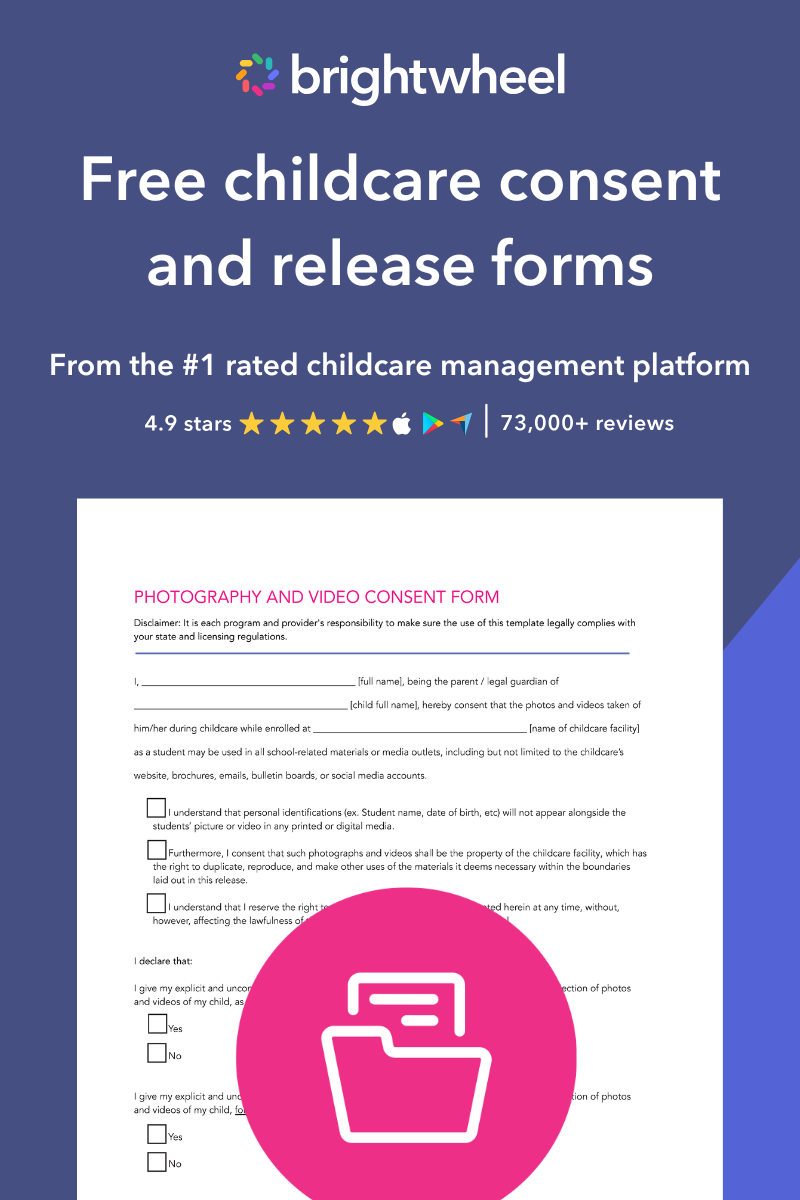
Childcare Consent and Release Forms
Use this free set of fillable PDF templates to obtain the required approvals and permissions from families
What are the best practices for medication administration?
The best way to prevent medication errors is to follow a standardized procedure every single time. According to medical guidelines, the most widely recognized standard is the "five rights of medication administration."
What are the five rights of medication administration?
The five rights of medication administration act as a critical checklist to ensure you give the right medicine to the right child safely.
- Right child: Always verify you have the correct child. Use at least two identifiers, such as asking for their name and checking a photo ID in their file.
- Right medication: Double-check that the medication name on the container matches the medication administration form.
- Right dose: Read the form and the label carefully to ensure you are giving the correct dosage. Use proper measuring tools like a syringe or a measuring cup, not a household spoon.
- Right route: Confirm how the medication should be given (e.g., orally, topically, or via an inhaler) as specified on the form and label.
- Right time: Administer the medication at the time specified by the family and the prescription.
After administration, document the event immediately. Record the time, dose, and the staff member who administered it to create a clear and accountable record.
How do you verify prescriptions and dosages?
For prescription medications, use the pharmacy label as your source of truth. It contains all the necessary information, which must align with the consent form. For over-the-counter medications, follow the manufacturer's instructions unless a doctor has provided different guidance in writing. If you have any doubts about a dosage, always err on the side of caution and contact the family or the doctor.
How should you store and dispose of medications?
You must store medications securely, out of reach of children, and in accordance with their specific instructions (e.g., refrigeration). Store each child’s medication in its original container and clearly label it. Never combine different medications in one container.
When a medication expires or is no longer needed, return it to the family for disposal. Do not dispose of medications at your program unless you have specific policies and training that comply with local regulations.
What training do staff need for medication administration?
Proper medication administration requires well-trained and competent staff to execute the procedures safely. Every team member authorized to administer medication must receive formal training before they can give medicine to a child.
This training should cover:
- Your program's specific medication policies and procedures
- The five rights of medication administration
- How to read and understand medication labels and forms
- Proper documentation practices
- Recognizing and responding to adverse reactions or medication errors
Conduct regular competency assessments to keep staff skills sharp. This can involve direct observation, written tests, or mock scenarios. Many states offer certification programs, and resources are often available through local health departments or childcare resource agencies.
How do you communicate with families about medications?
Clear and consistent communication with families is the cornerstone of a safe medication administration process. This process starts with obtaining proper consent and continues through daily documentation and addressing concerns.
Families must provide written authorization before you administer any medication. It is also good practice to have a brief conversation with the family member when they drop off the medication to confirm the instructions.
Every time you give medication, document it where families can see it. A digital childcare software like brightwheel makes this seamless. You can log the dosage and time, and families can view this information through a parent app. This transparency builds trust and keeps everyone informed.
Why is legal and regulatory compliance important?
Childcare programs are subject to state and local regulations regarding medication administration to protect children from harm. These laws vary significantly by location, and it is your responsibility to know and comply with the regulations in your area.
Failure to follow these rules can result in fines, license revocation, and legal liability. Proper documentation is your best defense. By diligently following procedures and maintaining accurate records, you create a powerful record of compliance and due care.
How to handle emergency situations and medication errors?
Your program needs a clear protocol for handling adverse reactions and medication errors because emergencies can still happen despite excellent procedures.
If a child has an adverse reaction, staff should:
- Immediately assess the child’s condition.
- Contact emergency services if the reaction is severe.
- Notify the child’s family immediately.
- Follow any specific instructions in the child’s medical file.
If a medication error occurs, you must act quickly. Notify the family and the Poison Control Center or the child’s doctor for guidance. Document the incident thoroughly, including what happened, who was involved, and what steps you took. Be familiar with your state's laws, as reporting requirements often apply.
Using brightwheel for medication management
Managing medication administration with paper forms can be cumbersome and prone to error. A digital solution like brightwheel streamlines the entire process, enhancing safety and compliance.
With brightwheel, you can:
- Use digital forms: Families can securely upload and sign medication administration forms directly from their phones.
- Track medications: Staff can log every dose, creating a real-time, shareable record.
- Enhance communication: Instantly share updates with families, providing peace of mind.
- Ensure compliance: All medication records are stored securely in each child’s profile, making them easy to access for licensing visits or emergencies.
By centralizing all medication-related information, brightwheel helps reduce administrative work and allows your staff to focus on providing the best possible care.
Frequently asked questions
Q: Can childcare programs administer over-the-counter medications?
A: Yes, but only if the childcare program has written authorization from the family. Always follow the manufacturer's instructions unless a doctor provides alternative written guidance.
Q: What happens if a staff member forgets to document a medication dose?
A: Failing to document a dose creates a risk of double-dosing. Staff should immediately inform a supervisor, contact the family if needed to verify the child's status, and document the error according to the program's incident reporting protocols.
Q: How often should childcare staff renew their medication administration training?
A: Staff should undergo competency assessments and renew their formal training annually, or as mandated by your specific state licensing regulations.
Elevate your medication safety standards
Safely administering medication is a fundamental part of running a high-quality childcare program. By establishing robust procedures, ensuring proper staff training, and maintaining clear communication with families, you can create a secure environment for every child.