For many childcare providers, the phrase "licensing inspection" can bring anxiety. Whether it’s an unannounced visit or a scheduled review, the pressure to meet every state and local requirement can feel overwhelming.
Preparation is key to reducing inspection stress. Knowing what inspectors look for and addressing common pitfalls in advance lets you approach visits with confidence.
This article highlights ten common mistakes childcare programs make and offers actionable steps to address them before your next inspection.
1. Not staying up-to-date with regulations
One of the most frequent issues providers face is relying on outdated information. Childcare regulations are not static; they evolve to reflect new safety standards, health research, and educational best practices. What was compliant three years ago might not meet today's standards.
How can you stay informed?
To avoid being caught off guard, proactively monitor changes from your licensing agency. Subscribe to their email newsletters and regularly visit their website for updates.
Joining local or state childcare associations is another excellent way to stay in the loop, as they often send alerts about regulatory changes. If you are unsure about a specific rule, reach out to your licensing representative directly. It is always better to ask questions now than to receive a citation later.
2. Incomplete or missing staff records
Your team is the backbone of your program, and inspectors will scrutinize their files closely. A common violation involves missing or expired documentation, such as background checks, CPR and first aid certifications, or training hours. If a new hire starts working before their background clearance is complete, it can lead to serious non-compliance issues.
What is the best way to manage staff files?
Create a checklist for every employee file to ensure it contains all required documents from day one. Using digital management tools can be a lifesaver here. Many childcare management platforms allow you to upload certifications and set automatic reminders for when documents are about to expire. This ensures you never miss a renewal date and can pull up any record instantly during an inspection.
3. Neglecting children's records
Just as staff files need to be maintained, so do the records for the children in your care. Inspectors often find gaps in emergency contact information, immunization records, or authorized pick-up lists. Missing health forms or allergy action plans are not just paperwork errors; they are safety risks.
How can you keep files organized?
Make it a policy to review children's files regularly—at least twice a year. Communicate with families early if you notice an immunization record is coming due.
Similar to staff records, utilizing a digital platform to store family data can streamline this process. It allows families to update their own information via an app, ensuring you always have the most current phone numbers and health details on hand.
4. Overlooking safety hazards
When you work in the same space every day, it’s easy to overlook potential hazards. You might stop noticing the cracked outlet cover in the hallway or the slightly loose cabinet hinge in the toddler room. However, a licensing inspector will spot these issues immediately.
What should you look for?
Conduct a monthly safety walk-through of your facility. Look for common violations such as:
- Uncovered electrical outlets
- Unlocked cabinets containing cleaning supplies or medication
- Trailing cords from blinds or electronics
- Furniture that is not anchored to the wall
By addressing these maintenance issues promptly, you ensure the physical environment remains safe for curious little ones.

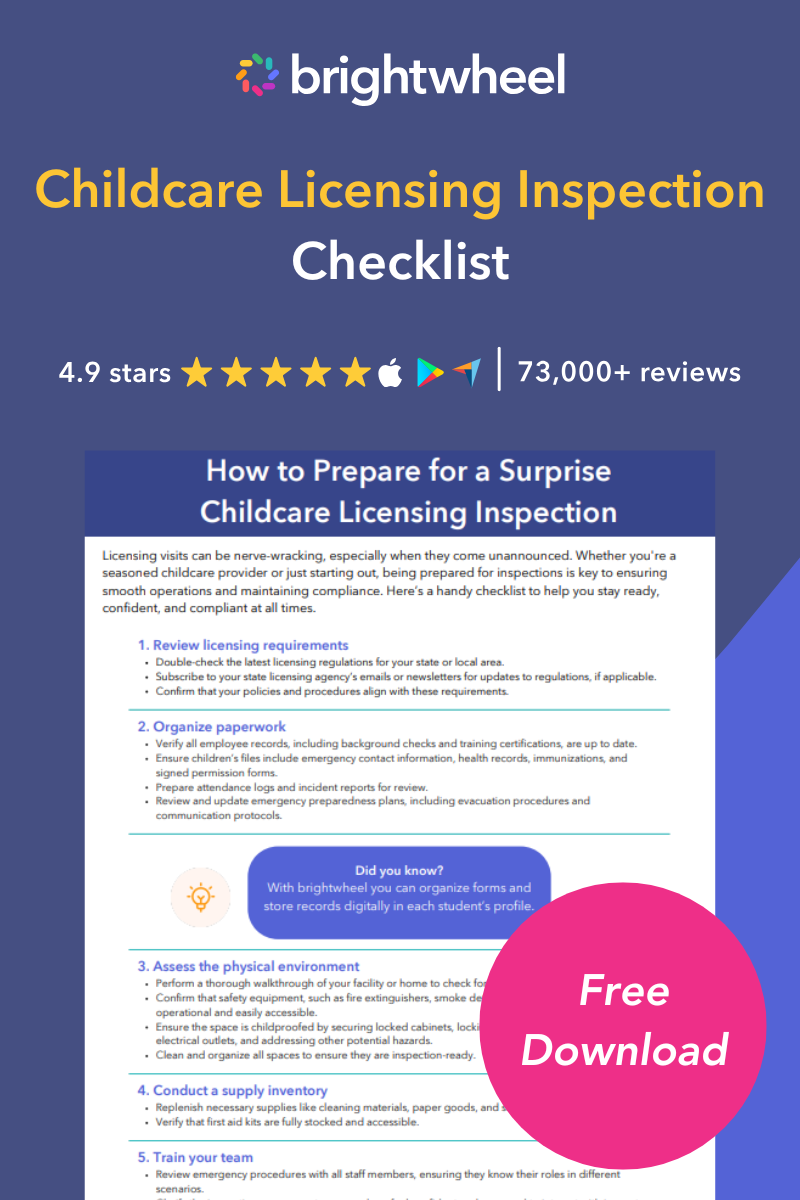
Childcare Licensing Inspection Checklist
A free checklist to prepare your program for a surprise childcare licensing inspection.
5. Faulty or missing safety equipment
Safety equipment is critical during an emergency, and finding out it is broken during an inspection (or worse, during a real emergency) is a major mistake. Inspectors frequently cite programs for expired fire extinguishers, dead batteries in smoke detectors, or depleted first aid kits.
How often should you check equipment?
Incorporate equipment checks into your monthly routine. Verify that fire extinguishers are fully charged and have current inspection tags. Test smoke and carbon monoxide detectors regularly. Open your first aid kits to ensure you have plenty of bandages, gloves, and ice packs, and discard any items that have expired.
6. Running low on essential supplies
Running out of necessary items like hand soap, paper towels, or toilet paper is a compliance issue that inspectors will note. Hygiene is a top priority in childcare settings, and a lack of cleaning supplies can suggest a lapse in sanitation protocols.
How can you manage inventory effectively?
Assign a staff member to monitor stock levels weekly. Keep a running inventory list and restock before you are down to your last package. Ensuring you always have adequate sanitation supplies, as well as enough healthy snacks and educational materials, demonstrates that your program is well-managed and prepared.
7. Lack of emergency preparedness
Documentation is not just about the past; it is also about planning for the future. A common oversight is having an emergency plan that is outdated or not posted visibly. Furthermore, failing to document monthly fire and disaster drills is a frequent citation.
What does a compliant emergency plan look like?
Your emergency plan should be detailed, current, and accessible to all staff and families. It needs to cover evacuation routes, relocation sites, and communication procedures. Ensure you conduct drills according to your state's schedule and log them immediately. If an inspector asks a staff member what to do in case of a fire, they should be able to answer confidently.
8. Unclean or damaged learning materials
Toys and learning aids endure a lot of wear and tear. However, broken toys with sharp edges or chipped paint are safety hazards. Additionally, if toys are visibly dirty, inspectors will flag them as a health risk.
How do you maintain learning materials?
Implement a cleaning schedule that includes daily sanitizing of frequently touched items and a deep clean of all toys on a rotation. Encourage staff to remove broken items from the classroom immediately. If a toy cannot be repaired safely, it is time to replace it. A clean, well-maintained classroom reflects a high standard of care.
9. Failure to display required notices
Most licensing agencies require specific documents to be posted in a prominent location visible to families and staff. Failing to display your license, emergency evacuation floor plans, menu, or daily schedule is an easily avoidable mistake.
What needs to be posted?
Walk through your entrance and hallways and check your bulletin boards. Ensure the following are visible:
- Your current childcare license
- Emergency numbers and evacuation plans
- Staffing ratios
- Allergy lists (in classrooms, protecting privacy as required)
- Daily schedules and lesson plans
10. Skipping the pre-inspection walkthrough
Perhaps the biggest mistake is assuming you are ready without actually checking. Going into an inspection blind leaves too much to chance. Many providers skip the step of conducting a "mock inspection," missing the opportunity to catch low-hanging fruit.
Why is a final walkthrough essential?
A few days before you expect a visit (or periodically if you are subject to unannounced visits), conduct a comprehensive walkthrough using a childcare licensing inspection checklist.
Check every room, every file, and every corner of the playground. If possible, ask a director from another program to walk through your facility; fresh eyes often catch things you might miss. This proactive step allows you to fix minor issues before they become permanent records on your inspection report.
Build a culture of compliance
Navigating licensing inspections does not have to be a source of dread. By avoiding these ten common mistakes, you can transform the process from a stressful event into a validation of your hard work. When you prioritize staying up-to-date with regulations, keeping meticulous records, and maintaining a safe environment, you do more than just pass an inspection—you provide the high-quality care that families deserve.