For many childcare providers, the phrase "licensing visit" can be nerve-wracking. Even experienced directors may worry about missed signatures, staff preparedness, or equipment issues. But inspections don’t have to be stressful—they’re designed to ensure children’s safety and well-being.
Most licensing visits follow a predictable routine. By understanding the process, you can feel confident and prepared. This guide breaks down the four key stages of an inspection: arrival, documentation review, facility walkthrough, and exit interview. Learn what inspectors look for at each step to keep your program ready and compliant.
The arrival and initial greeting
The way you handle the first few minutes of a childcare licensing visit sets the tone for the entire inspection. A calm, professional greeting demonstrates that you are in control of your program and confident in your operations.
Making a strong first impression
When a state licensing representative arrives, greet them warmly but professionally. It is natural to feel a flutter of nerves, but try to project calm. If you are in the middle of a task, pause what you are doing to give them your full attention. This simple courtesy shows that you take their role—and your compliance—seriously.
Verifying credentials and visitor protocols
Before you allow the inspector fully into your facility, you must follow your standard visitor protocols. Ask to see their identification to verify they are an official representative of the licensing agency. This isn't just a formality; it proves that you are vigilant about security and who enters your building.
Have the inspector sign in just like any other visitor. Whether you use a paper log or a digital check-in system, maintaining a record of their presence is a key safety measure. This small step immediately signals to the inspector that your program prioritizes safety and security procedures.
The documentation review
Once the initial greetings are over, the inspector will likely want to sit down and review your paperwork. This is often the most time-consuming part of the visit, so being organized is crucial.
Essential childcare record keeping
The inspector will request specific files to verify that you are meeting state regulations. You should be prepared to produce:
- Children’s enrollment forms: These must be complete with emergency contact information.
- Immunization records: Up-to-date health records for every child in care.
- Staff files: Proof of background checks, educational qualifications, and training certificates.
- Attendance logs: Accurate records of children’s arrival and departure times.
Missing or expired documents are common citations, but they are also easily preventable. Using a childcare licensing inspection checklist beforehand can help you identify gaps in your files before the inspector does.

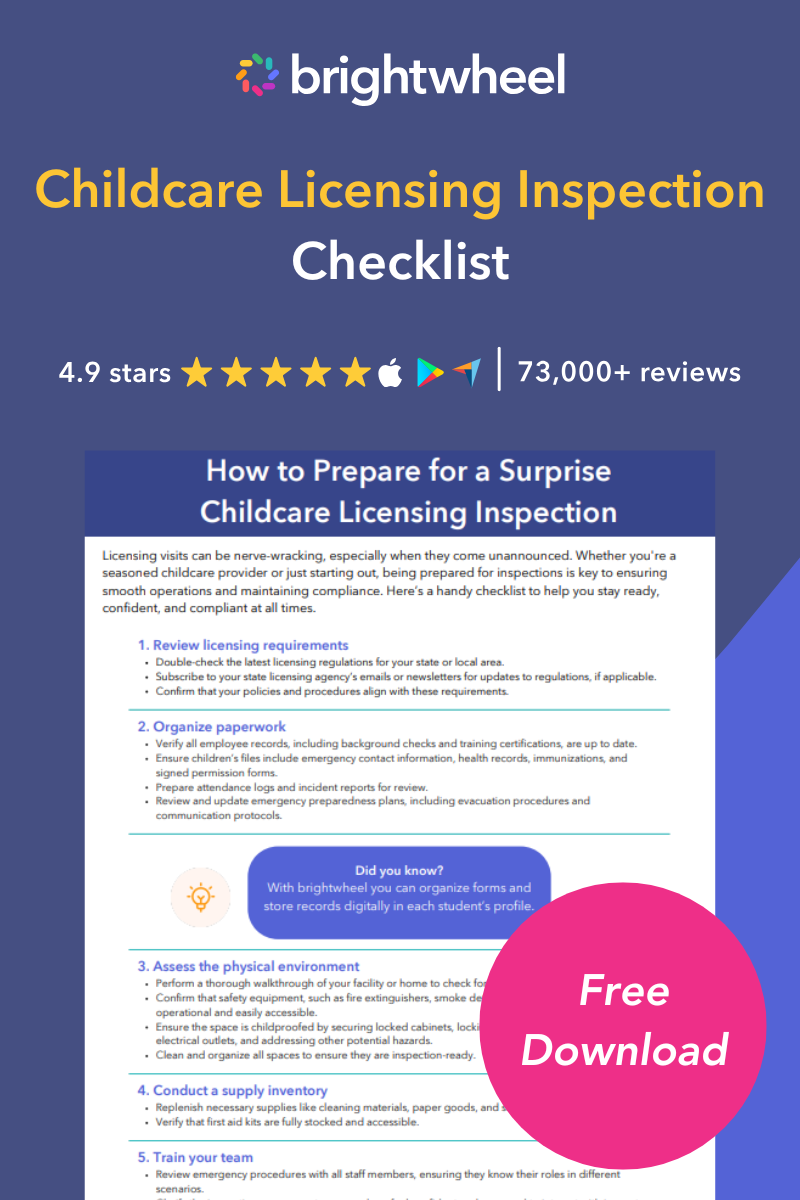
Childcare Licensing Inspection Checklist
A free checklist to prepare your program for a surprise childcare licensing inspection.
The benefits of digital organization
Nothing slows down an inspection like hunting through cluttered filing cabinets for a single piece of paper. If your program uses a digital platform for childcare record keeping, you can often pull up the necessary documents on a tablet or computer in seconds. Digital systems help ensure files are legible, organized, and time-stamped.
If you rely on paper records, ensure your binders are clearly labeled and logically organized. When an inspector sees neat, accessible files, it builds trust. It shows that you are organized and likely just as meticulous about the other aspects of your business.
The facility walkthrough
After reviewing your paperwork, the inspector will conduct a physical tour of your premises. This facility walkthrough is designed to identify potential hazards and verify that the environment is safe for children.
Checking health and safety standards
The inspector will look at your facility through a lens of risk prevention. They will check for common safety issues, such as:
- Electrical safety: Are all outlets covered? Are cords secured and out of reach?
- Hazardous materials: Are cleaning supplies and medications locked away?
- Playground safety: Is the equipment in good repair? Is there appropriate cushioning material under climbing structures?
- Hygiene protocols: Are diaper changing stations clean and sanitized? Is the food preparation area hygienic? Do staff and children follow proper handwashing procedures?
Regular self-checks help you stay on top of these health and safety standards so you aren't scrambling to fix a broken latch or move a heavy object while the inspector is watching.
Monitoring staff-to-child ratios
During the walkthrough, the inspector will rigorously check your staff-to-child ratios. They will count the number of children and staff in every room to ensure you are adhering to state mandates. They may also check that group sizes are appropriate for the ages of the children present.
Compliance with ratios is non-negotiable. It ensures that every child receives adequate supervision and care. If a teacher needs to step out for a break, ensure coverage is immediately available so you never drop below the required ratio, even for a few minutes.
Staff and child interactions
Your facility might be spotless and your paperwork perfect, but childcare is ultimately about people. Inspectors will observe the emotional climate of your program by watching how staff and children interact.
Observing teacher-child interactions
The inspector wants to see a nurturing, supportive environment. They will look for positive teacher-child interactions, such as:
- Teachers getting down to the child's eye level when speaking.
- Staff using positive guidance techniques rather than harsh discipline.
- Children who appear happy, engaged, and comfortable with their caregivers.
They will also observe how staff handle stressful moments, such as a crying infant or a toddler conflict. The goal is to ensure that the emotional well-being of the children is prioritized alongside their physical safety.
Preparing staff for questions
Inspectors often ask staff members brief questions to test their knowledge of procedures. They might ask a teacher:
- "What is the procedure if the fire alarm goes off?"
- "How do you manage food allergies in this classroom?"
- "What are the safe sleep practices for infants?"
Staff should feel comfortable answering these questions. You can help them prepare by conducting regular mock quizzes or reviewing emergency procedures during staff meetings. When your team answers confidently, it reflects well on your training and leadership.
The exit interview
The final stage of the childcare licensing visit is the exit interview. This is a meeting where the inspector summarizes their findings, discusses any observations, and reviews the official inspection report with you.
Reviewing the inspection report
The inspector will go over what went well and identify any areas where your program is not in compliance. If they found violations, they will list them as citations.
It is important to listen carefully and take notes. If you do not understand a citation, ask clarifying questions immediately. You need to know exactly what the issue is so you can fix it. Try not to get defensive; remember, the inspector’s job is to ensure safety, not to criticize you personally.
Creating a plan of correction
If you receive citations, you will likely need to submit a plan of correction. This document outlines how you will fix the problems and prevent them from happening again.
Discuss the timeline for these corrections during the meeting. Some issues, like a broken gate, might need immediate attention, while others, like missing staff training hours, might have a slightly longer deadline. Approaching this discussion with a cooperative attitude shows your commitment to continuous improvement.
Enter your next visit with confidence
A childcare licensing visit includes several moving parts: the arrival, paperwork review, walkthrough, observations, and final review. While it can feel overwhelming, breaking it down into these stages makes it much easier to manage.
Remember, licensing rules exist to protect children. By viewing the inspection as a tool to help you provide the safest possible care, you can shift your mindset from fear to readiness.