A well-structured time-off policy is essential for running a successful childcare program. It not only helps prevent staff burnout but also ensures your program remains compliant and adequately staffed. Creating a clear and fair policy minimizes disruptions, boosts morale, and contributes to a stable, positive environment for children and employees alike.
However, managing time-off in a childcare setting comes with unique challenges. Absences can directly impact staff-to-child ratios, and finding qualified substitutes at the last minute is often difficult.
This article will walk you through the key components of an effective daycare staff time off policy, provide concrete examples, and share best practices for implementation.
Key components of a time-off policy
A comprehensive time-off policy clearly outlines the procedures and expectations for both staff and management. Including these key components will help prevent confusion and ensure fairness across your program.
Eligibility criteria
Specify when new employees become eligible for paid time off. Many programs require a waiting period, such as 90 days of employment, before staff can begin accruing or using leave. Clearly state whether the policy applies to full-time staff only or if part-time employees are also eligible, and detail how their benefits might differ.
Accrual methods
Explain how staff earn time off. Common accrual methods include:
- Per pay period: Employees earn a set number of hours each pay period.
- Lump-sum: Staff receive their full allotment of time off at the beginning of the year or on their work anniversary.
- Per hour worked: Leave is accrued based on the number of hours an employee works, which is common for part-time staff.
Your policy should also state the maximum number of hours an employee can accrue or carry over into the next year.
Requesting time-off
Establish a clear process for how staff can request time off. This includes:
- Whom to submit the request to (e.g., a director or office manager).
- The required notice period (e.g., two weeks for vacation).
- The format for the request (e.g., a written form or a digital request through a software system).
Approval process
Describe how time-off requests are reviewed and approved. Outline the criteria for approval, such as ensuring adequate coverage and avoiding conflicts with other staff requests. It is also helpful to mention how far in advance requests will be approved and how you will handle competing requests for popular dates.
Unpaid vs. paid time-off
Distinguish between paid and unpaid leave. Paid time off (PTO) is compensated, while unpaid time off is not. Your policy should specify the circumstances under which unpaid leave may be granted and whether employees must exhaust their paid leave first.

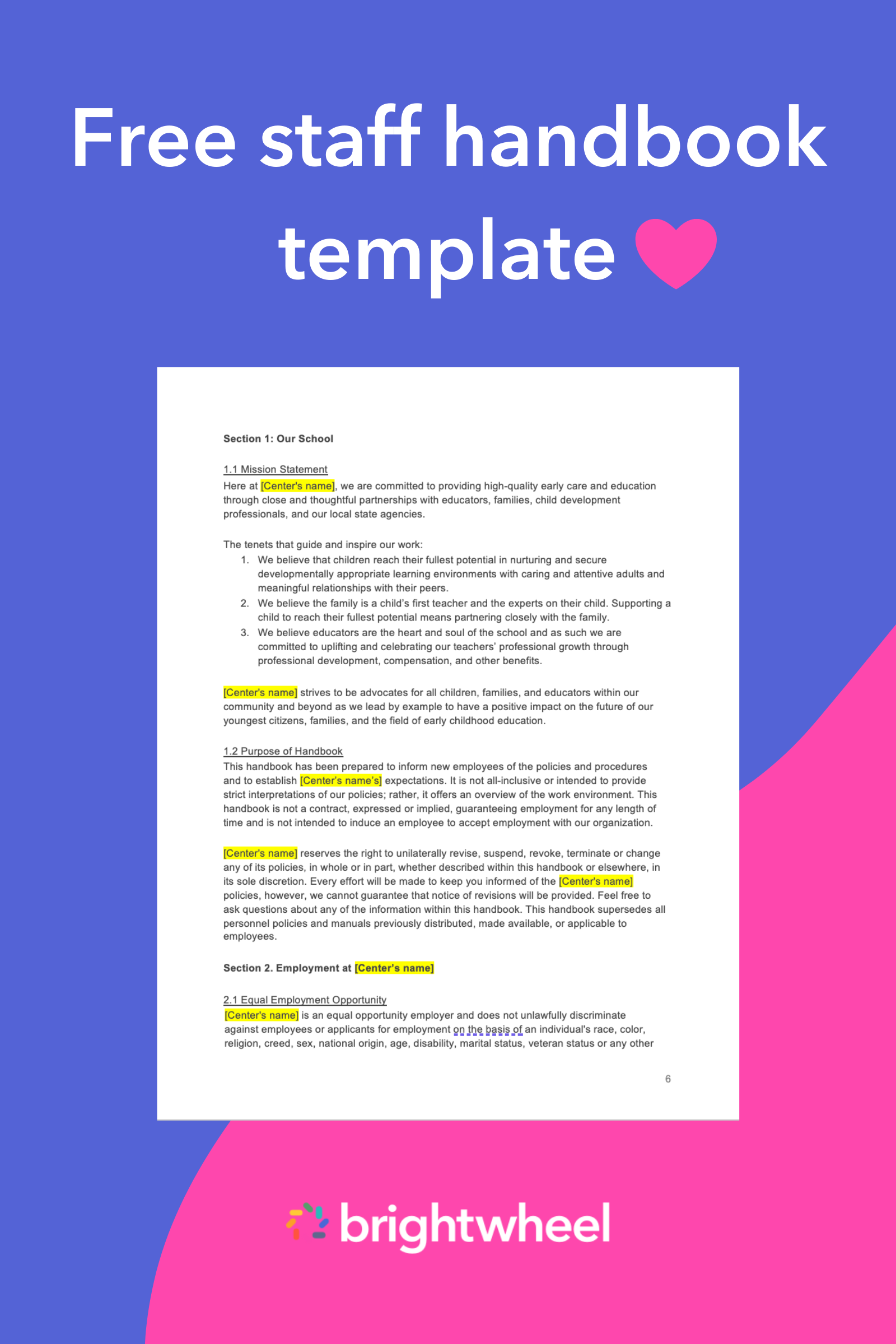
Staff Handbook Template for Early Education Programs
Use this free template to create a childcare employee handbook for your program.
Examples of time-off policies
Childcare programs can adopt various types of leave policies. You can offer these individually or combine them into a single, comprehensive Paid Time Off (PTO) bank.
PTO policy
A PTO policy combines vacation, sick leave, and personal days into a single bank of hours that employees can use for any reason. This approach offers flexibility and is often easier to manage.
- Example: "Full-time employees accrue 6.67 hours of PTO per month, totaling 80 hours (10 days) per year. PTO can be used for any reason, including vacation, illness, or personal matters. Employees can begin using accrued PTO after 90 days of employment."
Vacation policy
This policy allocates a specific number of days for vacation, separate from sick leave. The amount of vacation time often increases with an employee's years of service.
- Example: "Full-time employees receive 40 hours (5 days) of paid vacation after one year of service. After three years, this increases to 80 hours (10 days). Vacation requests must be submitted at least two weeks in advance."
Sick leave policy
Sick leave is designated for when an employee or a family member is ill. These policies are crucial for maintaining a healthy environment in a childcare setting.
- Example: "All staff accrue one hour of paid sick leave for every 30 hours worked. Sick leave can be used for personal illness, medical appointments, or to care for a sick family member. Staff must notify their supervisor as soon as possible if they are unable to work."
Personal days policy
Personal days provide employees with paid time off for personal matters that are not related to sickness or vacation, such as attending a parent-teacher conference for their own child or dealing with a home emergency.
- Example: "Full-time employees receive 16 hours (2 days) of paid personal leave each calendar year. These days do not roll over and must be used by December 31st."
Holiday policy
This section can list the paid holidays your childcare program observes. This typically includes federal holidays like New Year's Day, Memorial Day, Independence Day, Labor Day, Thanksgiving, and Christmas.
- Example: "Our program will be closed for the following paid holidays: [List of holidays]. Full-time employees will be paid for these days."
Special considerations
Beyond standard leave, your policy can address more complex situations to ensure your program runs smoothly.
Handling extended leave
Your policy should touch on procedures for extended absences, such as those covered by the Family and Medical Leave Act (FMLA) or for personal emergencies. Outline the documentation required and how the employee’s position will be handled during their absence.
Covering staff absences
A critical part of your time-off policy is your plan for covering shifts. This may involve training staff to work in different rooms, using a list of on-call substitute teachers, or having administrators step into classrooms when needed. A clear plan ensures you always maintain required staff-to-child ratios.
Legal and compliance considerations
Ensure your policy complies with federal, state, and local labor laws. Some states have mandatory paid sick leave laws or specific rules regarding leave for part-time workers. It is wise to have your policy reviewed by a legal professional to avoid compliance issues.
Best practices for your daycare staff time off policy
A policy is only effective if it is implemented correctly. Follow these best practices to ensure your policy supports both your staff and your program.
- Communication: Clearly communicate the policy to all staff during onboarding and whenever updates are made. Keep the policy easily accessible in an employee handbook or on a shared digital platform.
- Consistency: Apply the policy consistently and fairly to all employees. Inconsistent enforcement can lead to resentment and accusations of favoritism.
- Flexibility: While consistency is important, allow for flexibility when possible. Child care is a demanding job, and showing understanding for personal emergencies can significantly improve staff morale and retention.
How brightwheel can support your program
Managing staff schedules, time-off requests, and payroll can be time-consuming. Using a childcare management software like brightwheel simplifies these administrative tasks.
With brightwheel's staff management and payroll features, you can:
- Create and manage schedules: An intuitive interface allows you to build and adjust staff schedules with just a few clicks, making it easy to see and cover gaps.
- Track paid and unpaid time off: Time off automatically appears on schedules, eliminating the need for manual tracking on spreadsheets. Staff can view their available hours directly from the app.
- Streamline staff check-ins: Kiosk and QR code check-ins help maintain accurate timecards and ensure you always have correct staff-to-child ratios.
- Automate payroll: You can track employee hours and send data directly to Gusto for seamless and accurate payroll processing.
By automating these processes, you reduce the risk of errors and free up valuable time to focus on what matters most—providing excellent care for children.
A policy that supports everyone
A well-defined and consistently applied daycare staff time off policy is a cornerstone of a well-managed childcare program. It provides your staff with the rest and flexibility they need while ensuring your program operates smoothly and reliably for the families you serve. By investing time in creating a clear and fair policy, you foster a professional, supportive, and stable work environment for everyone.