Data is a powerful tool for growth. While it's often associated with large corporations, the insights found in data can be just as transformative for childcare programs. The information you already collect daily—from attendance logs to tuition payments—holds the key to unlocking new levels of efficiency and quality in your program.
This article will guide you on how to use the data from your childcare management software to make informed decisions. We will explore how to streamline operations, strengthen your program's financial health, and ultimately enhance the quality of care you provide for children and families. By the end, you'll have a clear roadmap for turning numbers into actionable improvements.
In short: Childcare management data includes financial metrics (payment rates, revenue trends), enrollment and attendance patterns, staffing and ratio compliance, and family engagement levels. Tracking these consistently helps programs improve efficiency, catch problems early, and make data-backed decisions.

Free Guide for Selecting Childcare Management Software
Download a free guide to simplify your decision-making process and help you choose the best childcare software for your program.
Key data points to track in your childcare program
Your childcare management software is a treasure trove of information. To get started, focus on tracking these key data points across different areas of your program.
Financial health metrics
Understanding your program's finances and tracking key financial metrics is essential for long-term stability and growth.
- On-time payment rates and outstanding balances: Track who pays on time and which accounts are frequently overdue.
- Revenue trends: Analyze your revenue by month or season to identify predictable patterns in your cash flow.
- Billing effectiveness: Compare the performance of automated billing versus manual invoicing to see which method is more efficient and results in faster payments.
Enrollment and attendance data
Enrollment and attendance numbers directly impact your revenue and staffing needs.
- Attendance patterns: Monitor daily, weekly, and monthly attendance to understand your program’s rhythm.
- Enrollment numbers and waitlist length: Keep an eye on how many children are enrolled and how many are on your waitlist.
- Peak check-in/check-out times: Identify the busiest times of day for arrivals and departures.
Staffing and ratios
Proper staffing ensures compliance with licensing requirements and maintains a high quality of care.
- Staff-to-child ratios: Monitor your ratios throughout the day to ensure you're always in compliance.
- Staff hours and time off: Track hours worked, overtime, and time-off requests to manage labor costs and staff well-being.
Family engagement and communication
Strong relationships with families are the cornerstone of a successful childcare program.
- Family engagement levels: Observe how often families interact with daily reports, photos, and messages.
- Response times: Measure how quickly your staff responds to family inquiries.
Before diving into how to use this data, it's worth considering how you're collecting it in the first place.
Manual tracking vs. childcare management software
| Manual tracking (spreadsheets & paper) | Childcare management software | |
|---|---|---|
| Compiling monthly reports | Requires manually gathering data from multiple logs and spreadsheets | Reports generate automatically from data already in the system |
| Real-time visibility | Data reflects whatever was last manually entered | Updates in real time as attendance, billing, and communication happen |
| Multi-location comparison | Comparing centers means combining separate files by hand | View and compare data across all locations from one dashboard |
| Administrative time | Hours spent each week compiling and cross-checking data | Brightwheel saves each admin and staff member 20 hours per month of administrative work |
| Error risk | Manual entry increases the chance of transcription errors | A centralized system reduces duplicate entry and mismatched records |
Use data to drive program improvements
Once you start tracking this information, you can use it to make strategic decisions that benefit your entire program.
Enhance financial stability
Use financial data to create a more predictable and stable revenue stream.
- Address late payments: If you notice a trend of late payments, you can implement automated reminders for specific families, offer small incentives for enrolling in autopay, or use Tap to Pay to collect a past-due balance on the spot at pickup.
- Forecast cash flow: By analyzing monthly revenue trends, you can better anticipate your cash flow and plan for large expenses, such as playground upgrades or seasonal staff bonuses, without financial strain.
Optimize staffing and operations
Attendance data can help you create more efficient schedules and procedures.
- Adjust staff schedules: Use attendance reports to align staff schedules with peak hours, ensuring you always meet ratio requirements while avoiding unnecessary labor costs during quieter periods.
- Streamline drop-off and pick-up: Identify your busiest check-in and check-out times to redesign your drop-off and pick-up procedures, reducing congestion and creating a smoother experience for families and staff.
Boost enrollment and retention
Data can reveal opportunities to grow your enrollment and keep current families happy.
- Plan for expansion: A long waitlist signals strong demand. Analyze this data to decide when it might be the right time to open a new classroom or even expand to a new location.
- Strengthen family relationships: Parent engagement metrics can highlight families who are less involved. This gives you a chance to reach out proactively, share positive updates about their child, and build a stronger connection. In fact, 95% of admins and staff report that brightwheel improves communication with families.
Support child development
Data from observations and assessments can directly inform your curriculum.
- Inform curriculum planning: By reviewing developmental milestone reports, you can spot trends across a classroom or for individual children. This allows you to tailor your curriculum to address specific needs, introduce new learning opportunities, and better support every child's growth.
Tip: As you tailor your curriculum, brightwheel's Early Learning Standards resource can help you align these insights with state-specific learning benchmarks.
Tips for implementing a data-focused approach
Adopting a data-driven mindset doesn't have to be overwhelming. Here are four tips to get started:
- Start small: Don't try to track everything at once. Focus on one or two key metrics that address your program's most pressing needs, like on-time payments or daily attendance. Once you're comfortable, you can gradually expand your focus.
- Make it a habit: Set aside a specific time each week or month to review your reports. Consistency is key to noticing trends and making timely decisions. Discussing these findings with your leadership team can also bring new perspectives.
- Share insights with your team: Data can support your entire staff. Share relevant classroom engagement trends or attendance patterns with your teachers. This information can help them better understand their classroom dynamics and feel more involved in the program's success.
- Use your software's reporting tools: Get to know the dashboard and reporting features in your childcare management software. Most platforms offer customizable reports that can automate data collection and make it easy to visualize key trends.
How brightwheel supports childcare programs
Using a comprehensive childcare management software like brightwheel makes it easy to collect and analyze the data you need. The platform's integrated features provide a holistic view of your program's operations.
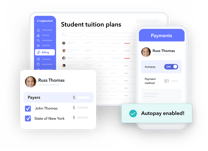
With brightwheel's billing features, you can automate invoicing, set up recurring payment plans, and collect in-person payments on the spot with Tap to pay — all of which improve your on-time payment rate. 90% of preschools report that more families pay on time with brightwheel, and 88% of admins say it helps their program get paid faster. The reporting tools give you a clear overview of your revenue and outstanding balances, so you always know where your finances stand.
The center management tools help you track attendance, monitor staff-to-child ratios in real-time, and manage enrollment from a central dashboard. For programs with multiple locations, brightwheel offers a multisite management dashboard to view data across all your centers, allowing you to compare performance and standardize operations.
Frequently asked questions
What data should childcare programs track?
Focus on four core areas: financial health (on-time payment rates, revenue trends), enrollment and attendance (waitlist length, peak check-in times), staffing (staff-to-child ratios, hours worked), and family engagement (response times, communication frequency).
How often should I review childcare management data?
Set aside dedicated time weekly or monthly to review reports rather than checking sporadically. Consistent review makes it easier to spot trends early and make timely decisions with your leadership team.
What is childcare management software?
Childcare management software centralizes daily operations — billing, attendance, staff scheduling, and family communication — into one platform, replacing manual processes like paper forms and spreadsheets.
How can data improve childcare enrollment and retention?
Tracking waitlist length can signal when it's time to expand, while family engagement metrics help identify less-involved families early, so staff can reach out proactively and strengthen those relationships.
Unlock your program's potential
The data you collect every day is more than just a record of your operations; it's a guide to improvement. By tracking financial health, enrollment, staffing, and family engagement, you can make smarter decisions that enhance your program's efficiency and the quality of care you provide.
Start by exploring the reporting features within your current childcare management software. Choose one area to focus on, and begin uncovering the insights that will help your program thrive.