Providing a safe, engaging environment is always a top priority for childcare programs. Doing this well often requires investing in high-quality equipment—like cribs, high chairs, playground structures, and learning centers. These purchases are essential to your daily operations and the children’s experience, but they can also represent significant costs. While managing these larger investments may feel overwhelming, keeping accurate, organized records makes the process more manageable and sets your program up for long-term financial health. In the next sections, you’ll learn what counts as supplies and materials, how to track them effectively, and which tools can help you stay organized and maximize your savings.
What qualifies as equipment and furniture?
Equipment and furniture are long-term assets with a useful life of more than one year, unlike supplies that are quickly consumed. For childcare providers, examples include:
- Infant and toddler furniture: Cribs, high chairs, changing tables.
- Classroom furniture: Tables, chairs, bookshelves, storage units.
- Playground equipment: Swings, slides, climbing structures, safety surfacing.
- Safety equipment: Baby gates, fire extinguishers, safety locks.
- Office equipment: Computers, printers, filing cabinets.
- Kitchen appliances: Refrigerators, microwaves, stoves used for the business.
These items, categorized as capital expenses, are typically depreciated over time for tax purposes.
Why tracking equipment and furniture matters
Accurate tracking of equipment and furniture purchases is essential for sound financial management:
- Budgeting and forecasting: These investments are significant. Tracking them helps plan for replacements and avoid unexpected expenses.
- Tax deductions through depreciation: Equipment costs are recovered over time through depreciation. Proper records ensure accurate claims and reduce your tax burden.
- Asset management: A detailed inventory helps manage your program’s assets, providing key information for insurance or audits.
- Simplified tax preparation: Organized records with purchase details make tax filing easier and reduce errors.
Tips for tracking expenses
Tracking equipment and furniture requires a consistent system. Here’s how to stay organized:
- Create a fixed asset schedule: Use a spreadsheet to record details like item descriptions, purchase dates, costs, and useful life.
- Keep purchase documentation: Save receipts, invoices, and financing agreements digitally or in a secure physical location.

Income and Expense Worksheet
Use this worksheet to track your finances, make smarter spending decisions, and create a monthly budget.
- Use a dedicated business account: Separate business expenses from personal spending to simplify tracking.
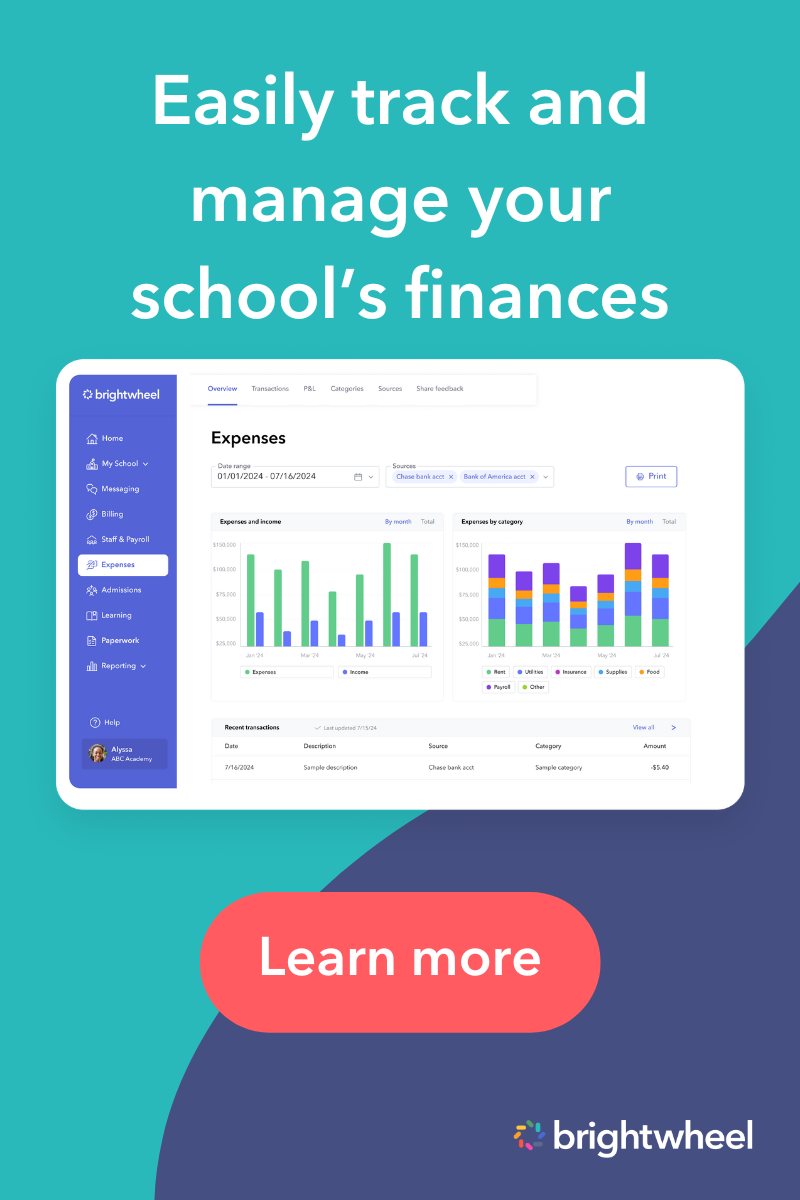
- Leverage technology: Brightwheel’s platform organizes expense tracking, making it easy to log purchases, store receipts, and generate reports.
Brightwheel also connects expense tracking with payroll, allowing you to manage staff payments, automate taxes, and track time seamlessly. This integration provides a clear view of your financial health and ensures smooth operations.
Are equipment and furniture tax deductible?
Yes. In most cases, you’ll deduct these costs over time through depreciation, since they’re long-term assets. However, certain IRS provisions—like the Section 179 deduction or the De Minimis Safe Harbor election—may let you deduct the full cost in the year you purchase the item, if you meet the requirements. A qualified tax professional can help you apply these rules correctly and make the most of your available deductions.
Investing in your program’s success
Your equipment and furniture are foundational to the experiences you provide. By tracking these purchases carefully, you can budget effectively, plan for replacements, and confidently manage your program’s finances.
Brightwheel simplifies expense tracking and management with tools for logging and categorizing expenses, storing receipts, and generating reports for budgeting and tax preparation. Its payroll feature further streamlines operations by managing staff payments, automating tax filings, and syncing time tracking—all within one platform. This streamlined approach saves time, reduces stress, and helps you focus on creating a nurturing environment where children can thrive.
Frequently asked questions about equipment and furniture expenses
What is the difference between equipment and furniture in a childcare program?
Equipment generally refers to items used to perform specific functions, such as computers, kitchen appliances, and safety gear. Furniture includes items that provide structure and support, like chairs, tables, cribs, and shelving units. Both are long-lasting assets, but their use in your program determines how they are categorized for accounting purposes.
How should I account for equipment and furniture expenses?
Most equipment and furniture purchases are considered capital assets. Instead of deducting the full cost in the year you purchase them, you typically depreciate these items over their useful life. This means spreading the deduction over several years. Keep a fixed asset schedule listing item details, purchase date, and cost. Choose depreciation methods that align with IRS guidelines or consult a tax professional for advice.
Can I expense equipment and furniture in the first year?
Some items may qualify for first-year expensing using the Section 179 Deduction or De Minimis Safe Harbor Election. These IRS provisions allow you to deduct the entire purchase amount in the same year, up to set limits and if certain conditions are met. It's wise to confirm eligibility with your accountant or tax advisor.
What records should I keep for equipment and furniture?
Maintain detailed purchase records, including receipts, invoices, financing agreements, and warranty information. To save time and prevent paperwork from getting lost, you can take photos of receipts with your smartphone and upload the digital images to Brightwheel for secure storage. This makes it easier to prepare for tax season and respond to audit requests.
How does Brightwheel help with equipment and furniture expense tracking?
Brightwheel lets you log, categorize, and store documentation digitally. You can generate reports for budgeting, asset management, and tax purposes, all from the same platform. This integration with payroll and other business management tools gives you a clear, organized view of your childcare program’s finances and assets.
Why is depreciation important for equipment and furniture?
Depreciation allows you to recover the cost of major purchases gradually. This smooths out your expenses, reduces your tax burden over time, and gives you a realistic picture of your program’s value and financial health.
Is it necessary to keep a separate account for equipment and furniture purchases?
Using a dedicated business account for all program-related expenses, including equipment and furniture, helps separate personal and business transactions. This organization makes expense tracking, reporting, and bookkeeping much simpler.