Running a childcare program often involves using your vehicle for tasks like field trips, supply runs, or attending business events, all of which can count as tax-deductible expenses. However, the rules for claiming vehicle expenses can be confusing, leaving many providers unsure of what qualifies. Mileage for work-related trips, fuel, and maintenance costs can add up over time, making it important to track these expenses thoroughly.
This article covers tips for maximizing tax savings, keeping organized records, and understanding what vehicle expenses qualify for deductions. By following best practices, you can lower your taxable income and streamline financial management, freeing up more time to focus on children and families.
What qualifies as a vehicle expense?
When your vehicle is used for your childcare program, many related costs can be classified as business expenses. These trips must, however, serve a business purpose. Personal trips, like commuting to work, grocery shopping for your household, or running errands, are not deductible.
Common examples of deductible vehicle use for childcare providers include:
- Driving children to field trips, parks, or libraries
- Running errands to purchase program supplies or equipment
- Traveling to attend workshops, conferences, or professional development courses
- Meeting with prospective families or attending business-related events
- Making trips to the bank for childcare-related deposits
Why tracking vehicle expenses matters
Keeping detailed records of business-related driving is more than a tax requirement—it’s a smart financial strategy.
- Maximize deductions: Vehicle expenses can lead to significant tax savings. Without accurate records, you risk losing deductions and overpaying taxes.
- Create accurate budgets: Tracking transportation costs helps you incorporate these expenses into your program’s budget and set tuition rates accordingly.
- Audit protection: In case of an IRS audit, a well-kept mileage log and receipts validate your deductions and demonstrate compliance.
- Simplify tax preparation: Organized records save time and reduce stress during tax season, ensuring nothing is overlooked.
How to track vehicle expenses effectively
To claim vehicle deductions, the IRS requires timely and precise records. This means tracking expenses as they happen, rather than trying to reconstruct them later. Two methods are available for claiming vehicle deductions: the Standard Mileage Rate and the Actual Expense Method. Whichever you choose, a detailed mileage log is essential. For each trip, record:
- The date of the trip.
- The purpose (e.g., "supply run to Costco" or "field trip to the zoo").
- Starting and ending locations.
- Total miles driven.

Income and Expense Worksheet
Use this worksheet to track your finances, make smarter spending decisions, and create a monthly budget.
Using technology for better tracking
While traditional methods like pen-and-paper logs work, they can be time-consuming and error-prone. Managing separate spreadsheets and receipts for various expense categories, like supplies, food, and vehicle costs, can quickly become overwhelming. That’s where a unified system can help.
Many vehicle expenses are tax deductible when they are directly related to your childcare program. Costs, such as mileage for field trips, supply runs, or transportation to business events, can significantly add up over time. By keeping thorough records and understanding what qualifies, you can maximize your deductions and lower your taxable income. It's important to consult a tax professional or refer to IRS guidelines to ensure you’re categorizing and claiming these expenses correctly.
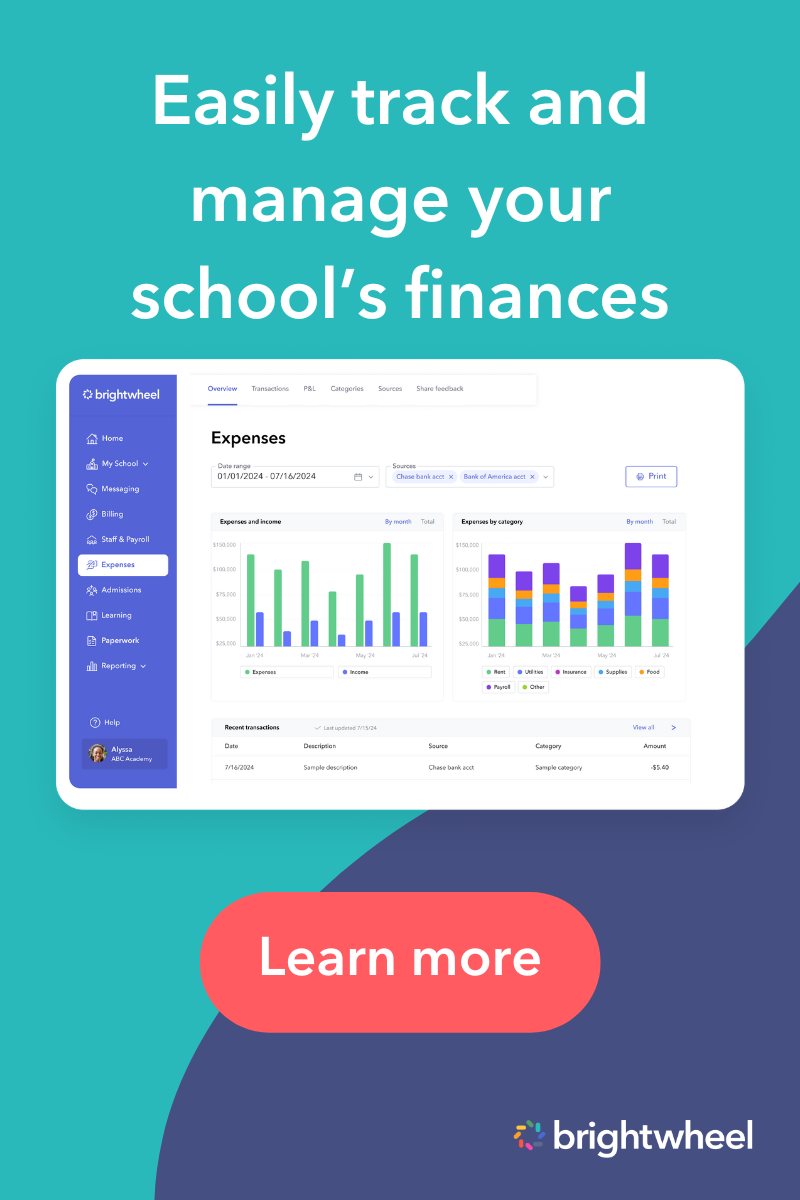
Brightwheel’s childcare management platform simplifies financial organization. It centralizes expense tracking, budgeting, and reporting, making it easy to manage all your business costs in one place.
By using brightwheel’s financial tools, like expense tracker, you can stay on top of your deductions and streamline tax preparation. Organized, accurate records make generating reports and sharing information with your tax professional effortless, keeping your program financially healthy and audit-ready.
Deducting vehicle expenses: Two methods
When filing taxes, you can calculate your vehicle deduction using one of two methods. Choosing the right option can maximize your savings.
1. Standard mileage rate
This method is straightforward. Multiply the total miles driven for business by the IRS-determined rate for that year.
- What it covers: The rate includes costs like gas, oil, maintenance, insurance, and depreciation.
- What’s separate: Additional costs like parking fees and tolls can still be deducted.
- Best for: Providers who want a simple calculation without tracking every expense.
2. Actual expense method
This method requires tracking all vehicle expenses and determining the percentage of business use.
- How it works: Divide business miles by total miles driven for the year to calculate your business-use percentage. Apply this percentage to your total vehicle costs.
- Deductible costs: Gas, oil, repairs, insurance, registration fees, tires, and depreciation (or lease payments).
- Best for: Providers with high vehicle costs or those who drive fewer business miles.
A tax professional can help determine which method is best for your situation.
Drive your program forward
Tracking vehicle expenses isn’t just about tax season: It’s a year-round practice that supports financial stability. Accurate records of business-related miles and costs help you save on taxes, create reliable budgets, and stay audit-ready.
Brightwheel’s all-in-one platform streamlines vehicle expense tracking, payroll, and financial management, reducing time spent on administrative tasks and allowing you to focus on children and families. By simplifying expense management, brightwheel helps your childcare program stay organized, maximize savings, and achieve long-term financial health.
Frequently asked questions about Vehicle Expenses
Can I expense auto lease payments for my childcare program?
Yes, you can deduct the business portion of your auto lease payments if you use the vehicle for your childcare program. Be sure to track the percentage of business use and apply it to your total lease payments for the year.
Are auto repairs and maintenance deductible?
Absolutely. Costs for repairs, oil changes, tire replacements, and routine maintenance are deductible based on the percentage of business use. Maintaining good records ensures you can capture every eligible expense.
What about car washes and cleaning?
Car washes and vehicle cleaning expenses are also deductible if your vehicle is used for business purposes, like transporting children or supplies. As with other expenses, only the portion related to your childcare program should be claimed.
Can I deduct parking fees and tolls?
Yes, you can deduct parking fees and tolls incurred while performing business tasks, such as attending workshops or running errands for your childcare program. Personal parking and toll expenses are not deductible.
How do I document these expenses?
Keep all receipts and note the business purpose of each trip or expense. For added convenience, take a photo of your receipts with your smartphone and upload them to brightwheel: This saves time and helps prevent documents from getting lost.
What if I use the vehicle for both personal and business purposes?
You’ll need to calculate the percentage of business use by dividing your business miles by the total miles driven for the year. Apply this percentage to your total car expenses when using the actual expense method.
Do I need to choose between the standard mileage rate and the actual expense method every year?
You can choose either method when you first use your vehicle for business. However, switching from actual expenses to the standard mileage rate later may not always be allowed if you've claimed depreciation deductions.
How should I track these expenses for my records and tax preparation?
A consistent system is key. Using a tool like brightwheel allows you to record mileage, store digital receipts, categorize expenses, and generate reports, all in one place, making tax season much easier to manage.