Running a childcare program means keeping the children in your care, your staff, and your business safe. Insurance is a key part of this responsibility, providing protection against accidents, injuries, and other unexpected events. While it’s a necessary cost, it’s also a major business expense that is often tax-deductible.
This guide breaks down what counts as an insurance expense, why it’s important to track these costs, and how to keep your records organized. You’ll also learn how insurance premiums may be deducted at tax time and which tools can simplify your financial management, so tax season feels more manageable and less stressful.
What qualifies as an insurance expense?
Several types of insurance are considered essential business expenses for childcare providers. The specific policies you need will depend on your program’s size, location, and services. Generally, premiums for business-related insurance are deductible.
Here are common types of deductible insurance for childcare programs:
- General liability insurance: Covers claims of bodily injury or property damage during operations.
- Professional liability insurance: Protects against claims of negligence or inadequate care (critical in early education).
- Property insurance: Covers building damage and contents if you own your facility. If you operate from home, a portion of homeowners insurance may be deductible.
- Commercial auto insurance: Required for vehicles used exclusively for business, such as transporting children.
- Workers' compensation insurance: Covers medical costs and lost wages for employees injured on the job (often required by law).
- Health insurance: Employer-paid premiums for staff are deductible. If self-employed, you may be able to deduct your own health insurance premiums.
Why tracking insurance expenses matters
Organized records of insurance payments are essential for financial management. Beyond tax season, proper tracking offers several ongoing benefits:
- Accurate budgeting: Insurance premiums are a recurring cost. Tracking them helps you budget effectively and ensure tuition rates cover essential expenses.
- Proof of coverage: Organized records show continuous coverage, which is vital for licensing compliance and reassuring families.
- Maximized tax deductions: Without clear payment records, you risk missing out on significant tax savings.
- Simplified tax prep: Organized documentation makes tax filing easier and ensures timely, accurate reporting.
How to track insurance expenses effectively
Tracking insurance premiums is simple when payments are made monthly, quarterly, or annually. The key is keeping organized records.
Organize Policy Documents and Payment Records
Maintain a dedicated physical or digital file for all insurance-related documents, including:
- Insurance policies
- Invoices or provider statements
- Proof of payments (e.g., bank statements or canceled checks)
If you run a home-based program, ensure your homeowner’s insurance policy shows coverage for business-use deductions.
Use a dedicated business account
Pay insurance premiums from a dedicated business bank account. This keeps business and personal finances separate, making it easier to track and categorize expenses.

Income and Expense Worksheet
Use this worksheet to track your finances, make smarter spending decisions, and create a monthly budget.
Leverage Technology
As your program grows, manual filing can become tedious. A digital tool like Brightwheel simplifies record-keeping by centralizing expenses, generating reports, and staying organized. This ensures you're ready for tax preparation and can claim all eligible deductions efficiently.
Are insurance expenses tax deductible?
Yes, premiums for business-related insurance are generally 100% tax-deductible. These costs are typically reported on Schedule C (Form 1040) for sole proprietors.
Here are some key considerations:
- Home-based programs: Deduct the business-use portion of homeowners insurance as part of the home office deduction.
- Prepaid insurance: If you prepay premiums covering multiple years, only deduct the portion applicable to the current year.
- Self-employed health insurance: Self-employed providers may deduct premiums for medical, dental, and long-term care for themselves, their spouses, and dependents on Form 1040 (not as a business expense).
Consult with a qualified tax professional to ensure you maximize deductions and comply with tax regulations.
By understanding what qualifies as a deductible insurance expense and maintaining organized records, you can protect your business while optimizing financial health.
Simplify insurance and payroll management with Brightwheel
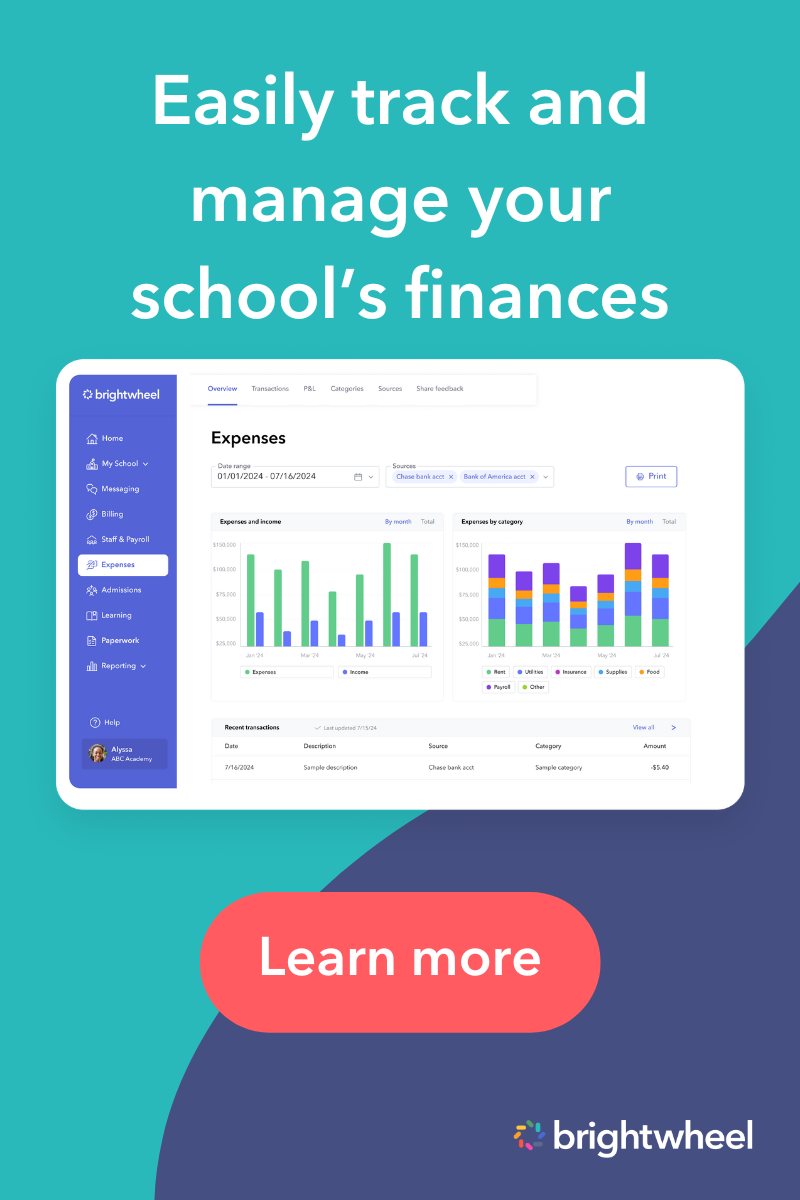
Brightwheel provides an all-in-one childcare management platform designed to streamline your financial operations. With intuitive expense tracking, you can log insurance and other business costs in one secure location, organize policy documents and receipts, and generate detailed financial reports for budgeting and tax preparation.
Brightwheel also simplifies payroll management. Its integrated features allow you to handle staff compensation and payroll taxes seamlessly. Time tracking syncs automatically with payroll, reducing errors and ensuring compliance with state and federal regulations. At tax time, you’ll have accurate, organized reports to ensure you claim every eligible deduction and stay prepared for audits.
By consolidating expense tracking and payroll in Brightwheel, you can reduce administrative stress and spend more time focusing on your staff, children, and families. Brightwheel helps you operate your program with confidence and efficiency.
Frequently asked questions: Insurance expenses for childcare providers
What other types of insurance should childcare programs consider?
Beyond general, professional, and property insurance, some programs may benefit from additional coverage such as tuition insurance (which helps safeguard your program if families are unable to pay due to specific hardships), cyber insurance (for data protection), abuse and molestation liability (to address highly sensitive claims), and umbrella liability policies (for extra coverage beyond standard policy limits). Each program is unique, so assess your risks with an insurance professional.
Is tuition insurance deductible as a business expense?
Yes, the premiums for tuition insurance are generally deductible if they are considered ordinary and necessary for your business. Always keep clear documentation and consult with your tax professional to ensure proper record-keeping and compliance.
Can I deduct the cost of specialized policies like cyber insurance and umbrella insurance?
Generally, premiums for business-related insurance policies—including specialized coverages—are tax deductible. Make sure you only deduct the portion that relates directly to business operations.
How do I decide which types of insurance my childcare program needs?
Start by reviewing state licensing requirements and evaluating your specific risks, such as transportation, technology use, or after-school programs. Consulting with a knowledgeable insurance agent familiar with childcare can help you select policies that best protect your program.
How should I track and organize multiple types of insurance policies?
Organize all insurance policies and related payment records in one secure place, such as a digital file organized by insurance type. With brightwheel, you can upload and store digital copies of policies and receipts, making documentation easy to retrieve during budget reviews or tax preparation.
What if I have questions about less common insurance coverages?
Consider speaking with your insurance agent or a financial advisor experienced in the childcare industry. They can help you understand potential gaps in coverage and whether policies like employment practices liability or equipment breakdown insurance are appropriate for your program.