Running a busy childcare program makes it tough to keep up with social media. Between managing staff, curriculum, and ensuring children are happy and safe, posting on Facebook or Instagram often gets sidelined. But inconsistent posting can weaken connections with current families and miss chances to attract new ones.
A social media content calendar can help. It’s a simple tool to organize posts, save time, and build an online community. This article walks you through five steps to creating a social media content calendar for your program.
Step 1: Define your social media goals
Before you start planning what to post, it is important to understand why you are posting. Having clear goals will guide your content creation and help you measure your success later. If you don't know what you are aiming for, it’s hard to hit the target.
Take a moment to identify your primary objectives. Common goals for childcare programs include:
- Increasing enrollment inquiries: Attracting new families to fill open spots
- Building community: Strengthening the connection with current families and staff
- Showcasing your philosophy: Demonstrating your unique approach to early childhood education
- Establishing expertise: Positioning your program as a local leader in child development
Once you identify your goals, every post on your calendar should serve one of these purposes.

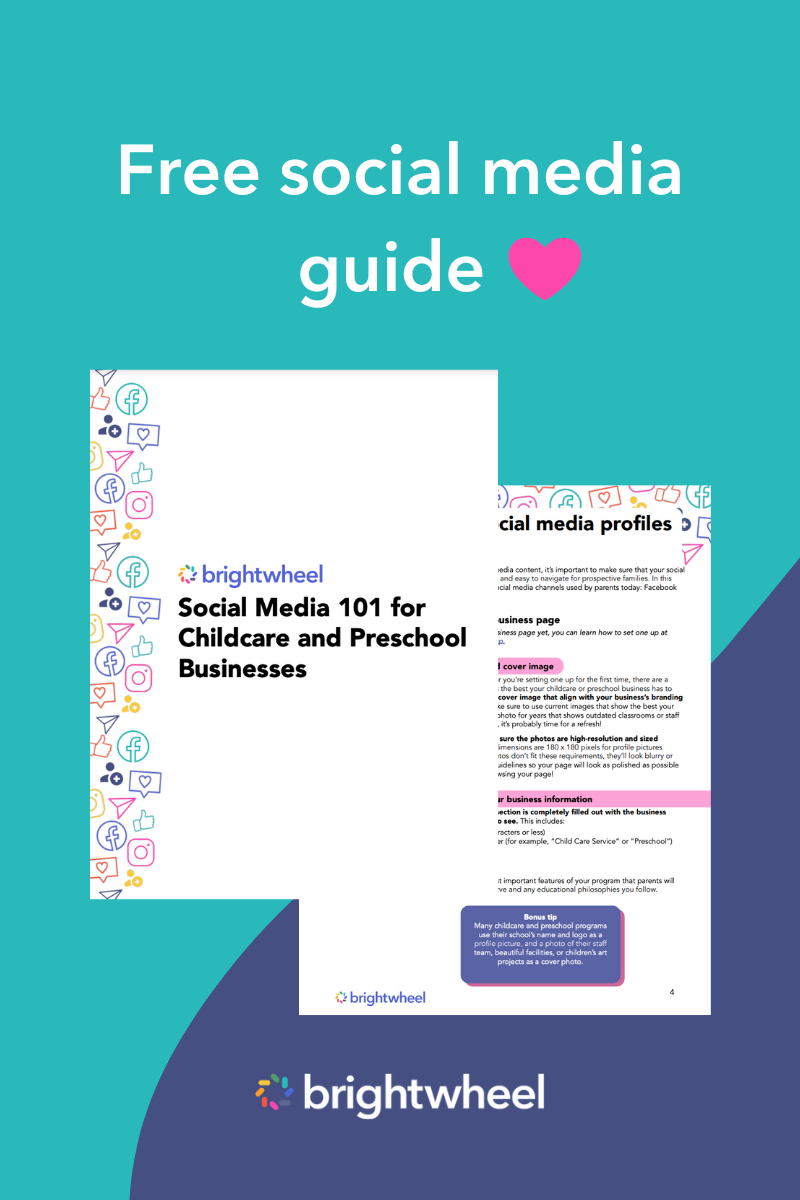
Free eBook: Social Media 101 for Childcare Businesses
Download this free eBook and improve your program's social media presence.
Step 2: Choose your platforms
It is tempting to try and be everywhere at once, but spreading yourself too thin often leads to burnout. Instead, focus on the platforms where your target audience—local families—is most active. For most childcare programs, this typically means Facebook and Instagram.
Each platform has different strengths:
- Facebook: This platform is ideal for community building. It allows for sharing detailed updates, creating events, and facilitating discussions in the comments. It is often the first place families look for reviews and operational information.
- Instagram: This is an excellent tool for visual storytelling. You can use photos, Reels, and Stories to highlight daily activities, show off your classroom environment, and capture the feeling of your program.
We recommend starting with one or two platforms. Master these before you consider expanding to others.
Step 3: Brainstorm content themes
Staring at a blank screen is the hardest part of social media management. To avoid writer's block, use "content pillars" or themes. These are categories of content that you rotate through to ensure your feed stays varied and engaging.
Here are several themes specifically relevant to childcare programs:
- Behind the scenes: Share photos or videos of activity prep, classroom setups, or staff collaboration. This shows the effort that goes into your care.
- Educational activities: Showcase learning in action. This could include sensory play, art projects, or circle time. Explain why the activity is beneficial for development.
- Staff spotlights: Introduce your teachers and staff. Sharing their experience and favorite parts of teaching builds trust and connection with families.
- Testimonials: Share positive feedback from current families (always ask for permission first). Social proof is a powerful marketing tool.
- Parenting tips and resources: Offer helpful advice on topics like child development, transitions, or at-home activities. This establishes your authority as an expert.
- Program announcements: Keep families in the loop with updates on enrollment, upcoming events, or holiday closures.
Step 4: Build your calendar
Now that you have your themes, it’s time to build the calendar. You don't need expensive software to do this. A simple spreadsheet (Google Sheets or Excel), a physical planner, or a digital project management tool like Trello or Asana works perfectly.
Determine posting frequency
Consistency is more important than volume. It is better to post three high-quality posts per week than to post five times one week and zero times the next. Choose a realistic schedule you can stick to, such as Monday, Wednesday, and Friday.
Map it out
Assign specific content themes to specific days to create a rhythm. For example:
- Monday: Staff spotlight (introduce a teacher)
- Wednesday: Educational activity (showcase a science experiment)
- Friday: Program announcement (reminder about next week's event)
Add detail
For each entry in your calendar, include the essential details so you aren't scrambling at the last minute. Include the post topic or copy, the image or video idea, and relevant hashtags.
Step 5: Schedule your posts
The final step is where you save the most time. Instead of logging in every day to post, utilize "batching." This means sitting down once a week (or once a month) to write and create all your posts at one time.
Once your content is ready, use scheduling tools to automate the publishing process. Meta Business Suite is a free tool that allows you to schedule content for both Facebook and Instagram in advance. By scheduling your posts, you free up your daily time to focus on the children and ensure your social media presence remains consistent, even on your busiest days.
Tips for success
Creating the calendar is just the first step. Here is how to keep your strategy running smoothly:
- Stay flexible: Your calendar is a guide, not a rigid rule. If it snows and the children are building amazing snowmen, post that instead of your scheduled content. Leave room for spontaneous, timely moments.
- Engage with your audience: Social media is a two-way street. Set aside a few minutes each day to respond to comments and messages. This engagement signals to algorithms that your content is valuable.
- Use quality visuals: Use clear, bright photos and videos. Blurry or dark images can make your program look unprofessional. Always ensure you have signed media waivers before posting images of children.
- Review your performance: Briefly check your analytics once a month. See which types of posts get the most likes and comments, and adjust your plan to do more of what works.
Start your journey to organized social media
A social media content calendar helps you stay organized, post consistently, and build a stronger connection with your community. By defining your goals, choosing your themes, and planning ahead, you can turn social media from a chore into an effective marketing tool that supports your business growth.