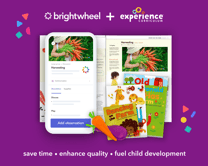
Childcare staff often find themselves juggling separate systems for lesson planning, tracking child development, and communicating with families. This siloed approach creates redundant work and can lead to disconnects between what happens in the classroom and what families understand about their child's day. A holistic approach, however, transforms these isolated tasks into a unified ecosystem.
An effective early learning curriculum is more than a collection of activities. It is a framework that seamlessly integrates lesson plans, social-emotional learning (SEL), and family engagement. When these components work in harmony, they create a supportive and consistent environment for children while streamlining workflows for educators.
This article will explore the three pillars of a modern, holistic curriculum and explain how connecting the classroom and home benefits children, families, and staff. We will also look at how the right tools can make this integrated approach a practical reality for any childcare program.
The three pillars of an early learning curriculum
A truly effective curriculum is built on three core components that work together to support whole-child development. When lesson planning, social-emotional learning, and family partnership are intertwined, the impact is far greater than the sum of its parts.
Integrated lesson planning
Modern lesson planning moves beyond simply keeping children busy. It involves creating intentional, standards-aligned activities that are both engaging and developmentally appropriate. A holistic curriculum provides a clear roadmap for educators, offering activities that can be adapted for different age groups and developmental stages. This ensures that every child is challenged and supported, turning playtime into a powerful learning opportunity. The goal is to make high-quality, research-based learning accessible and easy for teachers to implement.

Social-emotional learning (SEL)
A child’s ability to understand their emotions and build positive relationships is foundational to their success. Instead of treating SEL as a separate lesson, a holistic curriculum embeds it directly into daily routines and activities. This can be as simple as including prompts that encourage children to name their feelings, practice empathy, or work together to solve a problem during play. By weaving SEL into the fabric of the day, educators help children develop resilience, self-regulation, and social skills in a natural and supportive context.
Active family partnership
Engaging families is about more than sending home daily reports. It’s about creating a true partnership where families are active participants in their child’s education. A holistic approach shifts communication from simple reporting to meaningful engagement. When families understand the learning goals behind an activity, they can better appreciate the value of play-based education and reinforce those skills at home. This creates a continuous learning loop that benefits everyone.

Family Engagement Guide
A free guide to help you foster family engagement at your childcare program.
Bridging the gap between the classroom and home
When families have a clear window into their child’s day, it builds trust and strengthens the home-school connection. This transparency is crucial for demonstrating the educational value of your program and fostering a collaborative environment.
Why visibility matters
Sharing the "why" behind classroom activities is a powerful way to build trust with families. When a teacher sends a photo of a child building with blocks, including a note that ties the activity to a specific developmental skill—like fine motor skills or problem-solving—it transforms a simple update into a meaningful insight. This level of detail helps families see the intention and expertise behind your work, reinforcing the value of the education you provide.
Extending learning beyond school hours
A holistic early learning curriculum also helps bridge the gap between school and home by giving families simple, actionable ways to extend learning. When teachers share activities that align with classroom lessons, families feel empowered to support their child’s development. For example, an in-app message might suggest a fun sorting game with household items to reinforce math concepts learned that day. These small touchpoints make learning a continuous and shared experience.
The loop of feedback
Effective communication is a two-way street. A holistic system creates a feedback loop where teachers' observations inform families, and family feedback helps shape future lesson planning. When a family shares that their child has been practicing a new skill at home, it gives the teacher valuable context. Likewise, when a teacher shares a milestone achieved in the classroom, it helps families understand their child's progress. This collaborative exchange ensures that everyone is aligned in supporting the child’s growth.
How brightwheel’s Experience Curriculum unifies the approach
Brightwheel’s Experience Curriculum is designed to bring these holistic principles to life, offering an all-in-one solution that connects lesson planning, SEL, and family communication.
- All-in-one lesson planning: The curriculum provides digital, research-based lesson plans that are easy for teachers to access and implement. With everything in one place, educators can spend less time searching for materials and more time interacting with children.
- Embedded SEL support: Social-emotional learning is woven into every aspect of the curriculum. Built-in prompts and activities are designed to help children develop resilience, empathy, and self-regulation during regular play, making SEL a natural part of the daily routine.
- Seamless family connection: With brightwheel, teachers can send observations, photos, and updates linked to specific learning standards directly to families with a single click. This feature saves staff valuable time by eliminating the need to write separate updates and gives families immediate, meaningful insight into their child’s developmental journey.
The operational impact of a holistic system
Adopting a unified curriculum does more than just support child development; it also has a significant positive impact on the operational health of a childcare program.
Increasing staff efficiency
When lesson plans, developmental observations, and family communication tools are integrated, the administrative burden on teachers is greatly reduced. Staff no longer need to spend hours searching for activities, aligning them to standards, or drafting separate newsletters and parent updates. This efficiency allows them to focus their energy where it matters most: on the children.
Improving family satisfaction
Consistent, transparent communication is a key driver of family satisfaction and retention. When families receive regular, meaningful updates about their child’s progress and understand the educational value of your program, they are more likely to feel connected and confident in the care you provide. This builds loyalty and strengthens your program’s reputation.
Creating consistency across classrooms
A unified curriculum ensures that every child in your program receives a high-quality, standards-aligned education, regardless of their classroom or teacher. This consistency helps maintain a standard of excellence across your entire program and simplifies training and onboarding for new staff members.
Unify your program with a connected curriculum
An early learning curriculum is most powerful when it connects the child, the teacher, and the family in a shared educational journey. Fragmented systems create extra work and missed opportunities, but the right tools can transform a disjointed day into a cohesive, nurturing, and efficient experience for everyone.
By embracing a holistic approach, you can create a thriving learning community where every element works together to support growth.