Childcare providers can generally deduct 100% of the cost of meals and snacks provided to eligible children in their care as a business expense. To accurately claim these deductions, providers must maintain detailed records of all food purchases, menus, and attendance, or use the standard meal allowance rates set by the IRS.
Managing food costs is a critical part of running a sustainable childcare business. Whether you are maximizing tax deductions or participating in the Child and Adult Care Food Program (CACFP), having a clear system for tracking expenses is essential. This guide covers what qualifies as a deductible expense, how to leverage CACFP, and how modern tools can simplify compliance.
What qualifies as a food expense?
When it comes to deducting meal expenses, the IRS allows you to claim the cost of food and beverages provided to the children enrolled in your program. These costs are considered essential business expenses and are fully deductible.
Qualifying expenses typically include:
- Groceries: Fruits, vegetables, proteins, grains, and dairy products used for meals.
- Snacks: Items like yogurt, crackers, or cheese sticks served between meals.
- Beverages: Milk, 100% juice, and water.
- Specialty items: Foods purchased to accommodate allergies or dietary restrictions.
Note: Food consumed by you, your family, or your own children is not deductible. Food provided to employees is typically only 50% deductible. Keeping these costs separate is vital for accurate tax reporting.
Are food expenses tax deductible?
Yes, food served to children in your care is 100% tax-deductible. If you participate in the CACFP, you must report the reimbursement payments as income, but you can still deduct the actual cost of the food you purchased.
Detailed documentation is your best defense during an audit. You need to prove that the food was purchased for the business and served to eligible children.
Standard meal allowance vs actual expenses
Childcare providers generally have two options for deducting meal expenses:
- Actual expenses: Deduct the exact dollar amount spent on food. This requires keeping every receipt and logging every purchase.
- Standard meal allowance: Use the standard rates provided by the IRS for breakfast, lunch, dinner, and snacks. This method requires tracking the number of meals served rather than the specific cost of ingredients.
Consult a tax professional to determine which method yields the higher deduction for your specific situation.
How to track and manage food expenses
Consistent tracking is the only way to ensure you are maximizing your deductions and staying compliant. Here are four steps to simplify the process:
1. Digitize your receipts
Save every receipt for food purchases. Using a tool like brightwheel allows you to upload photos of receipts directly from your smartphone, keeping digital copies organized and safe from being lost or faded.
2. Separate business finances
Use a dedicated business debit or credit card for all program-related food purchases. This separation makes it much easier to identify deductible expenses when reviewing monthly bank statements.
3. Maintain detailed logs
Whether you use the standard meal allowance or actual expenses method, you need a log. Record the date, the meal type served, and the children present.
4. Leverage modern technology
Manual tracking is prone to error. Modern childcare software automates the heavy lifting.
- Menu uploader: Tools like brightwheel’s menu uploader allow you to snap a photo of your paper menu and instantly convert it into a digital format.
- Reusable templates: Save time by building menus once and rotating them using reusable templates.
- Automated reporting: Generate reports that combine attendance data with meal counts to ensure every eligible meal is counted for tax or reimbursement purposes.

Income and Expense Worksheet
Use this worksheet to track your finances, make smarter spending decisions, and create a monthly budget.
How can I track food expenses for CACFP reimbursement?
You can track food expenses for CACFP reimbursement by logging the number of meals and snacks served, maintaining accurate menu records, and saving grocery receipts. Participating in the Child and Adult Care Food Program (CACFP) is an excellent way for childcare programs to offset the cost of serving nutritious meals and snacks. CACFP provides federal reimbursement to eligible providers, helping you offer high-quality nutrition while easing financial pressure.
To receive reimbursement, providers must submit a monthly claim to their state agency. This claim details the number of meals and snacks served that meet CACFP guidelines, along with supporting documentation such as menus, meal counts, and purchase records. Staying organized and maintaining accurate records is important because only eligible expenses will be reimbursed, and State agencies may request documentation during reviews or audits.
Tracking your food expenses and meal service can feel overwhelming, especially for busy programs. That’s where technology makes a difference. Brightwheel’s menu planning software and CACFP meal tracking features are designed to streamline this process. With brightwheel, you can:
- Instantly convert paper menus to digital formats by simply uploading a photo using the Menu Uploader.
- Save time by building reusable menu templates from a centralized food item library pre-loaded with USDA items.
- Ensure compliance with real-time CACFP guardrails that alert you if required meal components are missing before you serve the food.
- Record meals and snacks served, noting eligibility and compliance with CACFP requirements.
- Log food purchases and attach receipts directly from your smartphone, keeping digital copies safe and organized.
- Generate reports showing meal counts and expenses for quicker, more accurate monthly claim submissions.
Providers can also use brightwheel to track attendance and meal patterns, ensuring submissions match eligibility requirements and reducing the risk of errors or lost reimbursement. By combining accurate tracking and user-friendly technology, you can make the most of CACFP benefits and keep your program financially strong.
Why does tracking food expenses matter?
Tracking a food expense matters because it allows administrators to create accurate budgets, identify cost-saving opportunities, and maximize eligible tax deductions. Tracking your food expenses is about more than tax preparation—it is key to running an efficient program. Careful tracking allows you to:
- Budget accurately: Food is a recurring but variable expense. By monitoring costs, you can set realistic budgets and manage cash flow effectively.
- Plan financially: Detailed records reveal spending patterns, helping you identify cost-saving opportunities like bulk purchases or more affordable suppliers.
- Maximize tax deductions: Food expenses are fully deductible for childcare programs. Proper documentation ensures you claim the full eligible amount.
- Simplify tax preparation: Organized records save time during tax season and give you confidence in filing accurate, compliant reports.
How does brightwheel simplify expense management?
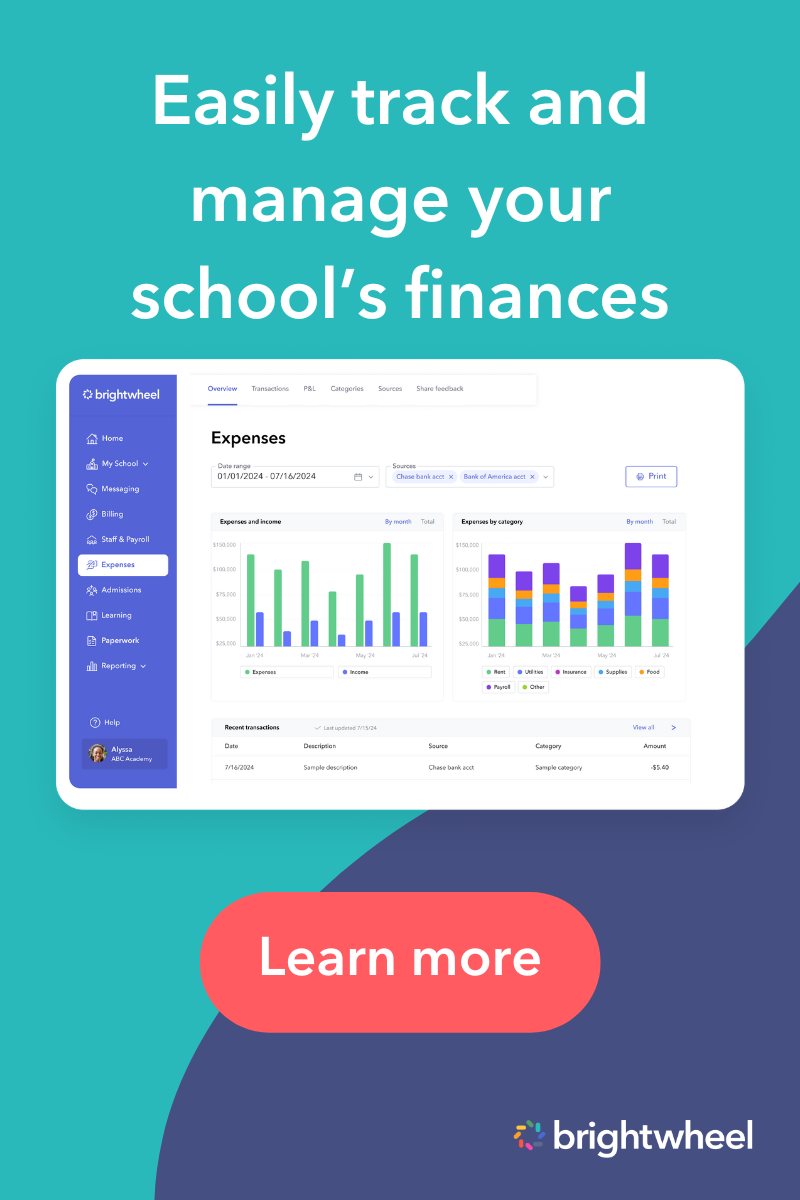
Brightwheel simplifies expense management by offering an integrated platform to track categorized expenses, manage budgets, and plan menus seamlessly. Track and categorize expenses, monitor budgets, and gain full visibility into your program’s financial health—all in one place.
This seamless approach saves time, reduces errors, and ensures you stay on top of your expenses, so you can focus on what matters most: providing quality care for children and families. Brightwheel’s platform makes it easy to categorize expenses and generate the reports you need, eliminating the stress of manual tracking. By integrating new menu features, you can snap a photo of a paper menu to digitize it and rely on active guardrails to catch claim errors before they happen.
Build a strong financial foundation
Managing food expenses is a vital part of running a successful childcare program. With consistent tracking and the right tools, you can create precise budgets, control costs, and maximize tax benefits—all while prioritizing the children in your care.
Brightwheel’s all-in-one solution supports every aspect of program finances. From tracking food expenses to automating payroll, it helps you stay organized, compliant, and focused on what truly matters—nurturing children and families.
Frequently asked questions about food expenses
Q: What is the difference between meals and snacks in a childcare setting?
A: Meals typically refer to breakfast, lunch, or dinner and provide the majority of a child’s nutrition for that part of the day. Snacks are smaller servings offered between meals to curb hunger and provide energy. When participating in CACFP, specific guidelines define what qualifies as a reimbursable meal or snack based on portion size and food groups served.
Q: How should I account for food expenses in my childcare program?
A: Food expenses should be tracked as a separate category in your program’s bookkeeping records using a dedicated business account. Keep all receipts and upload digital copies to a platform like brightwheel to simplify record keeping. Categorize each expense accurately to generate clear reports for budgeting, tax preparation, and reimbursement claims.
Q: Are CACFP reimbursements considered taxable income?
A: Yes, reimbursements received from the Child and Adult Care Food Program (CACFP) are generally considered taxable income by the IRS. When you file your taxes, you should report CACFP reimbursements as income but also deduct the corresponding food expenses.
Q: Can food expenses for my family or employees be deducted?
A: Food served to the children in your care is fully deductible, while food provided to employees is typically 50 percent deductible. Personal or family food expenses are not deductible, so it is important to separate these purchases clearly and keep accurate records for your program.
Q: How do I calculate a food expense per child?
A: You can calculate the food expense per child by dividing your total qualifying food costs over a specific period by the number of children enrolled. This metric helps childcare programs set accurate tuition rates and manage monthly budgets effectively.
Q: What is the standard food expense budget for a childcare program?
A: While it varies by location and program size, many childcare programs allocate between 10 and 15 percent of their total operating budget to food expenses. Monitoring these costs digitally ensures your program remains profitable while serving high-quality meals.
Q: Can I deduct meals if I don't use the CACFP?
A: Yes, you can deduct the cost of meals and snacks provided to children regardless of your participation in the CACFP. You can choose to deduct the actual cost of food or use the standard meal allowance rates set by the IRS.
Q: Is the cost of paper plates and napkins deductible?
A: Yes, non-food supplies used for serving meals—such as paper plates, napkins, and plastic utensils—are deductible as business expenses (supplies), but they are usually tracked separately from food costs.