Running a childcare program requires keeping a steady supply of items to maintain a safe, engaging, and clean environment. From art supplies and educational materials to cleaning products and diapers, these expenses can add up quickly. Properly tracking these purchases as business expenses is essential for managing your budget and preparing for tax season.
This guide will explain what qualifies as supplies and materials, why tracking them is vital, and how to do it effectively. We’ll also cover how these expenses can be deducted on your taxes and introduce a tool to simplify the process.
What qualifies as supplies and materials?
For childcare providers, "supplies and materials" include most consumable items used daily. These are items that need regular replenishment. If something is purchased specifically for your childcare business and is essential to its operation, it likely qualifies as a deductible expense.
Common examples include:
- Art supplies: Crayons, markers, paint, glue, and craft paper.
- Educational materials: Books, flashcards, worksheets, and science experiment supplies.
- Cleaning products: Disinfectant wipes, soap, paper towels, and all-purpose cleaners.
- Health and safety items: First-aid kits, tissues, disposable gloves, and bandages.
- Diapering supplies: Diapers, wipes, and changing table liners.
- Office supplies: Printer paper, pens, folders, and ink.
- Kitchen supplies: Paper plates, napkins, and plastic utensils for snacks and meals.
It’s important to distinguish between supplies and equipment. Supplies are used within a year, while equipment—like cribs or computers—has a longer lifespan and is handled differently for tax purposes through depreciation.
Why tracking supplies and materials matters
Tracking your supply and material expenses provides several benefits:
- Accurate budgeting: Knowing how much you spend each month allows you to plan for future expenses, manage cash flow, and set tuition rates that cover your costs.
- Smarter financial decisions: Detailed records help you identify overspending and opportunities to save, such as buying in bulk.
- Maximized tax deductions: Every eligible expense is a potential tax deduction. Without proper tracking, you might miss out on savings that could lower your tax bill.
- Simplified tax preparation: Keeping organized records throughout the year makes tax season less stressful and reduces the chance of errors.
Are supplies and materials tax-deductible?
Yes. In most cases, supplies and materials used in your childcare business are 100% tax-deductible. The IRS generally considers these costs “ordinary and necessary” for running your program. When you deduct them on your tax return, you lower your taxable income, which can reduce the amount you owe.
If you’re a sole proprietor, you’ll typically report these expenses on Schedule C (Form 1040), where you calculate your business’s profit or loss. To support your deductions, keep detailed, organized records throughout the year. Store receipts, invoices, and expense reports so you can show proof if the IRS ever has questions. A tax professional or accountant familiar with childcare programs can help you apply these rules correctly and make sure you’re maximizing your eligible deductions.
How to track supplies and materials expenses
Tracking doesn’t have to be complicated. The key is consistency.
Save receipts
Keep every receipt for business purchases. Receipts are essential proof for tax deductions. Make it a habit to request and store them whenever you buy supplies.
Use a dedicated payment method
A separate business credit or debit card for childcare expenses makes it easy to review purchases and simplifies bookkeeping by keeping personal and business expenses separate.
Stay organized
Organize receipts by month or category (e.g., "Art Supplies," "Cleaning Products"). For digital receipts, create folders on your computer. Adding notes to receipts about the purchase details can be helpful later.

Income and Expense Worksheet
Use this worksheet to track your finances, make smarter spending decisions, and create a monthly budget.
Use technology
Manual tracking works, but it can be time-consuming and prone to errors. Expense tracking tools can automate much of the process, saving time and ensuring accuracy.
Simplify financial management with brightwheel
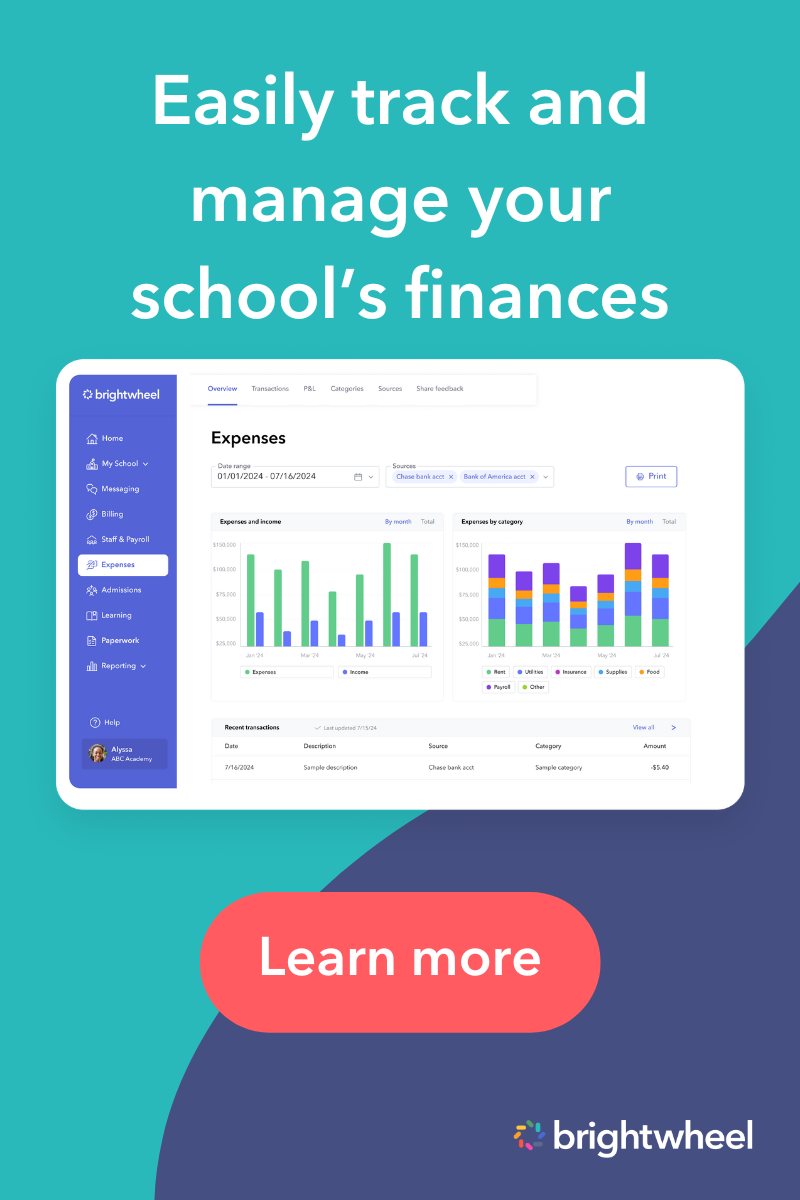
Brightwheel helps childcare providers streamline expense tracking and payroll management. With its built-in expense tracking features, you can record, categorize, and report supply purchases from a single user-friendly dashboard. This ensures nothing is missed when preparing for taxes or reviewing spending.
Brightwheel also includes payroll solutions tailored for childcare providers, integrating time tracking, payroll processing, and automated tax filings. This reduces administrative tasks so you can focus on the children and families you serve.
By combining expense tracking and payroll in one platform, brightwheel simplifies budgeting, improves financial oversight, and ensures you’re fully prepared for tax season with organized, accurate reports.
Stay organized and save more
Staying organized with your supplies and materials isn’t just about keeping your shelves stocked: It’s a core part of running a financially healthy childcare program. When you consistently track purchases and categorize expenses, you gain a clearer view of your monthly spending, uncover opportunities to buy in bulk or find better prices, and avoid unnecessary purchases. Well-maintained records also make tax preparation much faster and more accurate, helping you claim every eligible deduction and avoid costly errors. By making organization a habit, you’ll reduce stress, save money, and create a smoother experience for your team, allowing you to focus more on what matters most, supporting the children and families in your care.
Frequently asked questions about supplies expenses
What are considered supplies for my childcare program?
Supplies are consumable items used in daily operations that need to be replenished regularly. This includes art and craft materials, cleaning products, diapers, educational resources, and certain kitchen or office items. If the item is used up within a year and is necessary for your business activities, it typically counts as a supply.
How are office supplies different from office expenses?
Office supplies are tangible, consumable items like paper, pens, staples, and printer ink. Office expenses, on the other hand, often refer to service-based or recurring costs, such as software subscriptions, postage, or phone bills. Both types are deductible, but supplies are physical items consumed in the course of business, while office expenses often support administrative functions.
How should I account for supplies expenses?
For best results, use a dedicated business payment method for all purchases and keep copies of every receipt. An easy way to do this is by taking a photo of the receipt with your smartphone and uploading it to brightwheel, which saves time and prevents receipts from getting lost. Categorize each expense (e.g., “Art Supplies” or “Cleaning Products”) and enter it into your tracking system promptly. At tax time, report your total eligible supply expenses on the appropriate section of your tax return (usually Schedule C for sole proprietors). Organized, up-to-date records make tax filing easier and help you claim every deduction you deserve.
Are there supplies that should be categorized differently?
Yes. Larger, long-lasting purchases such as furniture, computers, or playground equipment are considered equipment, not supplies. These are depreciated over time instead of being deducted all at once. Supplies are items expected to be used up within a year.
How often should I update my supply expense records?
Update your records regularly—ideally after each purchase or at least weekly. This habit prevents paperwork from piling up, ensures you have all necessary documentation, and provides a clearer view of your spending throughout the year.
Do I need to keep physical copies of my receipts?
The IRS accepts digital copies, so scanning or photographing your receipts is perfectly acceptable. Uploading them to a platform like brightwheel helps organize your records, making them easy to access for budgeting or during tax season.