A back-to-school deep clean for childcare programs covers five core areas: floors and carpets, walls and surfaces, toy sanitation, HVAC and air quality, and supply restocking. The goal is to eliminate accumulated allergens and pathogens, organize materials for efficiency, and create a hygienic baseline before children return.
The start of a new school year brings excitement, new faces, and fresh energy to your childcare program. After a summer of fun and activities, or a short break to recharge, your facility likely needs a reset. To welcome families and staff back properly, a thorough deep clean is essential to prepare the space for the busy months ahead.
A comprehensive back-to-school cleaning strategy not only ensures a hygienic environment but also sets the tone for an organized and successful year. When families walk through your doors, a sparkling clean facility signals that you prioritize their children's health and safety. It creates a welcoming atmosphere that builds trust and confidence from day one.
This guide covers deep cleaning fundamentals, organizational strategies for supplies, and tips for establishing a healthy baseline for the coming months. By following these steps, you can create a safe, organized, and inviting space where children can thrive and staff can focus on what they do best—caring for and educating young minds.
Starting with a clean slate
A deep clean acts as a reset button for your facility. It goes beyond the daily tidy-up to address grime, allergens, and wear and tear that accumulate over time.
Floors and carpets
High-traffic areas take a beating throughout the year. Schedule professional carpet cleaning or rent a high-grade steamer to remove summer grime, allergens, and stains that vacuuming alone can't reach.
For hard floors, consider stripping and waxing them to restore their shine and protect them from future scuffs. Clean floors not only look better but also improve the overall hygiene of your childcare program.
Walls and baseboards
Walls often bear the brunt of sticky fingers and artistic endeavors. Wash down walls to remove fingerprints, scuff marks, and any residue. Don't forget the baseboards, where dust and germs often settle unnoticed. Disinfecting these low-touch areas contributes to a cleaner overall environment and reduces the presence of allergens.
Windows and lighting
Natural light can transform a room, making it feel larger and more welcoming. Clean windows inside and out to maximize the sunlight entering your classrooms. Additionally, dust light fixtures and ceiling fans to prevent dust bunnies from falling onto clean surfaces.
Replace any burnt-out bulbs to ensure a bright, cheerful atmosphere that is conducive to learning and play. A bright, stain-free room immediately signals to new families that you prioritize care and attention to detail.

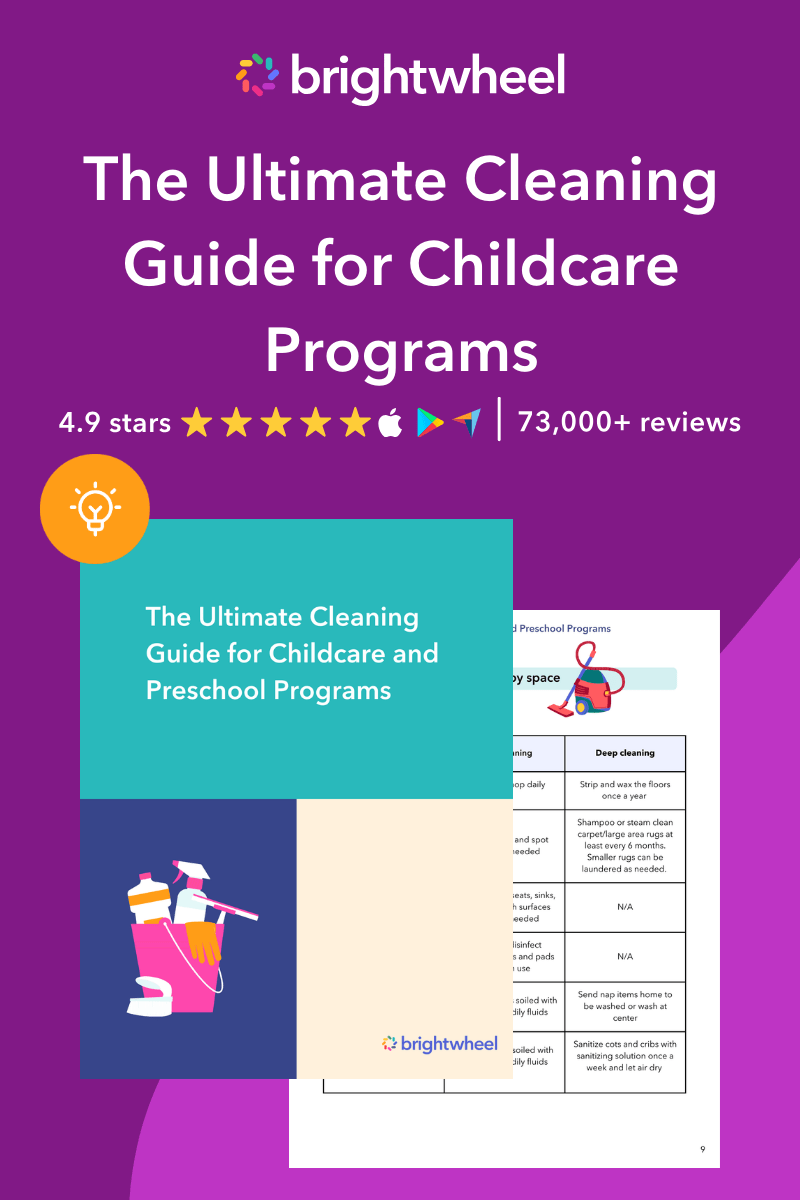
The Ultimate Cleaning Guide for Childcare Programs
Use this guide to create safe and healthy spaces for children, staff, and families.
Inventory and organization for efficiency
An organized facility runs more smoothly. Taking the time to audit and organize your supplies now will save you headaches later when the school year is in full swing.
Audit existing supplies
Sort through art supplies, manipulatives, and office materials. Discard dried-out markers, broken crayons, or damaged paper. This process clears out clutter and helps you identify exactly what you need to order. It also ensures that the materials available to the children are safe and in good condition.
Sanitize bins and shelves
Before restocking, wipe down the inside of storage bins and shelves. Dust and crumbs can easily accumulate in these spaces. Use this opportunity to relabel containers clearly for staff and children. Clear labeling systems help substitutes and new staff members locate items quickly without disrupting the classroom flow.
Restock essentials
Create a checklist of high-use items such as tissues, hand soap, paper towels, and hand sanitizer. Stock up on these essentials now to avoid shortages during the first hectic weeks of school. Having ample supplies on hand ensures that hygiene practices can be maintained without interruption.
Establishing health and safety protocols
A clean environment is the first line of defense against illness. Establishing robust health and safety protocols helps keep your community healthy throughout the year.
Most state childcare licensing regulations require facilities to maintain a written cleaning and sanitation schedule — this back-to-school clean is a good time to review and update yours.
Touchpoint disinfection
Intensely disinfect high-touch areas like doorknobs, light switches, faucet handles, and cabinet pulls to kill lingering germs. These surfaces are prime vectors for the spread of viruses and bacteria. Making this a regular part of your cleaning routine significantly reduces the risk of illness transmission.
Toy sanitation
Toys are constantly handled and often end up in mouths. Run dishwasher-safe toys through a cycle and soak plastic toys in a child-safe bleach solution or an EPA-approved disinfectant. Wash all soft toys, dress-up clothes, and cushion covers in the laundry. Starting the year with freshly sanitized toys helps prevent the spread of germs from day one.
| Toy type | Sanitizing method |
|---|---|
| Dishwasher-safe plastic/rubber | Run on heated cycle |
| Non-dishwasher plastic | Soak in diluted bleach solution (1 tbsp per gallon), rinse, air dry |
| Soft toys, dress-up clothes | Machine wash on hot cycle |
| Books and puzzles | Wipe with EPA-approved disinfectant wipe |
HVAC maintenance
The CDC recommends upgrading HVAC systems to MERV-13 filters or higher to reduce the transmission of airborne respiratory particles — a step that applies directly to childcare facilities, where children in close contact are especially vulnerable. Proactive HVAC maintenance can significantly improve indoor air quality, potentially reducing sick days for both staff and children later in the season.
FAQs
How often should childcare centers deep clean?
Most licensing bodies recommend a full facility deep clean at least twice a year — at the start and end of the program year. High-touch surfaces should be disinfected daily.
What disinfectants are safe to use around children?
Use EPA-registered, child-safe disinfectants. The EPA's Safer Choice program lists products that are effective against common pathogens while minimizing risk to children and staff.
How long should toys air-dry after sanitizing?
After soaking in a bleach solution (typically 1 tablespoon unscented bleach per gallon of water), toys should air-dry completely before returning to use — usually 10–30 minutes.
What's the difference between cleaning, sanitizing, and disinfecting?
Cleaning removes visible dirt; sanitizing reduces bacteria to safe levels; disinfecting kills a broader range of pathogens. Childcare programs should do all three, in that order, on surfaces children contact regularly.
Setting the stage for a successful year
By dedicating time to deep cleaning and organizing before your school year starts, you set the stage for a smoother, more efficient year ahead. It allows your staff to focus on the children rather than clutter, and it reassures families that their children are in a safe, well-cared-for environment.