Childcare licensing inspections are a critical component of operating a safe and compliant childcare program. While the thought of a surprise visit might seem daunting, viewing these inspections as an opportunity to demonstrate your commitment to quality care can shift your perspective. A successful inspection not only validates your hard work but also builds trust with families and staff.
Being proactive is the best way to handle the stress of an unannounced visit. When you have systems in place and a team that understands the importance of compliance, you can face any inspection with confidence. This guide will walk you through the essential steps to prepare your program, from organizing paperwork to conducting physical walkthroughs.
What is the importance of childcare licensing inspections?
State licensing agencies conduct inspections to ensure that childcare programs meet specific health, safety, and operational standards. These regulations are designed to protect the well-being of the children in your care.
Regular inspections help you identify potential hazards before they become issues, ensuring that your environment remains safe and nurturing. Furthermore, maintaining a strong compliance record is a powerful marketing tool. Prospective families often check licensing history before enrolling their children, so a clean record can directly impact your enrollment numbers.
To help you stay organized, it is helpful to use a structured tool. A comprehensive checklist can serve as your roadmap, ensuring no detail is overlooked. By systematically reviewing every area of your program, you can catch small oversights that might otherwise lead to citations.

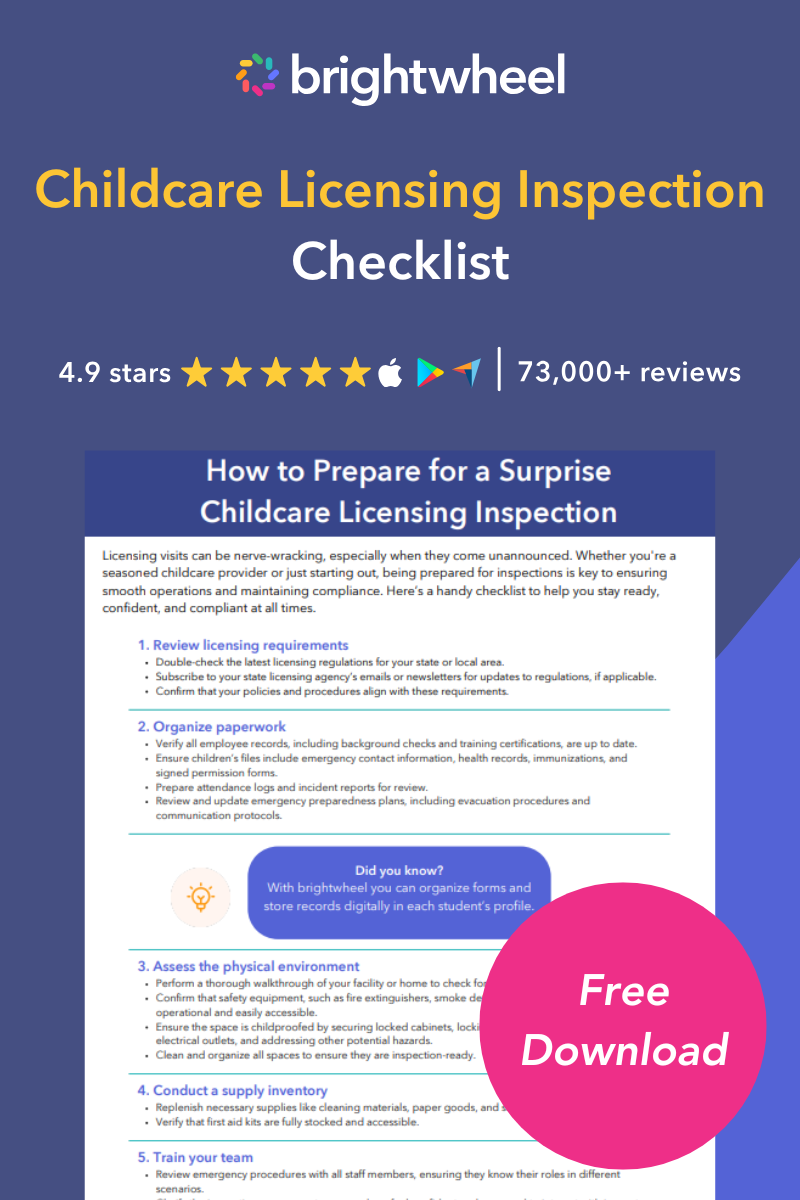
Childcare Licensing Inspection Checklist
A free checklist to prepare your program for a surprise childcare licensing inspection.
Understanding licensing requirements
Regulations can change, and what was compliant last year might need an update today. The first step in your preparation should always be a regulatory review.
Double-check the latest licensing regulations
Visit your state licensing agency’s website to download the most current set of regulations. Many states also offer email subscriptions or newsletters that alert providers to regulatory changes. Confirm that your program's policies and procedures align with these current requirements. If you operate in multiple locations, remember that requirements can vary significantly by state or even local jurisdictions.
Verify employee records
Your staff files are often one of the first things an inspector will ask to see. Ensure that every employee record is up to date and includes:
- Completed background checks
- Current training certifications (CPR, First Aid, etc.)
- Educational credentials
- Health screenings (if required by your state)
Using a digital management system like brightwheel can simplify this process by alerting you when certifications are about to expire.
Ensuring safety and emergency preparedness
The physical safety of the children is paramount. Inspectors will look for hazards that could pose a risk to curious toddlers or active preschoolers.
Thorough walkthrough of facility
Perform a mock inspection of your facility or home. Look at your space from a child’s perspective—literally get down to their eye level. Check for:
- Uncovered electrical outlets
- Unsecured furniture that could tip over
- Medication or cleaning supplies that are not in locked cabinets
- Choking hazards in play areas
Check safety equipment
Safety equipment is only useful if it works. Verify that all fire extinguishers are fully charged and have been inspected recently. Test smoke and carbon monoxide detectors to ensure they are operational. Check your first aid kits to ensure they are fully stocked and that no items have expired.
Review emergency procedures with all staff members
Having a plan on paper is not enough; your team must know how to execute it. Review your emergency preparedness plans, including evacuation routes and communication protocols. Ensure every staff member knows their specific role during a fire, severe weather event, or medical emergency.
Maintaining proper records and documentation
Administrative organization is a key indicator of a well-run program. Inspectors will look for specific documents regarding the children in your care and your operational policies.
Audit children’s files
Incomplete children's files are a common citation. Audit your files to ensure they contain:
- Up-to-date emergency contact information
- Current health records and physicals
- Immunization records
- Signed consent forms (for transport, photography, sunscreen application, etc.)
- Allergy and dietary restriction information
Display required notices
Your state requires specific documents to be visible to families and staff. Specific requirements vary, but generally, you should display:
- Your current childcare license
- Emergency evacuation plans and routes
- Staffing ratios
- Caregiver certifications
- Menus (if you provide meals)
- Notice of the last inspection results
Preparing the physical environment
Your facility should be clean, organized, and well-stocked. A chaotic environment can signal to an inspector that supervision or hygiene might be lacking.
Replenish necessary supplies
Conduct a supply inventory to ensure you aren't running low on essentials. This includes cleaning materials, paper goods (towels, tissues, toilet paper), and healthy snacks. Ensure that soap dispensers are full and that changing tables have all necessary sanitation supplies within reach.
Inspect toys and learning aids
Inspectors will check the condition of your educational materials. Confirm that all toys and learning aids are:
- Clean and sanitized
- In good repair (no broken pieces or sharp edges)
- Age-appropriate for the classroom they are in
Organize these materials to maintain a neat and welcoming space. This demonstrates that you value the learning environment and the children's experience.
Last-minute preparations
As you get closer to your expected inspection window (or if you just want to stay ready year-round), a final review can catch any lingering issues or potential violations.
Plan a comprehensive walkthrough
Schedule a dedicated time to do a full walkthrough of your facility one or two days before you expect an inspection, or on a monthly basis for general maintenance. If possible, invite a fellow director or a trusted mentor who is unfamiliar with your space to conduct this walkthrough. Fresh eyes often spot things that you might overlook because you see them every day.
During this final check, address any last-minute maintenance issues, such as a flickering light bulb or a loose cabinet handle.
Minimize stress through preparation
Proper preparation is the antidote to inspection anxiety. When you know your program meets high standards, you can welcome inspectors as partners in safety rather than adversaries.
By maintaining accurate records, ensuring a safe physical environment, and training your team, you minimize stress and support a high-quality childcare program.