Imagine the doorbell rings at your childcare program. You look at the camera and see a state licensing inspector standing there. Does your heart race with panic, or do you feel calm and confident? For many providers, the thought of an unannounced inspection triggers anxiety. It often leads to a frantic scramble to check files, clean corners, and verify ratios.
Licensing rules exist for a vital reason: keeping children safe and ensuring high-quality care. Compliance shouldn't feel like a once-a-year exam. Instead, it should be a daily habit embedded into your operations. When compliance becomes second nature, inspections are simply an opportunity to show off your excellent program.
Staying compliant year-round doesn’t happen by chance. It requires proactive habits, team collaboration, and the right tools. With a mindset shift and strategic systems, you can move from scrambling to being prepared. Here’s how to build a compliance culture that lasts all year.
Cultivate a culture of safety and awareness
Creating a safe environment starts with the people in it. When your entire team understands their role in compliance, they create a safety net that catches issues early.
Involve the whole team
Compliance isn’t just the director’s responsibility. Every educator and staff member plays a role. Encourage your team to:
- Fix or report potential issues immediately (e.g., frayed rugs, missing forms).
- Communicate openly about hazards or broken equipment without fear of reprimand.
- Take ownership of daily safety checks and standards.
Make ongoing education a priority
State-mandated training is just the starting point. Go beyond the basics:
- Share quick safety tips during monthly staff meetings.
- Regularly review protocols that might get overlooked during busy days.
- Explain the reasons behind rules. When staff understand that regulations protect them and the families they serve, they’ll be more motivated to follow them.
Conduct routine self-audits
Don’t wait for a state inspector to find a problem. By conducting your own inspections regularly, you can address gaps on your own schedule.
Try mock inspections
Schedule quarterly “surprise” internal inspections:
- Treat it like a real visit, checking files, classrooms, and outdoor areas.
- Use a detailed tool like a childcare licensing inspection checklist to ensure thoroughness.
Rotate who inspects
Fresh eyes catch what daily routines miss. Assign a lead teacher to inspect another classroom or invite a director from a partner program to conduct a walkthrough. Use their feedback to improve collaboratively, not as a performance review.

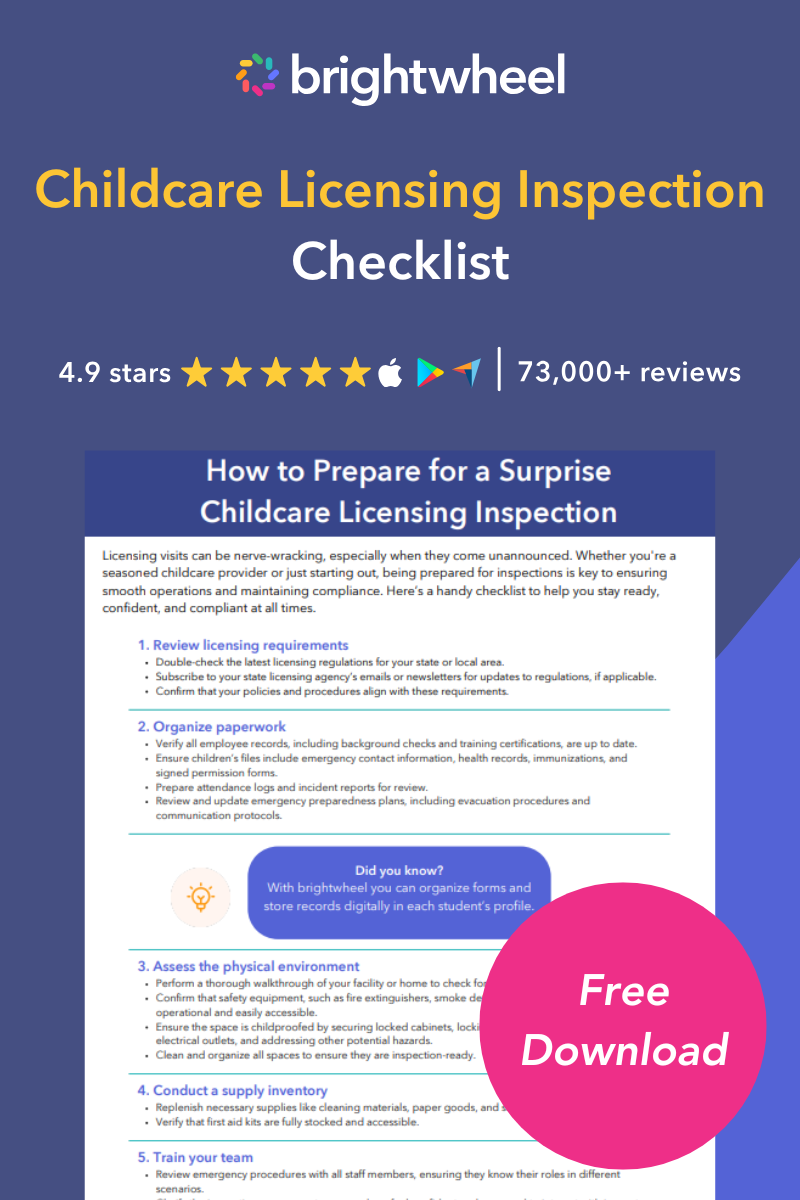
Childcare Licensing Inspection Checklist
A free checklist to prepare your program for a surprise childcare licensing inspection.
Streamline documentation and record keeping
Paperwork is often the biggest compliance headache. Missing one signature or immunization record can lead to citations. Organized systems can help.
Switch to digital systems
Digital tools make tracking easier by:
- Centralizing child files, staff certifications, and attendance in one secure location.
- Sending automated alerts for expiring immunization records or upcoming background check renewals.
These systems reduce human error and keep critical documents up to date.
Follow the “touch it once” rule
Pile-ups of paperwork lead to mistakes. To stay on top of records:
- Update files as soon as you receive new information from families or staff.
- Avoid creating “to-do” piles where documents get lost.
- Conduct monthly file audits. Reviewing 5–10 random files regularly prevents last-minute scrambling before inspections.
Maintain the physical environment proactively
Daily wear and tear in childcare facilities is inevitable. A maintenance strategy ensures your environment stays safe.
Conduct daily safety sweeps
Create quick opening and closing checklists to:
- Scan for hazards like loose outlets, broken toys, or tripping risks.
- Report maintenance needs immediately through a simple logging system.
Prompt repairs show families and inspectors that safety is a top priority.
Perform seasonal checks
Different seasons bring unique challenges. Stay prepared by:
- Inspecting outdoor equipment for summer heat or winter conditions.
- Checking emergency supplies like first aid kits, food, and water for expired items.
Being ready for emergencies is a key part of compliance.
Build a foundation of readiness
Compliance is about honoring the trust families place in your program. By fostering a culture of safety, conducting regular self-audits, and streamlining your systems, you can eliminate inspection panic. A compliant childcare program is a safe one, allowing you to focus on providing excellent care and education.