Licensing inspections can feel intimidating, but they’re designed to ensure the safety and well-being of the children in your care. Viewing inspections as a tool to uphold high standards can make the process less stressful.
Preparation isn’t about last-minute fixes—it’s about maintaining a solid foundation of compliance and care every day.
By understanding what areas inspectors prioritize and building best practices into your daily routine, you can approach inspections with confidence.

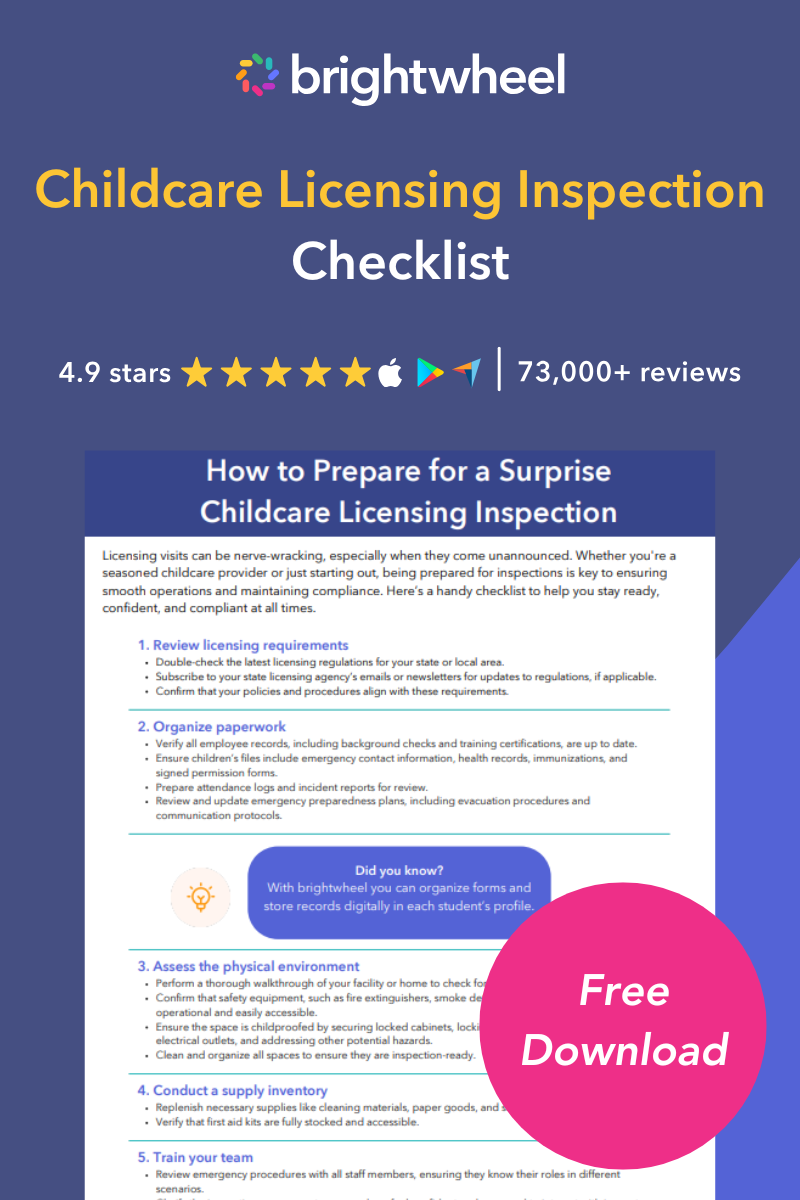
Childcare Licensing Inspection Checklist
A free checklist to prepare your program for a surprise childcare licensing inspection.
1. Health and safety protocols
The most fundamental aspect of any licensing inspection is the health and safety of the children. Inspectors will rigorously check that your facility adheres to strict hygiene and safety standards. These are non-negotiable elements of compliance that protect children from illness and injury.
What are the critical safety practices to maintain?
- Sanitation and hygiene: Inspectors will look for well-stocked handwashing stations and evidence that proper handwashing procedures are followed by staff and children. They will also check diapering procedures and ensure that toys and surfaces are sanitized regularly to prevent the spread of germs.
- Emergency preparedness: Your program must have clear, practiced plans for emergencies. This includes documented fire drills, accessible evacuation routes, and fully stocked first aid kits that are within easy reach of staff but out of reach of children.
- Playground and equipment safety: Outdoor play areas are a major focus. Inspectors will check for hazards like broken equipment, ensuring that all structures are age-appropriate and that proper surfacing materials are used to cushion falls.
- Safe sleep practices: For programs caring for infants, adhering to safe sleep guidelines is critical. This includes placing babies on their backs to sleep and keeping cribs free of blankets, pillows, and toys.
2. Staffing and supervision
Your staff is the heart of your childcare program, and inspectors will closely evaluate how your team operates. They need to verify that the people entrusted with the children’s care are qualified, vetted, and present in sufficient numbers.
How do inspectors evaluate staffing compliance?
- Staff-to-child ratios: One of the first things an inspector will verify is that you are meeting the required staff-to-child ratios for every age group present. This must be maintained throughout the entire day, including during drop-off, pick-up, and breaks.
- Qualifications and background checks: Inspectors will review personnel files to ensure all staff members have the necessary qualifications and up-to-date certifications, such as CPR and First Aid. They will also confirm that comprehensive background checks have been completed and cleared for every employee.
- Active supervision: It is not enough to just have staff in the room. Inspectors observe how staff interact with and supervise children during various activities, transitions, and free play. They look for attentive, engaged supervision that prioritizes child safety.
3. Child and staff records
Meticulous record keeping demonstrates professionalism and attention to detail. Inspectors need to see that you have accurate, up-to-date information readily available. Disorganized or missing paperwork is a common compliance issue that is easily avoidable with a good system.
What documentation must be up to date?
- Children’s files: Every child in your care must have a complete file containing enrollment forms, current medical records (including immunization history), and emergency contact information.
- Staff files: Similarly, staff records must be maintained. This includes hiring documents, educational transcripts, training logs, and proof of background clearance.
- Operational documentation: Inspectors will check daily attendance logs to ensure you know exactly which children are on-site. They will also review incident reports for proper documentation of accidents and verify that medication administration logs are accurate and signed by families.
4. Physical environment and learning materials
Your facility’s physical environment plays a huge role in child development. Inspectors assess the space to ensure it is not only safe but also conducive to learning and growth. The environment should be welcoming, well-maintained, and stimulating.
What environmental standards do inspectors look for?
- Condition of the facility: Both indoor and outdoor spaces must be clean, well-maintained, and free of hazards like peeling paint, exposed wires, or tripping hazards.
- Comfort and safety controls: The facility must have adequate lighting, proper ventilation, and appropriate temperature control to ensure a comfortable environment for children and staff.
- Learning resources: Inspectors will look for a sufficient supply of age-appropriate toys and learning materials. These items should be in good condition—free of broken parts or sharp edges—and accessible to children to encourage independent exploration.
5. Nutrition and food service
If your program provides meals or snacks, this area will be subject to strict scrutiny. Inspectors verify that food is handled safely and that the nutritional needs of growing children are being met according to state guidelines.
How is food service evaluated?
- Food storage and handling: Proper food safety practices are essential. This includes storing food at the correct temperatures, labeling perishable items with dates, and ensuring food preparation areas are sanitary.
- Allergy management: Inspectors will check for clear documentation of children’s allergies and dietary restrictions. This information should be posted in food preparation and eating areas (while maintaining privacy) to prevent accidental exposure.
- Menu planning: Your menus should reflect a balanced diet that meets nutritional standards. Inspectors may review past menus to ensure variety and compliance with state requirements for meal components.
Embed compliance into your culture
Preparing for a licensing inspection is not a one-time event; it is an ongoing commitment to quality and safety. By focusing on these key areas—health and safety, staffing, record keeping, the physical environment, and nutrition—you build a program that is always ready for review. When these standards are embedded into your daily operations, an inspection becomes an opportunity to showcase the excellent care you provide, rather than a source of stress.