During an inspection, few things are scrutinized as closely as your program's hygiene practices. Childcare licensing inspectors are trained to look for specific protocols that prevent the spread of illness, and even small oversights can lead to citations. While your staff works hard to keep the environment clean, meeting the rigorous standards of a state inspection requires more than just general tidiness—it requires a documented, systematic approach to sanitizing and disinfecting.
Understanding exactly what inspectors look for allows you to prepare your facility and train your staff effectively. This article will walk you through the key regulations, inspection hotspots, and necessary documentation to help ensure your sanitizing protocols meet and exceed state requirements.
Understanding your state's licensing requirements for sanitizing
The first step in preparing for an inspection is knowing exactly what rules you are playing by. Every state has a specific set of regulations governing sanitation in childcare programs. Inspectors do not grade based on personal preference; they check for compliance with these written standards.
Locating the rules
You can typically find the official sanitizing and disinfecting guidelines on your state's childcare licensing website. Look for sections dedicated to "Health and Safety," "Environmental Health," or "Infection Control." These documents will detail mandated frequency schedules, approved products, and specific procedures for different areas of your facility. It is helpful to print these regulations and keep them in your office for easy reference.
Cleaning vs. sanitizing vs. disinfecting
One of the most common mistakes inspectors find is the misuse of terms and methods. Licensing bodies and health organizations like the CDC make distinct differentiations between these three processes:
- Cleaning removes visible dirt, soil, and debris from surfaces using soap and water. It is always the first step. You cannot sanitize a dirty surface.
- Sanitizing reduces the number of germs on a surface to a safe level. This method is typically required for food-contact surfaces like high chair trays and tables.
- Disinfecting kills nearly all germs on a hard surface. This stronger process is generally required for diaper changing stations, bathrooms, and areas where bodily fluids have been present.
During a visit, an inspector will observe your staff to ensure they are using the right method for the right surface. Using a sanitizer on a diaper changing table might be cited as a violation because it is not strong enough to kill the bacteria present.
Approved solutions
Inspectors will closely examine the bottles you use for cleaning. They check that you are using approved sanitizing solutions. If you use a bleach-water solution, they will verify you are mixing it at the correct ratio (often different for sanitizing vs. disinfecting) and that the solution is prepared fresh daily, as bleach loses potency over time.
If you use commercial products, inspectors will look for EPA registration numbers on the label to ensure the product is approved for use in childcare settings. Furthermore, every spray bottle must be clearly labeled with its contents. A bottle simply labeled "Spray" is a guaranteed citation.
Contact time
Another critical detail inspectors watch for is "dwell time" or "contact time." This is the amount of time a solution must remain wet on a surface to be effective. Spraying a surface and wiping it immediately often renders the sanitizer or disinfectant ineffective. If a product label says it needs to sit for two minutes, your staff must wait those full two minutes before drying the surface. Inspectors often time this process during their observations.

Childcare Licensing Inspection Checklist
A free checklist to prepare your program for a surprise childcare licensing inspection.
Inspection hotspots: Key areas inspectors scrutinize
Inspectors know exactly where germs are most likely to spread, and they focus their attention on these high-risk areas. Knowing these hotspots allows you to double-check your protocols and ensure your team is vigilant where it counts most.
Food preparation and eating areas
Because foodborne illness is a significant risk, eating areas are a top priority. Inspectors check that high chairs, tables, and food-contact surfaces are sanitized before and after each use. They want to see that staff are not just wiping crumbs away but actively reducing germs.
They will also verify the use of a proper three-step process for dishes and trays if you do not use a dishwasher: wash, rinse, and sanitize. If you use a daycare sanitizing checklist, ensure these steps are clearly outlined for staff to follow during every meal service.
Diaper changing stations
This area is perhaps the most scrutinized spot in any childcare program. Inspectors look for a clearly posted, step-by-step diapering procedure right next to the changing table. They will observe a diaper change to ensure the changing surface is disinfected after every single use.
Beyond the table itself, they check for a hands-free trash can (to prevent re-contaminating hands) and ensure that staff follow proper handwashing protocols immediately after the change. Any lapse here, such as touching a clean diaper with contaminated hands, will be noted.
Toys and play equipment
Germs spread rapidly through shared toys. Inspectors will ask about your toy washing schedule. They typically expect mouthed toys in infant and toddler rooms to be cleaned and sanitized daily, while toys in older classrooms may be on a weekly schedule.
A common item they look for is a designated "mouthed toys" container. This bin should be out of reach of children and used to store any toy that has been in a child's mouth until it can be properly cleaned. This system prevents a dirty toy from being picked up by another child, a critical infection control measure.
Cots, mats, and bedding
Naptime equipment is another focal point. Inspectors verify that each child has individually labeled bedding and that cots or mats are spaced adequately to prevent the spread of germs during sleep. They will check your policy for how often bedding is sent home to be laundered (usually weekly) and will inspect the condition of the mats to ensure there are no rips or tears where bacteria can harbor.
Documentation and staff training: Proving your compliance
You might have excellent cleaning habits, but in the eyes of an inspector, "if it isn't written down, it didn't happen." Documentation provides the proof that your sanitizing procedures are consistent and compliant.
Creating cleaning and sanitizing logs
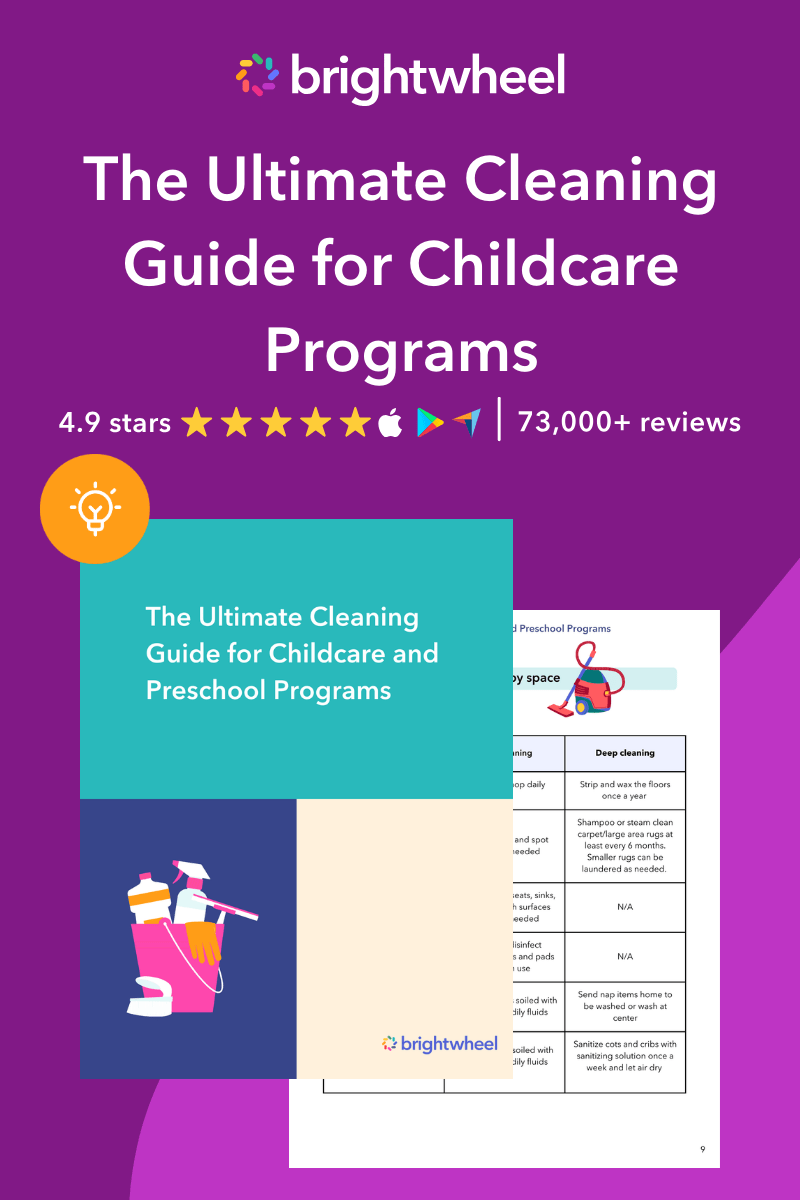
Inspectors often ask to see daily and weekly cleaning logs. These documents should list specific tasks (e.g., "Sanitize mouthed toys," "Disinfect door handles") and require staff to initial them upon completion. This verifies consistency and accountability. Providing a comprehensive daycare sanitizing checklist for your team to use daily is an excellent way to ensure nothing is missed and provides the paper trail inspectors need to see.
Staff training records
Your staff executes your policies, so their training is paramount. Inspectors may ask staff members directly how they mix solutions or how long a disinfectant needs to sit. To prepare for this, keep detailed records of all training sessions. Document the topics covered (e.g., "Bloodborne Pathogens," "Proper Diapering Procedures"), the date of the training, and who attended.
Posting procedures
Visual aids are a huge asset during inspections. Procedures for diapering, handwashing, and mixing cleaning solutions should be laminated and posted in the relevant areas. This shows inspectors that you have provided your staff with constant references to do their jobs correctly. It also reduces the likelihood of human error during a busy day.
Labeling and storage
Finally, safety is key. Inspectors check that all cleaning and sanitizing chemicals are stored in a locked cabinet, inaccessible to children. They will check that this cabinet remains locked when not in use. Additionally, they will ensure all spray bottles, buckets, and containers are accurately labeled with their contents and any necessary hazard warnings.
For many childcare programs, managing these logs and training records manually can be a burden. An all-in-one childcare management software like brightwheel can help you track staff training and communicate health and safety policies to families and staff with ease, ensuring you are always inspection-ready.
Preparation is the key to passing inspections
Passing a licensing inspection comes down to knowing the specific requirements, focusing on critical hotspots, and meticulously documenting your procedures. By understanding what inspectors look for—from contact times to labeled bedding—you can ensure your program is always prepared and your license remains secure.