Managing consent form refusals involves communicating with families to understand their concerns, offering flexible accommodations when possible, and maintaining strict adherence to state licensing regulations. When a family declines to sign a consent form, childcare programs should listen actively and explore alternative solutions that prioritize child safety.
Why do families refuse to sign consent forms?
Families often refuse to sign consent forms due to privacy concerns, a misunderstanding of legal jargon, or a desire to protect their child's safety and digital footprint.
When a family declines to sign a consent form, they rarely do so because they want to be difficult. Often, their hesitation stems from a place of protection and concern for their child. In today’s world, families are increasingly cautious about data privacy, digital footprints, and medical decisions.
Childcare programs must approach these situations with empathy rather than frustration. A refusal might root itself in a misunderstanding of what the form actually allows. Alternatively, families might base their refusal on cultural beliefs, past negative experiences with other institutions, or specific fears about safety.
For example, a family might refuse a photo release not because they do not want to support your marketing, but because they are navigating a complex foster care situation where anonymity means safety. Acknowledging that their refusal comes from a place of care serves as the first step toward finding common ground.

Childcare Consent and Release Forms
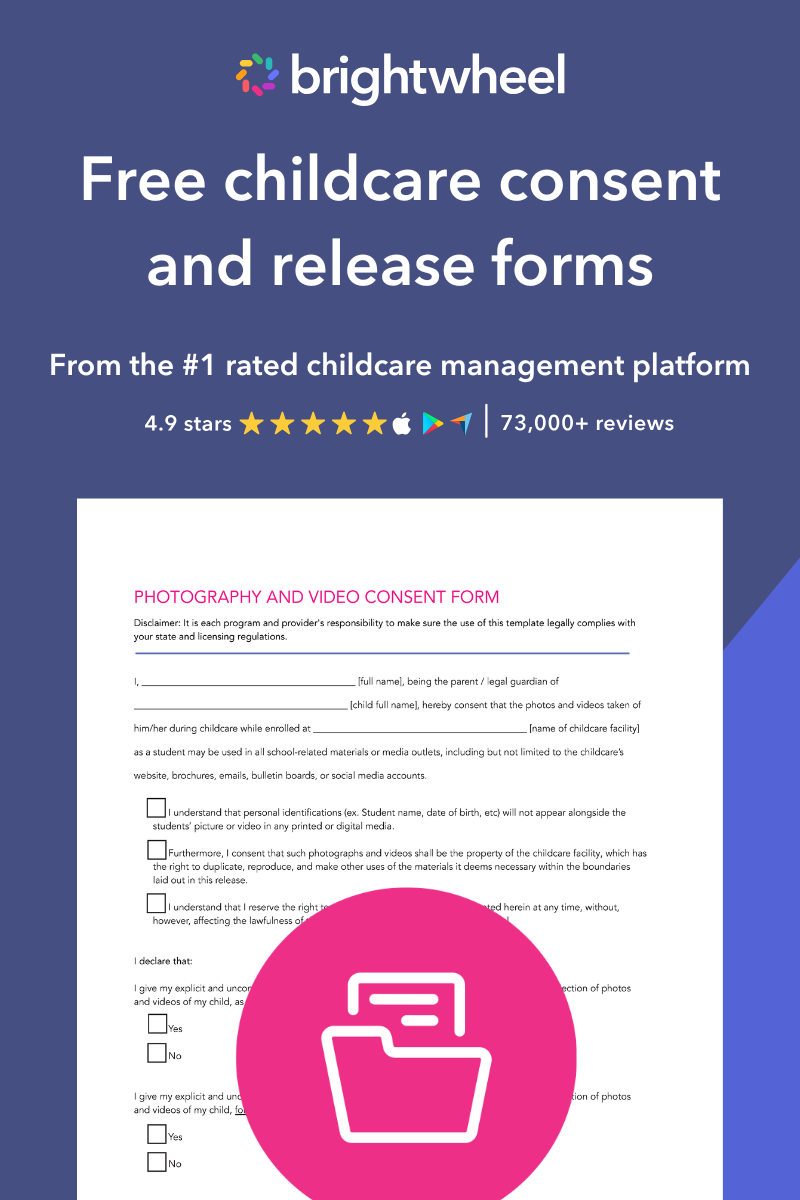
Use this free set of fillable PDF templates to obtain the required approvals and permissions from families.
What are common reasons for declining consent?
Common reasons for declining consent include a lack of understanding regarding the form's purpose, privacy concerns about photography, disagreement with specific activities, or deeply held medical and religious objections.
Before you can address a refusal, you need to identify the specific roadblock. While every family is unique, objections usually fall into a few common categories:
- Lack of understanding: Sometimes legal jargon is intimidating. A parent might think a "Liability Release" means you take no responsibility for their child's safety, rather than understanding it protects you from accidents outside your control.
- Privacy concerns: This issue occurs increasingly often regarding photography and video releases. Families may worry about someone posting their child's image on social media or using it in ways they cannot control.
- Disagreement with activities: A parent or guardian might feel uncomfortable with a specific field trip location or a certain type of activity due to safety concerns.
- Medical or religious objections: Refusals regarding medical consent, vaccinations (where applicable by law), or specific dietary provisions often stem from deeply held personal or religious beliefs.
How can childcare programs address consent form refusals?
Childcare programs can address consent form refusals by prioritizing clear communication, maintaining transparency about data usage, offering flexible alternatives, and actively listening to family concerns.
Once you know the reason behind the refusal, you can determine how to address it. Use the following four strategies to navigate the conversation effectively.
Use clear communication
Often, you can solve a refusal simply by explaining the necessity of the form. Explain the "why" clearly and without defensiveness. For instance, if a family refuses a medical consent form, explain that this document allows you to act instantly in an emergency when seconds count. Frame the form as a tool for their child's safety, not just administrative red tape.
Maintain transparency
If the objection is about data or privacy, be transparent about your processes. If a family is concerned about a photo release, explain exactly where photos are stored, who sees them, and how long they are kept. If you use a secure tool like brightwheel to manage student records, highlight the security features that protect their information.
Offer flexibility
Search for a middle ground. If a family refuses a blanket field trip consent form, ask if they would be willing to sign for individual trips on a case-by-case basis. If they refuse a photo release for social media, ask if they would consent to internal photos used only for classroom displays or assessment portfolios.
Practice active listening
Sometimes, families just need you to hear them. Sit down with them and listen to their concerns without interrupting. Validate their feelings by saying things like, "I understand why you are concerned about privacy, and I want to make sure you feel comfortable." This practice builds trust, lowers defenses, and makes families more open to hearing your perspective.
What are alternative solutions to consent form refusals?
Alternative solutions to consent form refusals include allowing partial consent, creating individualized care plans, and documenting any agreed-upon accommodations to protect the childcare program.
You will not always get a "yes," and that is okay. In many cases, you can find an alternative solution that respects the family's boundary while keeping your childcare program compliant.
Allowing partial consent
Consider allowing families to opt out of specific sections rather than rejecting the whole form. For example, a media release form might have separate checkboxes for "Social Media," "Website," and "Internal Use Only." Allowing them to check "Internal Use Only" while declining the others is a win-win.
Creating individualized care plans
For medical or dietary refusals, you may need to create an individualized care plan. If a family refuses a certain type of first aid (e.g., specific ointments), document clearly what the alternative protocol is. This ensures staff knows exactly how to care for the child without violating the parents' wishes.
Documenting accommodations
If you agree to an accommodation, write it down. Keep detailed records of the discussion, the agreed-upon alternative, and the specific limitations of the consent. Proper documentation protects your business in the event of a dispute later on.
What are the legal and ethical considerations of consent refusals?
When handling consent refusals, childcare programs must adhere to state licensing regulations, prioritize the ethical obligation to protect children's rights, and ensure the overall safety and well-being of the child.
While you want to remain flexible, you will encounter lines you cannot cross. Your childcare program has a strict responsibility to adhere to state and local licensing regulations.
- Adhering to regulations: Some forms are non-negotiable for enrollment. For example, most states strictly require emergency medical consent forms. If a parent refuses a form that is required by law for you to operate, you may need to firmly (but kindly) explain that you cannot enroll the child without it.
- Protecting children's rights: Your primary ethical obligation is to the child. If a refusal would put a child in danger (e.g., refusing consent for emergency medical transport), you must prioritize the child's safety.
- Ensuring safety and well-being: Never accept a refusal that compromises your ability to keep a child safe. If you cannot safely care for a child without a specific consent, it is better to delay enrollment than to accept liability for a situation you are not equipped to handle.
How can childcare programs prevent consent form refusals?
Childcare programs can prevent consent form refusals by conducting pre-enrollment discussions, providing comprehensive information packets, and ensuring families have easy access to all program policies.
The best way to handle refusals involves preventing them from happening in the first place. You can smooth out the process by setting expectations early.
Conducting pre-enrollment discussions
Do not wait until the first day of school to hand over a stack of forms. Discuss your policies and consent requirements during the initial tour. Mention your philosophy on photography, field trips, and medical care so families do not experience surprises later.
Providing comprehensive information packets
Provide a parent handbook or admission information packet that includes detailed explanations of each form. If you have a "Permission to Apply Sunscreen" form, include a blurb explaining that licensing requires this for any topical product, even over-the-counter ones. Context reduces confusion.
Ensuring easy access to policies
Make your policies readily available to all families. Whether they are printed in your lobby or accessible via your childcare software, families should be able to reference them easily. When families see that these are standard, program-wide policies, they are less likely to feel singled out or suspicious.
Examples of managing consent form refusals
Here are two examples of how to handle common scenarios:
Example 1: Handling a refusal for a medical consent form
A family refuses to sign the emergency medical consent because they fear a hospital might perform procedures they don't agree with.
- Response: The director sits down with the family and explains that the form applies specifically to life-threatening emergencies where staff cannot reach the family. They clarify that the form authorizes transport and stabilization, not elective surgeries. The director offers to attach a note to the form specifying the family's preferred hospital and primary care physician. Reassured that they retain control over non-emergency decisions, the family signs the form.
Example 2: Managing concerns about photography
A family refuses the photo release because they don't want their child's face on Facebook.
- Response: The administrator explains that they use brightwheel to share daily updates with families privately and that social media is separate. They update the form to allow the parent to consent to "In-App Updates" for their own viewing while opting out of "Public Social Media/Marketing." The family happily signs the modified consent, ensuring they still get daily updates without compromising their privacy standards.
How can handling refusals build trust with families?
Handling a refusal to sign a consent form provides an opportunity to build trust by demonstrating that you value the family's partnership and prioritize their child's well-being.
Remember, the goal does not just involve getting a signature; it centers on ensuring everyone aligns on how to best care for the child. Review your current process today to determine if your forms use clear language and robust explanations. Small changes in communication can make a world of difference in getting those forms signed and submitted on time.
Frequently asked questions about consent form refusals
Q: Can a childcare program deny enrollment if a family refuses a consent form?
A: Yes, a childcare program can deny enrollment if a family refuses to sign a consent form that state licensing regulations mandate, such as an emergency medical consent form. Programs must prioritize legal compliance and child safety over enrollment.
Q: Do childcare programs need to update consent forms annually?
A: Yes, childcare programs should update consent forms annually to ensure all family preferences, medical information, and emergency contacts remain current and legally compliant.
Q: Can verbal consent replace a written consent form in a childcare program?
A: No, verbal consent cannot replace a written consent form. Written documentation provides the necessary legal protection and ensures childcare staff have a concrete record of the family's exact permissions and limitations.