Updating childcare consent forms for summer activities ensures your program maintains licensing compliance, reduces liability, and clearly communicates new seasonal risks to families.
As the weather warms up, your childcare program’s activities shift from indoor crafts to outdoor adventures. But with new activities come new safety considerations. The standard enrollment forms that families signed in the fall may not cover specific summer activities like water play or bug spray application. This can leave your program vulnerable and families uninformed.
This article will walk you through the importance of updating your consent forms for seasonal activities. We'll provide a clear checklist of permissions to review and offer tips to make the process efficient, ensuring a safe and fun summer for everyone involved.
Why are seasonal permission updates crucial for childcare programs?
Keeping consent forms updated is a fundamental part of running a safe and trustworthy childcare program. Seasonal updates are essential for aligning with new activities, maintaining licensing compliance, and building strong relationships with families.
How do updated forms align with new activities and risks?
Summer brings unique and exciting activities like swimming, sprinkler fun, and nature hikes. These activities have different risk profiles than regular classroom activities. For example, water play introduces supervision challenges and drowning risks, while hikes in wooded areas might involve exposure to insects or poisonous plants. Updated forms ensure that families are fully aware of these specific plans and the associated risks, allowing them to provide informed consent.
How do consent forms ensure licensing compliance?
Licensing bodies often have strict requirements for high-risk activities. Many states mandate explicit, written permission for activities such as water play, field trips, or the application of topical solutions like sunscreen and bug spray. Failing to obtain and document this consent can lead to citations or more severe penalties during a licensing inspection. A seasonal review of your permission forms helps ensure your program remains compliant and avoids any potential violations.
How do updated permissions build trust with families?
Proactive communication about safety demonstrates to families that you are thorough and prioritize their child's well-being. When you take the time to explain new activities and request specific permissions, you show transparency and respect for their role as primary caregivers. This process strengthens the family-provider relationship and builds a foundation of trust that is invaluable for your program's reputation.

Childcare Consent and Release Forms
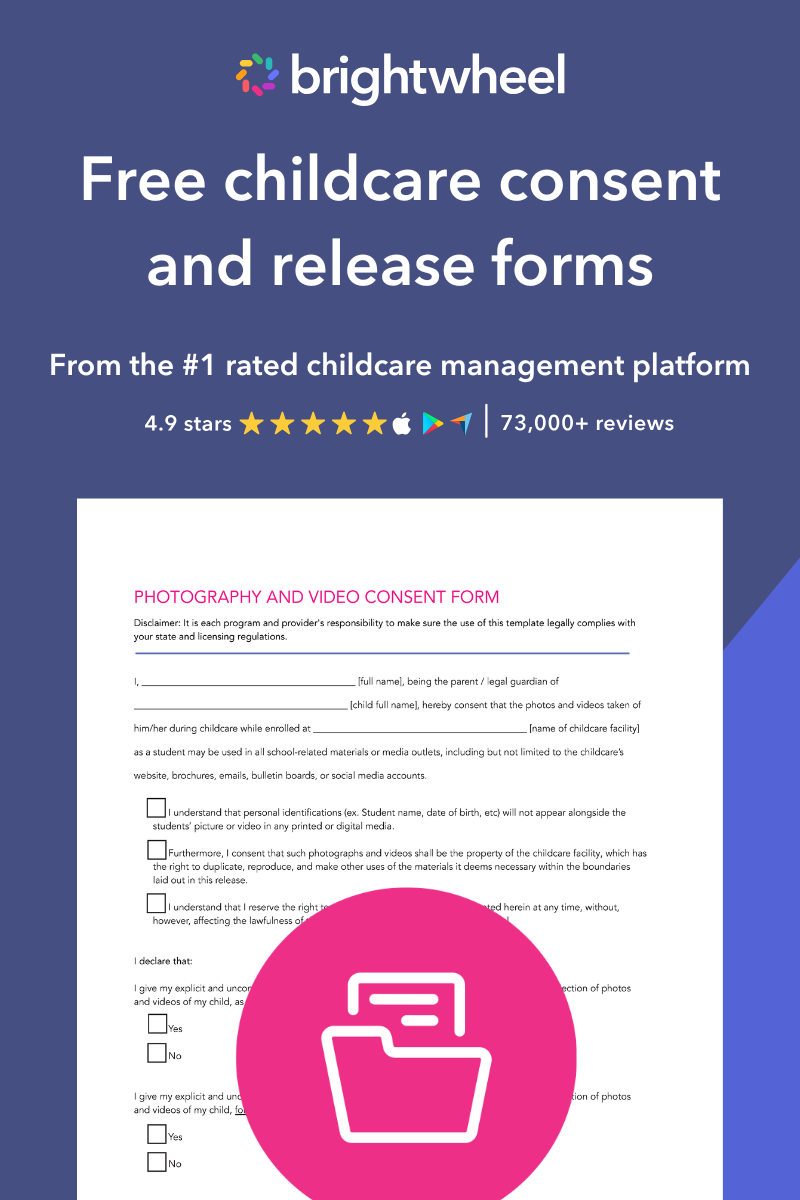
Use this free set of fillable PDF templates to obtain required approvals and permissions from families.
What are the essential permissions to update for summer?
The essential permissions to update for summer include water play and swimming consent, sunscreen and bug spray application, outdoor excursions, and specific summer camp activities. To prepare for a season of sun and fun, review your current consent forms and identify which ones need updating.
What should a water play and swimming consent form include?
This is one of the most critical permissions for summer. Your water play consent form should be detailed and specific.
- Types of activities: Clearly state the kinds of water activities children will participate in, such as sprinklers, wading pools, or off-site swimming at a local pool or lake.
- Supervision ratios: Specify the adult-to-child ratio that will be maintained during water play, ensuring it meets or exceeds licensing requirements.
- Safety protocols: Outline the safety measures in place, such as lifeguard presence, use of life vests, and emergency procedures.
Given the high-risk nature of water activities, obtaining this permission is non-negotiable for any child participating.
Why do you need sunscreen and bug spray application forms?
Protecting children from sunburns and insect bites is a top priority for outdoor play. It's crucial to have a sunscreen permission form and a similar consent for insect repellent.
- Product specifics: The form should specify whether the program will provide the product or if families need to supply their own. If the program provides it, list the brand and active ingredients.
- Application frequency: Detail how often sunscreen or bug spray will be applied.
- Allergies: Include a section for families to note any known allergies or skin sensitivities.
When should you use outdoor excursion and field trip forms?
Summer often includes more outdoor excursions, from simple walks to a local park to bigger field trips.
- Routine trips: Even for regular walks in the neighborhood, a general permission form is a good practice.
- Specific field trips: For larger trips to destinations like farms, zoos, or nature centers, a separate, trip-specific form is essential. This form should detail the destination, date and time, transportation method, cost, and emergency contact plan.
What consent is required for summer camp-specific activities?
If your program runs a special summer camp, you may have unique activities that require their own permissions. These could include:
- Special guest visits (e.g., a petting zoo, a local musician)
- Outdoor cooking or campfires
- Unique sports or games
Review your summer curriculum and create specific consent forms for any activity that falls outside your typical daily schedule.
How can you streamline the seasonal consent form update process?
You can streamline the seasonal update process by creating a bundled summer safety packet, leveraging childcare management software, and communicating early with families. Collecting new forms from every family can feel like a daunting task, but a few simple strategies can make it manageable.
Create a summer safety packet
Bundle all the necessary seasonal forms into a single digital or physical packet. This approach is similar to the initial enrollment process and makes it easier for families to review and complete everything at once. An organized packet reduces the chances of a form getting lost and simplifies tracking for your administrative team.
Leverage childcare management software
Digital tools can significantly streamline the process. A comprehensive childcare management software allows you to:
- Send new forms to all families simultaneously.
- Track which families have completed the forms and which haven't.
- Send automated reminders to families who still need to submit their permissions.
- Securely store completed forms in each child's digital profile for easy access.
Communicate clearly and early
Announce the need for updated permissions well before your summer programs begin. Use all your communication channels—newsletters, app messages, and posted signs—to explain why these forms are necessary for their child's safety and your program's compliance. A clear explanation can help families understand the importance of the task and encourage prompt completion.
Frequently asked questions
Q: Can I use verbal permission instead of written consent forms?
A: No, licensing bodies require explicit, written permission for activities like water play and applying topical solutions. Written forms ensure state compliance and reduce your program's liability.
Q: How often should I review my childcare program's consent forms?
A: You should review your consent forms at least twice a year. Typically, programs update forms in the fall for standard enrollment and in the spring to prepare for summer activities.
Q: Do I need a new form if a family changes their preferred sunscreen brand mid-summer?
A: Yes, you should have families fill out an updated form or a signed amendment if they change products. This ensures you have accurate records of ingredients in case a child develops a skin reaction.
Prepare for a safe summer season
Taking the time to update your permission forms is a crucial step in preparing for a safe and enjoyable summer. By reviewing permissions for water play, sunscreen, field trips, and other seasonal activities, you ensure your program is compliant with licensing regulations and has the trust of your families.