As a childcare provider, you manage many important tasks, from planning activities to keeping families informed. Among these, legal forms play a vital role in ensuring children's safety, building trust with families, and protecting your program from liability. Proper consent and release forms are essential—for instance, medical consent ensures quick care in an emergency, and photography permissions safeguard family privacy.
This article highlights common mistakes with legal forms and offers practical tips to help you stay organized and compliant with confidence.

Childcare Consent and Release Forms
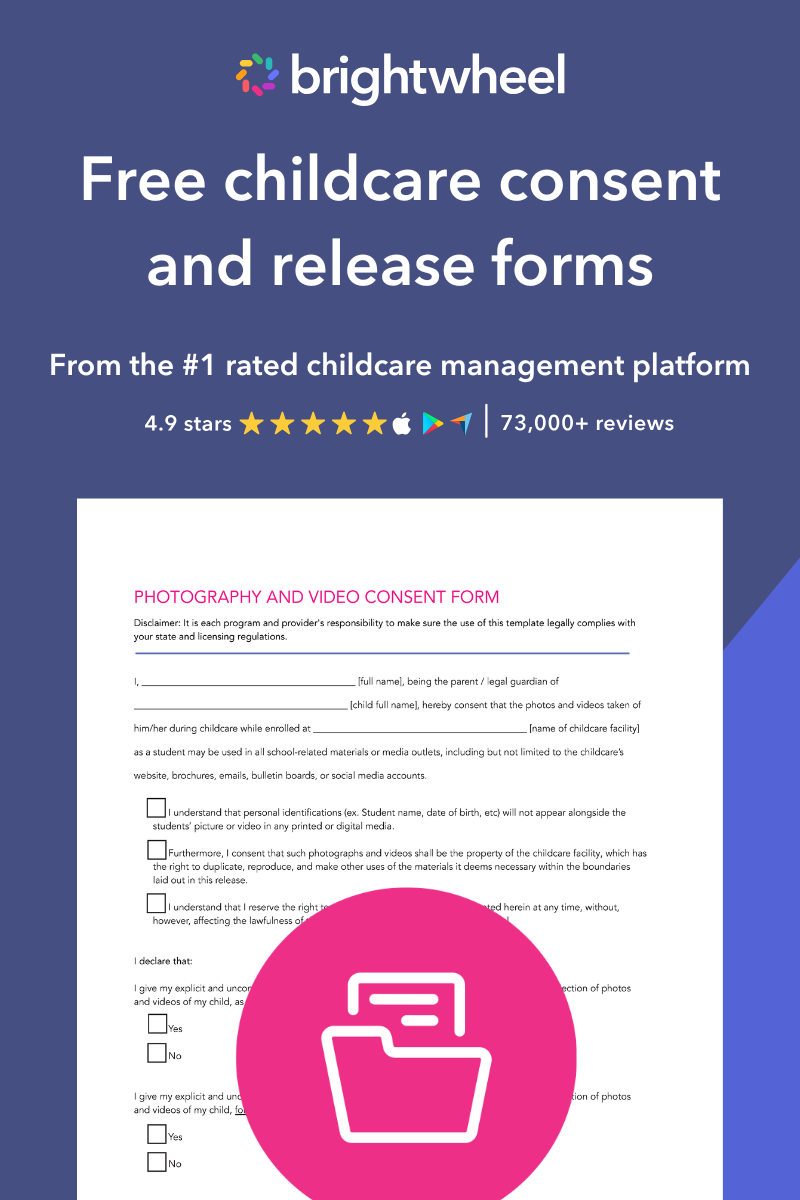
Use this free set of fillable PDF templates to obtain the required approvals and permissions from families.
Common mistakes with medical consent forms
Medical consent forms are arguably the most critical documents in your files. They authorize you to seek medical treatment for a child in an emergency. Here’s where providers often slip up.
Mistake 1: Not having a child medical consent form at all
Emergencies are unpredictable. Waiting to get verbal permission from a parent or guardian during a crisis is not a viable plan. Without a signed medical consent form, healthcare providers may be unable to administer treatment, potentially leading to devastating consequences.
- How to fix it: Make collecting a signed medical consent form a mandatory part of your enrollment process for every child. Ensure no child attends your program, even for a single day, without this form on file.
Mistake 2: Using outdated or incomplete medical consent forms
A form from five years ago might not reflect a child's current health status, allergies, or family contact information. Using incomplete forms with missing signatures, dates, or key details renders them ineffective.
- How to fix it: Require families to review and update their child's medical consent form annually or whenever their information changes (e.g., new address, phone number, or medical condition). Periodically audit your files to ensure all forms are complete.
Mistake 3: Lack of clear procedures for medical emergencies
Having a signed form is only half the battle. If your staff doesn't know where to find the form or what steps to take in an emergency, chaos can ensue.
- How to fix it: Develop a clear, written emergency protocol that all staff members are trained on. This includes the location of consent forms (both physical and digital), emergency contact procedures, and steps for documenting the incident.
Medication administration form errors
Many children require medication during their time at your program. Proper administration is essential for their health and your program's liability.
Mistake 1: Not following the "Five Rights" of medication administration
The "Five Rights" (the right child, right medication, right dose, right time, and right route) are the cornerstone of safe medication administration. Deviating from these principles can lead to dangerous errors.
- How to fix it: Train all staff responsible for administering medication on the "Five Rights." Use a medication administration form that requires them to double-check each of these elements before giving any medication.
Mistake 2: Failing to document medication administration properly
If it isn't documented, it didn't happen. Failing to log every dose administered can lead to confusion, missed doses, or double-dosing. It also leaves your program without a legal record of its actions.
- How to fix it: Use a dedicated Medication Administration Form to log every dose. The log should include the child’s name, medication, dose, date, time, and the signature of the staff member who administered it.
Mistake 3: Lack of training on medication administration procedures
Handing a bottle of medicine to an untrained staff member is a significant risk. Proper training ensures they understand storage requirements, dosage measurements, and potential side effects.
- How to fix it: Provide comprehensive training for all staff authorized to administer medication. This will cover your program’s policies, state regulations, and specific procedures for different types of medication.
Issues with photography and video consent forms
Sharing photos and videos is a great way to engage families and market your program, but it must be done with respect for privacy.
Mistake 1: Not obtaining explicit consent for photography and video
Assuming families are okay with their child being photographed is a common but risky mistake. Privacy laws are strict, and families have different comfort levels with sharing their child's image.
- How to fix it: Use a Photography and Video Consent Form that clearly explains how you intend to use media. Get this signed during enrollment.
Mistake 2: Using photos and videos without considering privacy preferences
A family might consent to photos for an internal classroom newsletter but not for your public social media page. Ignoring these preferences erodes trust and can have legal repercussions.
- How to fix it: Your consent form should provide granular options, allowing families to specify where images can be used (e.g., internal use only, program website, social media). Always respect these choices.
Mistake 3: Failing to inform families about the use of media for marketing
If you plan to use a child’s photo in a brochure, on a billboard, or in a paid ad, families have a right to know.
- How to fix it: Be transparent. If you use images for marketing, your consent form should explicitly state this. This builds trust and ensures families are fully informed.
Problems with field trip consent forms
Field trips are exciting learning opportunities, but they require extra diligence to ensure safety.
Mistake 1: Not getting specific consent for each field trip
A blanket permission slip signed at the beginning of the year is often insufficient. Families need to know the specifics of each outing to provide informed consent.
- How to fix it: Use a separate Parent Consent Form for each field trip. This ensures families have all the necessary details and have given explicit permission for that specific event.
Mistake 2: Overlooking essential details in field trip consent forms
A form that just says "We're going to the park" isn't enough. Families need to know the date, times, location, mode of transportation, and what their child should bring.
- How to fix it: Your field trip consent form should include all pertinent details. Also, include a section for any special instructions or health concerns for that day.
Mistake 3: Not having emergency contact information readily available
During a field trip, you're away from your home base. If an emergency occurs, you need immediate access to contact information and medical consent forms.
- How to fix it: Bring a binder or a secure digital file with copies of emergency contacts and medical consent forms for every child on the trip.
Sunscreen and diaper cream authorization errors
Even seemingly minor applications like sunscreen or diaper cream require permission, as they are often classified as over-the-counter medications by licensing bodies.
Mistake 1: Applying sunscreen or diaper cream without authorization
A child may have a sensitivity or allergy to a specific product. Applying it without permission may cause a reaction and create liability for your program.
- How to fix it: Obtain a signed Permission to Apply Sunscreen Form and a Diaper Cream Authorization Form from families. These forms should specify the brand of product and any known allergies.
Mistake 2: Not documenting the application of these products
If a child develops a rash, you'll want a record of what was applied and when. Proper documentation protects both the child and your program.
- How to fix it: Keep a simple log to document when sunscreen or diaper cream is applied to each child. This can be part of their daily report.
Best practices for managing your forms
Avoiding these common mistakes comes down to having a solid system in place.
- Keep it clear: Ensure your forms are easy to read and understand. Avoid legal jargon.
- Update regularly: Review and update all consent forms annually to ensure they are current.
- Store securely: Keep all signed forms in a secure, organized location where authorized staff can easily access them in an emergency.
How brightwheel helps manage forms
Managing piles of paper forms is time-consuming and inefficient. Digital solutions can streamline this entire process. With brightwheel, you can manage all your consent forms digitally. You can upload required state forms, allow families to submit them directly through the app, and automatically link documents to each child's profile. Automated reminders can help you track down missing forms and ensure your records are always up-to-date.
Protect your program with proper procedures
Consent and release forms are more than just paperwork; they are a cornerstone of a safe, compliant, and trustworthy childcare program. By avoiding these common mistakes and implementing clear procedures, you can protect the children in your care, build strong relationships with families, and safeguard your business.