Trust is the currency of childcare. When families drop off their children at your program, they are placing their most precious family members in your hands. This act requires an immense amount of faith in your ability to keep their children safe, happy, and nurtured. While warm smiles and daily updates go a long way in maintaining this relationship, the administrative side of your business plays an equally critical role.
Consent forms are often viewed as just another item on the endless checklist of paperwork required for enrollment. However, when viewed through the lens of communication, these documents become powerful tools for building confidence. They demonstrate professionalism, attention to detail, and a deep respect for family preferences. By clearly outlining permissions and boundaries, you are telling families that you take their child's safety and specific needs seriously.
Clear documentation isn't just about legal protection; it's about building relationships. Whether it is permission to apply sunscreen or authorization for emergency medical care, every signed form is a mutual agreement that strengthens the partnership between your childcare program and the families you serve.
The benefits of having clear consent forms
Beyond meeting licensing requirements, comprehensive consent forms serve as a roadmap for care. They ensure that your staff is empowered to make decisions that align with family wishes, creating a cohesive environment for the child.
Supporting comprehensive care
Ensuring you have all the information you need from a child’s parents or guardians means that you can care for them in the best way possible. When you have explicit permission to administer medication or apply diaper cream, your staff can act confidently and quickly without hesitation. This streamlined care routine supports the child and provides families with confidence that their specific health needs are being handled effectively.
Building a relationship of trust
Transparency is key to any healthy relationship. By presenting detailed consent forms, you are showing families that you have nothing to hide and that you respect their authority as parents. For example, offering a detailed photography release form allows families to decide if they are comfortable with their child’s image being on social media or if they prefer images to be used for internal purposes only. This level of granularity shows that you respect their privacy and digital footprint, which significantly deepens their trust in your program.
Helping you avoid speculation
Without clear consent forms, providers may find themselves guessing what a family might want in a specific situation. Is it okay to take the children on a spontaneous neighborhood walk? Can we apply a generic brand of sunscreen if a child forgets theirs? Consent forms eliminate this speculation. They provide a clear "yes" or "no" to these questions, protecting your staff from making well-intentioned mistakes and protecting families from unwanted surprises.

Childcare Consent and Release Forms
Use this free set of fillable PDF templates to obtain the required approvals and permissions from families.
Best practices for creating effective forms
To maximize the effectiveness of your consent forms, they need to be clear, professional, and comprehensive. A poorly worded or vague form can cause more confusion than it solves. Here are some best practices to ensure your documentation builds confidence rather than questions.
Include essential identification details
Every consent and release form should be unmistakably clear about who it involves and what it authorizes. At a minimum, your forms must indicate:
- The name of your childcare program: This confirms the agreement is specifically with your business.
- The type of consent form: Whether it is a medication administration form, a field trip permission slip, or a diaper cream authorization form, the title should be bold and descriptive.
- Signatures and dates: Always include space for the printed name and signature of the parent or guardian, as well as the date signed.
Prioritize timely distribution and collection
The timing of your communication matters as much as the content. Distributing forms to families and collecting them in a timely manner will help you avoid unnecessary delays in care.
Ideally, essential forms like medical consents and emergency contacts should be completed before the child’s first day. For specific events like field trips, sharing forms with families well in advance gives them time to ask questions and ensures you aren't chasing down signatures as the bus is loading.
Incorporate liability release statements
While the primary goal is care and communication, business protection is also a reality. Consent and release forms can include a statement that releases the business owners from liability for authorized actions.
For instance, a field trip form can acknowledge the inherent risks of off-site activities. This legal layer protects your livelihood, but it also communicates to families that you are a professional operation that understands risk management.
Common types of consent forms that build confidence
Different activities carry different risks and requirements. By having specific forms for different scenarios, you demonstrate that you have thought through every aspect of the child's day.
- Child medical consent form: Emergencies happen when we least expect them. A robust medical consent form enables providers to act quickly in a medical crisis when guardians cannot be reached immediately.
- Medication administration form: Managing medications requires strict protocols. A standardized form ensures children receive the correct dosage at the right time and reduces the risk of errors.
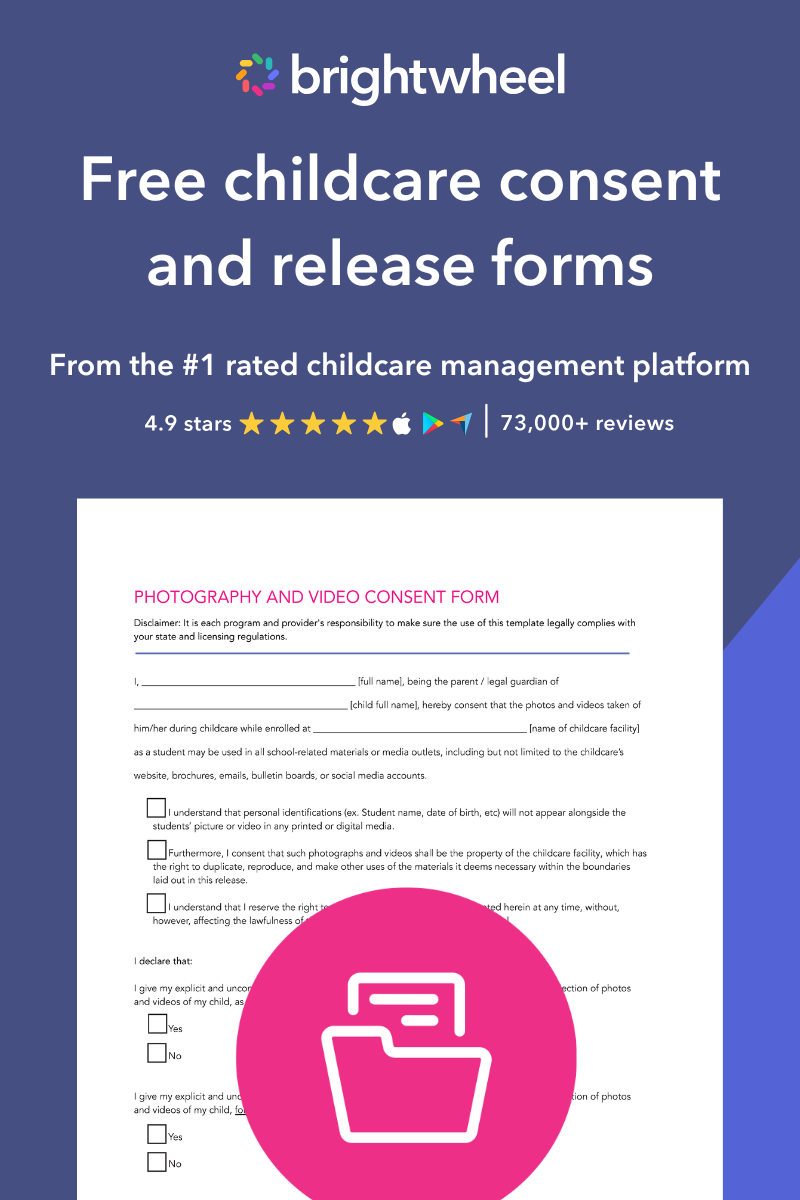
- Photography and video consent: In an era of social media, protecting a child's digital footprint is a top priority for many families. A clear form respects family privacy preferences.
- Field trip consent: Field trips are exciting learning opportunities, but they come with unique risks. This form outlines transportation methods, destinations, and emergency protocols.
- Sunscreen and diaper cream authorization: It might seem like a minor detail, but over-the-counter creams are often treated as medication by licensing bodies. These forms ensure staff have clear instructions to treat skin issues effectively.
Streamlining the process with professional templates
Creating these forms from scratch can be time-consuming and leaves room for error. Using templates can save you hours of administrative work and ensure you aren't missing critical fields.
Accessing reliable templates
Resources like brightwheel’s collection of free consent and release form templates can help you obtain a family's consent for everything from medical releases to photo permissions. Using these easy-to-use templates ensures every authorization is accurately recorded, giving you peace of mind. This allows you to concentrate on what's truly important—delivering excellent care to the children.
Ensuring compliance
While templates are a fantastic starting point, it is the responsibility of each program and provider to confirm that the use of any template fully adheres to your state and licensing regulations. Licensing requirements vary significantly from state to state regarding what must be included in a consent form. Always review these templates against your local guidelines to ensure full compliance.
Conclusion
Running a high-quality childcare program is about more than just supervising children; it is about building a community of trust with the families you serve. Consent forms are a vital part of that foundation. They facilitate clear communication, ensure the safety and wellbeing of the children, and protect your business from liability.
By implementing comprehensive, clear, and professional consent forms, you are sending a message to every family that their child’s safety is your top priority. This attention to detail builds communication confidence, turning administrative necessities into opportunities for connection and trust.